Java has an undo button?
Java has an undo button?
Java has an undo button?
 Craig and Renee are in Sydney and dangerously podcast after Renee’s one (1) drink and Craig’s two (2) drinks. Along the way they fumble over the following topics:
View original post 147 more words
 My presentation with Renee Troughton from the Agile Australia 2013 conference called “Visual Management: Leading With What You Can See” is available on Slideshare.
Using task boards or story walls is a key Agile practice, but are you making the most of it? Visual Management is more than just putting cards on a wall, it is a growing style of management that focuses on managing work only by what you can see rather than reports or paper being shuffled around. Visual Management allows you to understand the constraints in the system, mitigate risks before they become issues, report on progress from the micro to the macro. Visual Management can also be used to demonstrate to customers and clients where the work they care about is at. This presentation is all about taking the management of your work to the next stage of transparency. Discover:
* How to identify when your story wall isn’t telling you everything and how to adjust it
* What the three different types of story walls are and which one is more suitable to certain circumstances
* Different ways to visualise your product backlogWhy queue columns and limiting work in progress is so important regardless of whether you are using Scrum or Kanban
* How symbols and tokens can be used to give more information
* What else can you use other than story walls to visualise information
* How to ingrain Visual Management into both the team and management structures of your organisation
* Visualising Your Quality, Testing and Team
* What is systemic flow mapping and why is it important
Lynne Cazaly did an awesome visualisation of the talk!
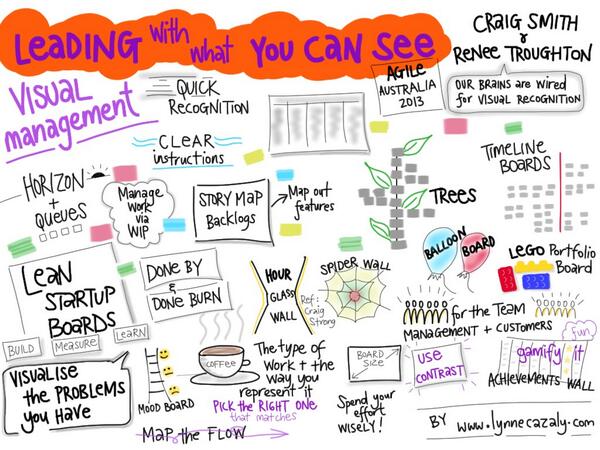
We had some great feedback from people after the talk as well as via Twitter.
Renee also has a (slightly earler) version of the slidedeck online via her Slideshare, with one slide change and one omission…
 Tony, Renee and Craig meet in sunny suburban Sandgate and have an intense debate about the world of Agile while dealing with the 4:01 to Shorncliffe and beeping out Tony’s references to seagulls and respect.
View original post 80 more words
 My presentation from the Brisbane Agile Meetup in May 2013 called “Scrum Masters: The Full Time Role Conundrum” is available on Slideshare.
A replay of the talk delivered by Craig Smith at the recent Scrum Australia gathering in Sydney
The Scrum Guide defines the Scrum Team as being made up of three primary roles: Product Owner, Development Team and Scrum Master. The role of the Scrum Master is often misunderstood, particularly by management, so often questions start to get asked such as “can I share the Scrum Master across teams”, “can the Scrum Master do Project Management” and “can the role be rotated”?
In this talk we will take a look at some of the misconceptions around the Scrum Master role, discuss how it fits into the organisational structure and tackle the age-old question of whether the Scrum Master is a full time role. We will also look at an improvement plan template to help Scrum Masters improve in their role.

Here are some comments from Meetup:
 -world presso… (Juan)
 I had the pleasure this week to sit in on a 2 day Introduction to Clojure workshop being run by one of Clojure’s core developers, Stuart Sierra. YOW! and Relevance, Inc. are running these workshops on the east coast of Australia throughout May 2013 and for someone still very new to functional concepts it was a great introduction to functional programming as well as the Clojure language itself.
The key to a workshop like this is the slides with the code examples and the labs to practice the learnings, Nonetheless, here are my notes from the course on some of the concepts that I picked up.
 Here is a highly inspirational talk on TED from Neil Pasricha, the author the 1,000 Awesome Things website.
His three A’s of Awesome are:
Watched a couple of short, unrelated videos on TED today from entrepreneur Derek Sivers.
When starting a movement, it takes a leader but the first follower is actually an underestimated form of leadership in itself. … The first follower is what transforms a lone nut into a leader! There job is to make it OK for others to join and to make it more safe.
Whatever brilliant ideas you may have or hear, the opposite may also be true. He gives the example of naming streets in Western culture, but blocks in Japan and how eastern doctors get paid for keeping you healthy, not treating you when you are sick.
Keep your goals to yourself because telling someone your goal makes it less likely to happen.
 With thanks to my very good friends at SlatteryIT, I headed off to Tech Connect 2013 in Brisbane this week to network with the Brisbane startup community.
Brisbane Lord Mayor Graham Quirk kicked off the day by reaffirming the Digital Brisbane strategy which already has seen the appointment of a Chief Digital Officer, a visiting entrepreneurs program and a strategy to attract more startups in Brisbane. He was keen to see more success stories in Brisbane, following on from start ups like Halfbrick, the inventors of Fruit Ninja.
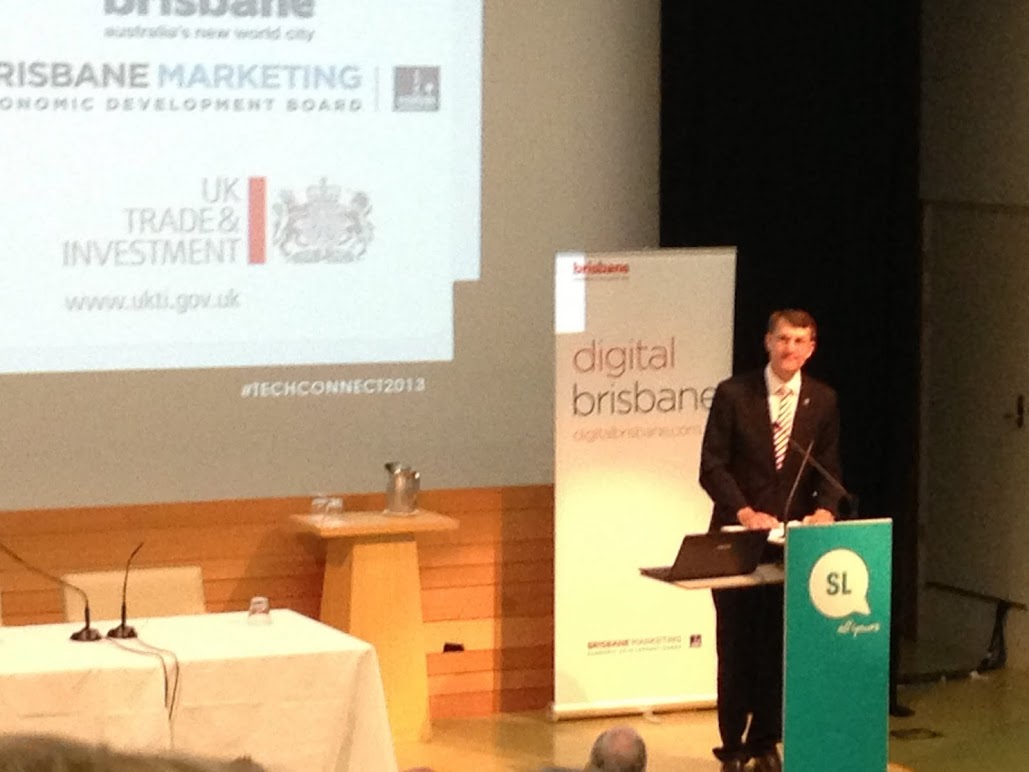
Here are my notes from the sessions.
Tyler Crowley is the first speaker to be brought to Brisbane as part of the visiting entrepreneurs program. Tyler is a well known and respected entrepreneur, best known to me as the co-host of the This Week in Startups podcast. I am not sure if there was meant to be any direction to this session, but it turned out to be a rambling question and answer session.
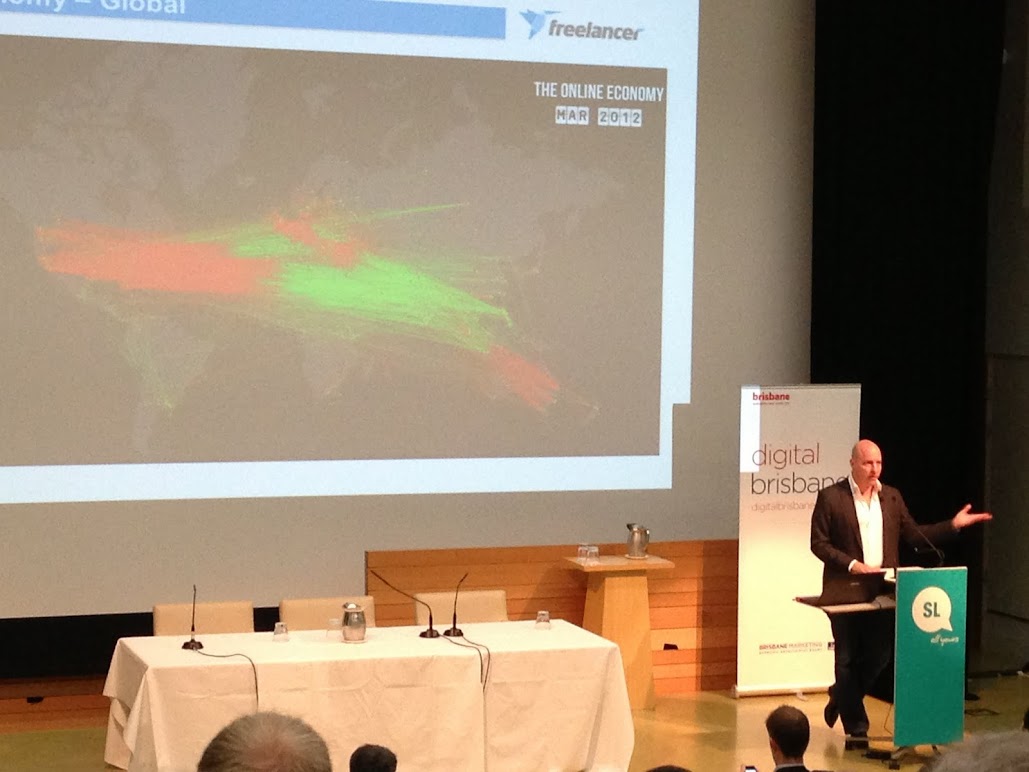
Matt Barrie is the creator of Freelancer, which is the worlds largest outsourcing marketplace. I was really looking forward to seeing this talk and it did not disappoint! His presentation is also available online.
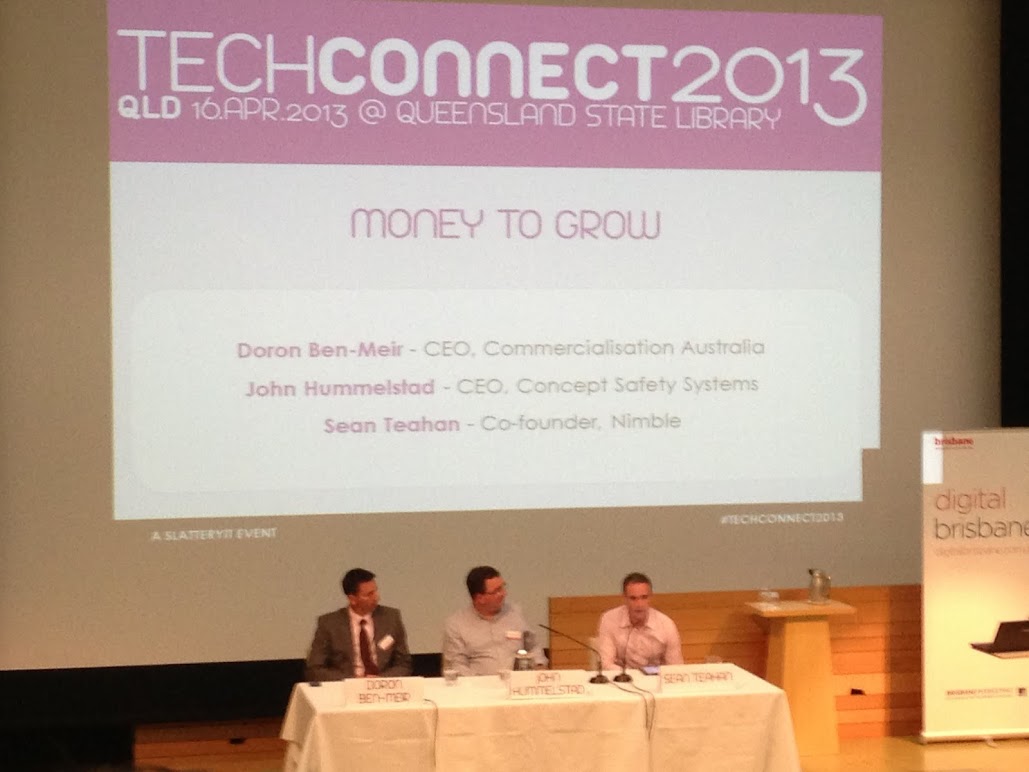
This panel included John Hummelstad (Ephox and Concept Safety Systems), Sean Teahan (Nimble) and Doron Ben-Meir (Commercialisation Australia).
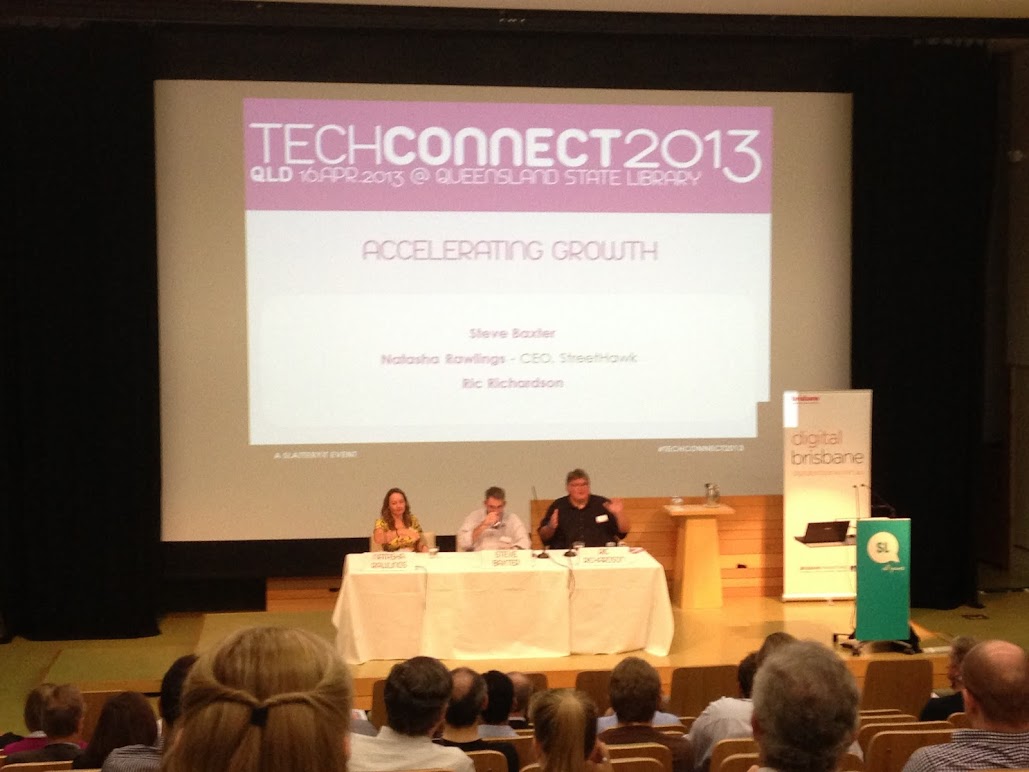
This panel included Natasha Rawlings (StreetHawk), Ric Richardson (inventor of software activation amongst many other thing) and Steve Baxter (River City Labs). Ric mentioned that he gets lots of attention from his appearances on Australian Story (The Big Deal and A Done Deal).
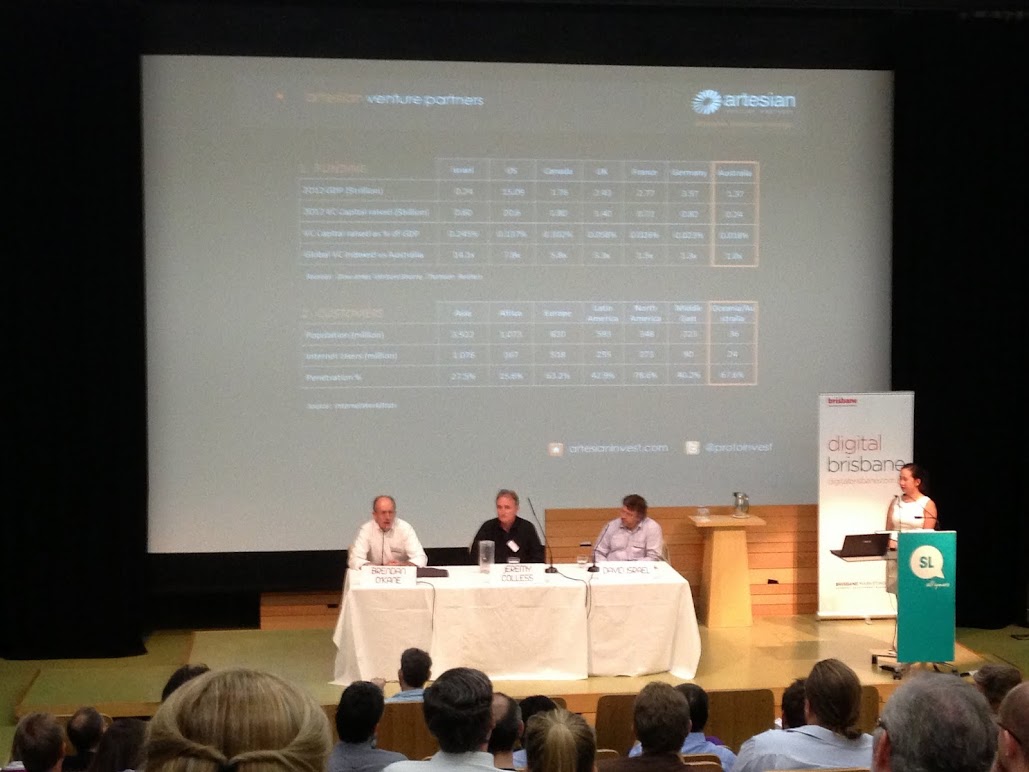
This panel included Brendan O’Kane (OtherLevels), Jeremy Colless (Artesian Venture Partners, which was spun out of ANZ) and David Israel (UniQuest)
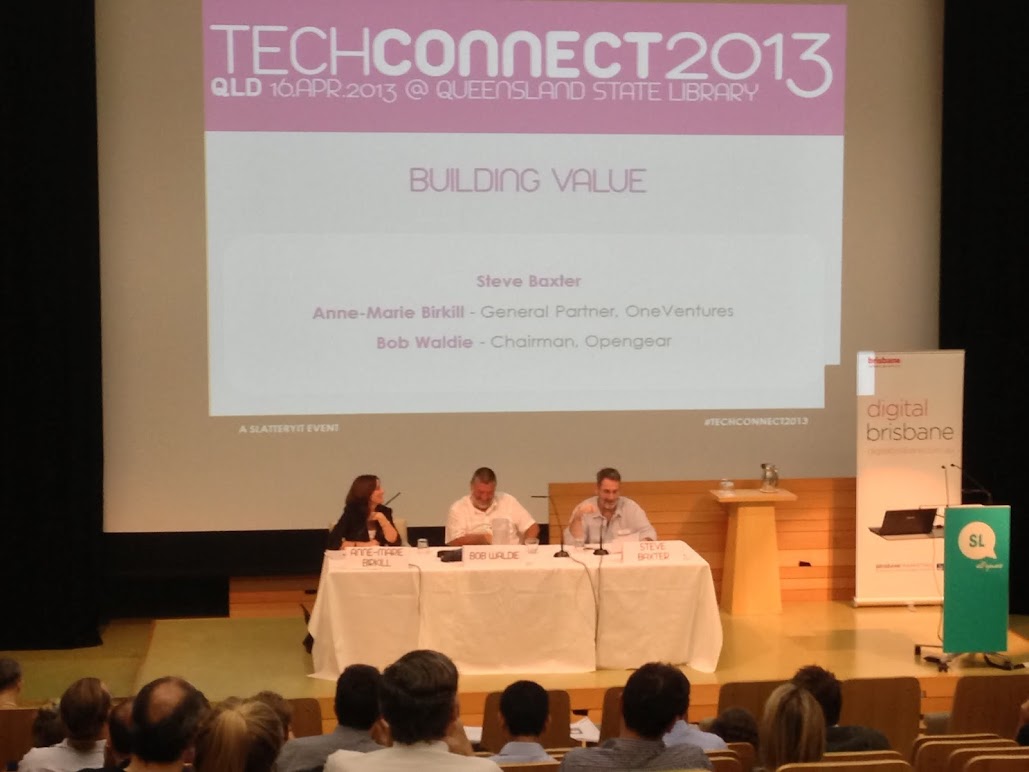
This final panel included Anne-Marie Birkill (OneVentures), Bob Waldie (Opengear) and Steve Baxter.
Overall a great day of presentations, panels and meeting new and interesting people in Brisbane technical and startup community.
 Craig and Renee rendezvous in Sydney for Scrum Australia and clear the backlog for a way overdue podcast. Whilst Craig battled a cold and Renee a fit of giggles, they discussed:
View original post 37 more words

 Craig Smith
You must be logged in to post a comment.