Scrum Australia 2013: Scrum Masters: The Full-Time Role Conundrum

Scrum Australia 2013My presentation from Scrum Australia 2013 called “Scrum Masters: The Full Time Role Conundrum” is available on Slideshare.

The Scrum Guide defines the Scrum Team as being made up of three primary roles: Product Owner, Development Team and Scrum Master. The role of the Scrum Master is often misunderstood, particularly by management, so often questions start to get asked such as “can I share the Scrum Master across teams”, “can the Scrum Master do Project Management” and “can the role be rotated”?

In this talk we will take a look at some of the misconceptions around the Scrum Master role, discuss how it fits into the organisational structure and tackle the age-old question of whether the Scrum Master is a full time role. We will also look at an improvement plan template to help Scrum Masters improve in their role.

Some of the comments from Twitter included:

Adam Weisbart on Agile Antipatterns and Tools to Make Agile Fun

Adam Weisbart discusses making Agile fun, through the use of resources he has developed such as “Build Your Own Scrum”, “Retrospective Cookies”, “Update The Card Wall” and “Agile Antipatterns”.

Source: Adam Weisbart on Agile Antipatterns and Tools to Make Agile Fun

Episode 47: $#*! Adam Weisbart Says

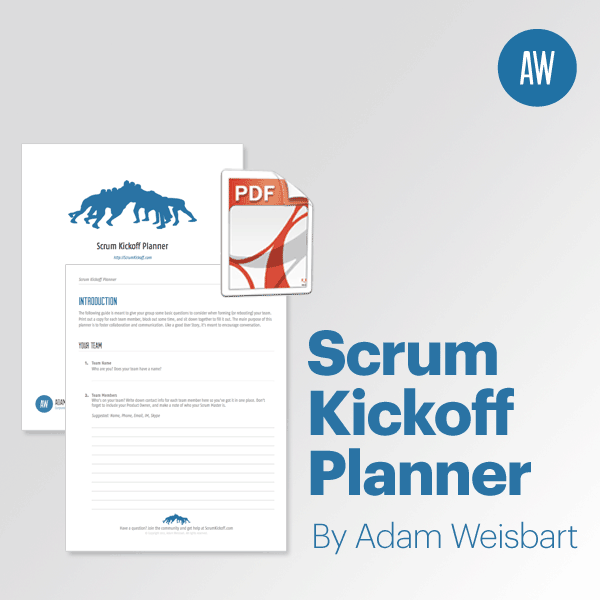
New Scrum Kickoff Planner Aims To Help Agile Teams Start on The Right Track

A new “Scrum Kickoff Planner” has just been released by Adam Weisbart with the aim of facilitating team discussion around the important facets of starting a new Agile team or project.

Source: New Scrum Kickoff Planner Aims To Help Agile Teams Start on The Right Track

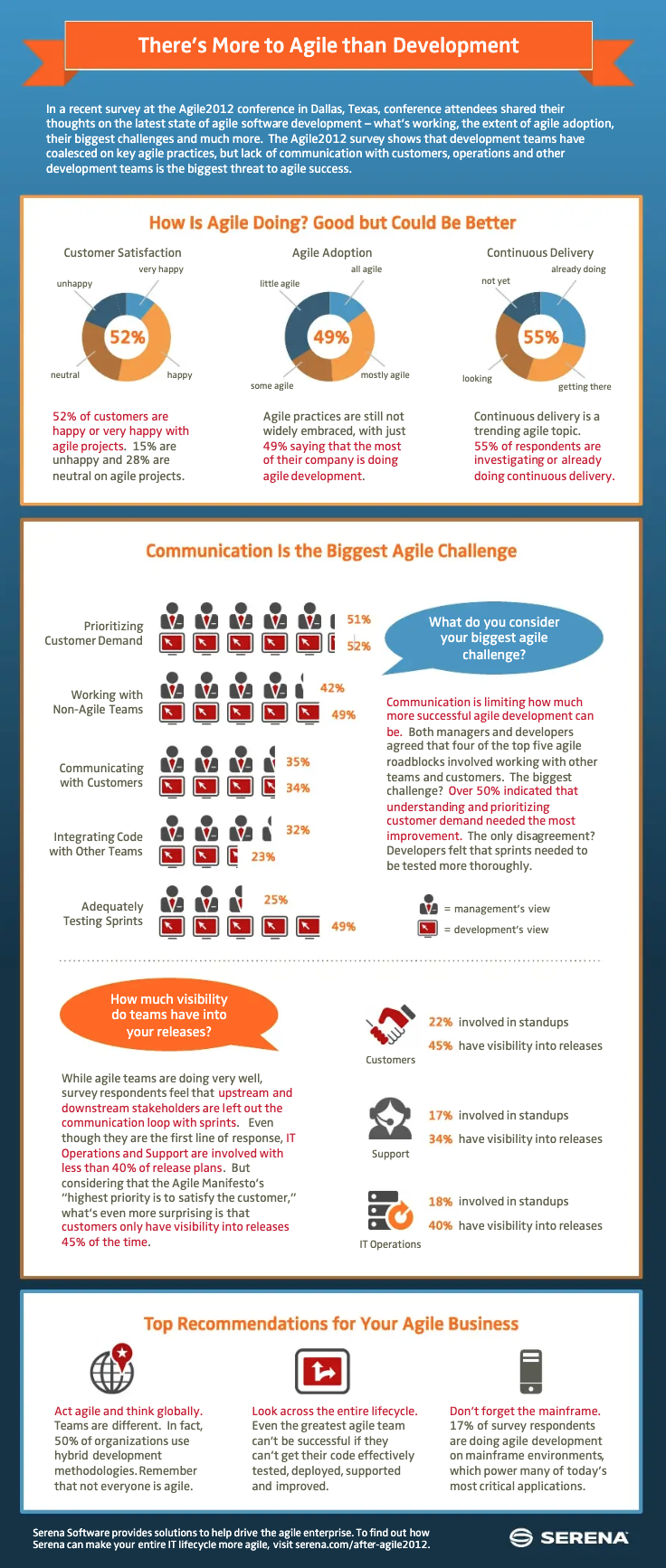
Survey Confirms Biggest Agile Challenges Are Communication and Continuous Improvement

A new survey, conducted by Serena Software at the recent Agile 2012 conference in Dallas, Texas has confirmed that whilst projects using Agile are working well, they could be much better and some of the biggest challenges include upsteam and downstream communication.

Source: Survey Confirms Biggest Agile Challenges Are Communication and Continuous Improvement

Fusion 2012: Going All XP On Your Business

FusionMy presentation from Fusion 2012 called “Going All XP On Your Business” is available on Slideshare.

When XP and Scrum were devised over 10 years ago, they were created to improve the delivery of software development projects. As many enterprises have matured in the Agile adoption, many of the business users on IT projects are now attempting to use Agile approaches on their own non-IT projects.

In this session we will cover using Agile in a non-IT environment and demonstrate how the original XP practices map extremely well over to business processes. And how those in SD can help your business counterparts.

Throughout the talk I will be referencing back to specific examples and case studies that we have experienced
in our organisation as we have rolled out agile processes across the enterprise. We’ll look at:

  • Agile values for non-software development, including an updated look at the agile manifesto.
  • Agile principles and why they make good business sense.
  • Agile practices (such as TDD, standups, retrospectives, storycard elaboration and acceptance criteria
    and planning approaches) and how to adapt them effectively into a business process (using case
    studies as specific examples).
  • Mapping the XP, Scrum and Kanban practices to work in a business context.
  • Agile vs Kanban and how to decide when which is most appropriate.
  • What a business storycard looks like and why the elaboration and acceptance criteria are important.
  • Project delivery and how iterative delivery applies (and what delivery looks like in a non-software development project).

Episode 35: Scrum Shortcuts Without Cutting Corners

The Agile Revolution's avatarThe Agile Revolution Podcast

Ilan GoldsteinRenee, Craig and Ilan Goldstein talk at Agile Australia 2012 about Scrum Masters, conferences, writing a book and the state of Agile amongst other things.

Ilan is the Director at AxisAgile, and he is the author of the Scrum Shortcuts Without Cutting Corners blog. He is currently writing a new book with the working title “Scrum Shortcuts Without Cutting Corners” for Addison Wesley as part of the Mike Cohn Signature Series.

TheAgileRevolution-35 (33 minutes)

View original post

Episode 29: Offshoring at IBM

The Agile Revolution's avatarThe Agile Revolution Podcast

IBMCraig, Tony and Renee talk about the news Scrum Inc style, discuss the coolness of Lego for reporting, chat about Net-Map and discuss the state of IBM.

Quotes:

“Anyone who has never made a mistake has never tried anything new” – Albert Einstein

“The greatest waste is failure to use the abilities of people. Learn their frustrations and contributions they’re eager to make” – Deming

View original post 150 more words

Seven Options for Handling Interruptions on Agile Teams

Interruptions are something that every team has to deal with and, if not managed appropriately, they can potentially have a detrimental affect on their ability to deliver. In a recent post on the Agile Advice blog, Mishkin Berteig described seven options that teams could consider to deal with interruptions when using Scrum or iterative Agile approaches.

Source: Seven Options for Handling Interruptions on Agile Teams