At Agile 2012 in Dallas, Texas, Craig chats with Declan Whelan, a Canadian Agile Coach at LeanIntuit, the CTO and co-founder of a new startup called Printchomp and a newly elected member of the Agile Alliance board. Amongst other things we talk about pair coaching, running a Lean Startup, the direction of the Agile Alliance and the future of Agile.
When XP and Scrum were devised over 10 years ago, they were created to improve the delivery of software development projects. As many enterprises have matured in the Agile adoption, many of the business users on IT projects are now attempting to use Agile approaches on their own non-IT projects.
In this session we will cover using Agile in a non-IT environment and demonstrate how the original XP practices map extremely well over to business processes. And how those in SD can help your business counterparts.
Throughout the talk I will be referencing back to specific examples and case studies that we have experienced
in our organisation as we have rolled out agile processes across the enterprise. We’ll look at:
Agile values for non-software development, including an updated look at the agile manifesto.
Agile principles and why they make good business sense.
Agile practices (such as TDD, standups, retrospectives, storycard elaboration and acceptance criteria
and planning approaches) and how to adapt them effectively into a business process (using case
studies as specific examples).
Mapping the XP, Scrum and Kanban practices to work in a business context.
Agile vs Kanban and how to decide when which is most appropriate.
What a business storycard looks like and why the elaboration and acceptance criteria are important.
Project delivery and how iterative delivery applies (and what delivery looks like in a non-software development project).
Craig chats with Peter Saddington (an Agile Coach and Consultant who is probably best known as the face behind Agile Scout) at Agile 2012 in Dallas, Texas about Agile in the US Military, the top lists on Agile Scout, his newly rewritten book “The Scrum Pocket Guide” and the state of Agile (or “Raccoon”!)
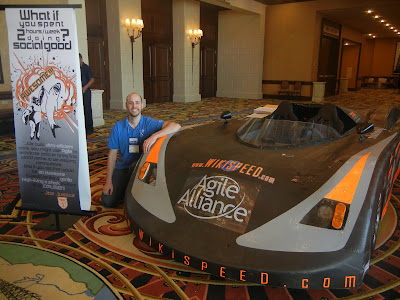
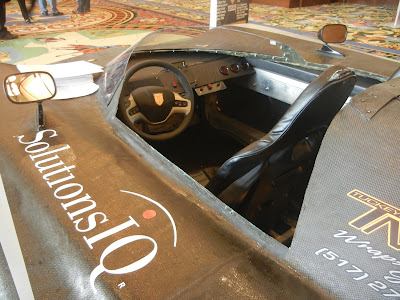
Craig chats with Joe Justice from Wikispeed at the Agile 2012 conference about extreme manufacturing and using Agile for social good to create a 100 mile per gallon car.
Joe is the founder, CEO and team leader at Wikispeed (by night) and an Agile Consultant for SolutionsIQ (by day).
The final day of Agile 2012 in Dallas, Texas and a morning of keynotes. It was announced that they had received over 800 submissions and selected 200 presentations. Also interesting was the fact that the band of volunteers have 2 daily scrums and self organise their sessions!
Keynote: Adventures of an Accidental Entrepreneur: A High Tech Teleradiology Venture from India
international teleradiology – started small, covered the night shift at Yale from India, considered too radical for Yale, decided to set up themselves
the one closest to the future has the best view
believe in yourself, if you can see the future and have a dream, push along with it
focussed on quality, first Indian company to get the gold seal
dream big, we are often constrained by the limitations of our own mind – built a big space to house a small company initially
tempted to a million dollar buyout – money is a distraction, could have been a one way street to obscurity (Forbes India article)
struggled with bandwidth, electricity, no senior management to lean on – stick it out
anti-outsourcing sentiment, particularly from the media in the USA, realised that people only remember that you were in the newspaper, not what for
Singapore had a shortage of radiologists – reduced turnaround from 3 days to 1 hour – quality wins, even when competition enters
greatest need is in Africa – use the same domain knowledge for social good
used one reading centre in India to cover multiple hospitals (efficiency of scale), covering USA night in Indian day, also have a team in Israel to have full day coverage
Singapore was using the same technology but a different need (turnaround time rather than coverage)
did not cause job displacement – freed doctors up to cover more patients locally
implemented a 7 minute daily huddle to replace monthly meetings, had to break culture of not reporting bad news – hospitals liked the responsiveness
do eco-friendly visits – use Indian electric cars
HR Consultants said they were doing everything wrong – ignored them, broke existing cultures – hired full time masseuse, wear masks – its not just the paycheck it’s the small things that make people feel wanted
people did not want to work on Sunday – despite double or triple time – need to find innovative solutions and constantly find innovations to stay afloat (Israel)
built own product – if you have a great idea, get help implementing it – RADSpa
internal software group – developers and doctors were not cooperating – told then to treat us like an external client, bid for the work (coopetition – cooperation in competition)
set up a new clinic – no business plan, just a doctor and good quality service – not everything needs a business plan, every thing needs passion – do what you love and the money will follow
to improve our way of working, we need to fundamentally improve our institutions
how do you develop a car in a garage that gets better mileage and is more aesthetically pleasing
Wikispeed is all volunteers – some highly specialized, some just eager to help
the Wikispeed CNC machine cost $20,00, big auto companies have machines that are over @100,000,000, that is 1/500,000 of the cost! – better not because of the tools but because of the way of working
iterate every 7 days
ideal is to make society a better place
there’s a trend that is disrupting all industries, called Agile, all the 10 big IT companies are all or mostly Agile
manufacturing is like software 10 years ago, products are based on what the customer wanted 10 years ago
XM – extreme manufacturing – what the customer wanted 7 days ago – first manufacturing company to have that model
manufacturing is slow because the processes are costly to change
the Wikispeed car is built in 8 parts, completely interchangeable
originally started to win the X Prize, came 10th, while other teams were planning, they built tests (TDD) – had initial design on the road in 3 months
our approach – Agile – might be the biggest change since the industrial revolution
all tools to run a distributed team are free, did not exist 10 years ago
newest shop is in New Zealand (none in Australia)
history has been building up to Agile
John Deere – open source modular tractors – call the process frugal engineering, when they built the 8030 tractor despite being over budget and people working over time they thought they had been successful – thinking about Wiki Deere now
MakerPlane – open source aviation project, using Wikispeed model, Boeing looking at their approach
Boeing visited the Wikispeed garage in Seattle – “our tooling is better, but culturally you are so far ahead of us”
Tait Radio– devised using a recorder to record noises for testing of emissions, makes audio devices, now using Scrum to build products – text fixtures are cardboard, had been doing standups, introduced retrospectives and team stewards – developed a product in a week
send middle managers back to product work , analytics and budgeting goo back to weekly funding cycles – get more nimble management
safety iteration – initially took months, now takes days, cost $10k for a crash test so can’t afford to run it every 7 days, but they learn from real test and run simulations every 7 days
went to Detroit auto show – was waiting for sarcasm but got “good job, go get ’em!”
2013 Roadster reveal – built in 2 sessions at the conference, only one person in the sessions had built a car, used pairing to learn – this vehicle is going to the Boeing museum in Seattle
Team Wikispeed members spend 2-4 hours per week solving social good
actively looking for product owners to find the next social good to join team wikispeed
how do we change financial stupidity? – agile accounting, lean accounting
Day 3 and 4 at Agile 2012 meant a large number of interviews for InfoQ, as well as some podcast interviews and numerous hallway discussions. As a result I have combined both days into one post. Here are my notes from the sessions that I attended.
That Settles It! Techniques for Transparent & Trusted Decision-Making on Your Agile Team
They are a set of values that impact how we will make decisions.
Traps, risks and blunders:
group dynamics – fallacy of the flawed leader, no diversity in the group, inability to consider alternatives, lack of diversity in the group, group-think (striving for consensus that drives down alternatives)
delegative – group decision, decision leader may delegate decisions to a sub group
democratic – discuss and take a vote
consensus – leader and group together agree based on unanimous decision
consultative – where the group collaborates and consults to a person to make a decision
consensus – all legitimate concerns should be addressed that impact the group, stakeholders all need to be there, it is not a compromise, there is no bargaining, this is and/both thinking
4S – stake, stakeholders, speed and sustainability of a decision
We then created a 2D gradient to map out decison styles – delegate -> democratic -> consultative -> consensus
edict – do it, not very sustainable, used 35% of time, worked 38% of the time
persuasion – used 49% of the time, worked 44% of the time
participation – used less than 16% of the time, worked 80% of the time, delegated to a group or sub group
intervention – delegated but group had guidelines and benchmarks to make a decision, used less than 16% of the time, worked 90% of the time
We then talked about values:
trust – contractual (shared goals and boundaries), communication (transparent, honest and frequent communication, walking the talk), competency (respectful of others ability of what they do on the team and learning how we can do better as a team, honour our agreements) – is a key part of making decisions
values for group effectiveness – people need valid information in a timely way to make a free and informed choice, decision rules that enhance internal commitment
Group versus individual decision making:
accuracy – better at group level – more alternatives, diversity, more points of view
acceptance – group
creativity – group
efficiency – individual
speed – individual
We then had some final thoughts and questions:
collaboration pattern – decide how to decide – need to make a decision but know you have made it
common decision rules – delegate, decide without discussion, negotiation, majority vote, spontaneous agreement, arbitrary, consensus leader decides after decision
gradient of agreement – endorse, agree with reservations, disagree cannot support (but won’t block), block
to reach closure – with decision leader decide on how to decide, with the whole group clarify the decision process, close discussion, clarify proposal, poll group using gradient and decision leader decides or chooses further discussion
RAPID – effective organisations have clarity in roles around decision making – recommend, agree, perform, input, decide (like a RAPSI)
In keeping with the theme of Agile in non-software, I was very interested in hearing about this initiative from Luke Hohmann from Innovation Games. A copy of his slides from SXSW appear to be similar to those he presented here.
San Jose, 10th largest city in the USA, in deficit by $115 million, Luke ran into the mayor on a plane…
games – have a goal, arbitrary constraints, interaction rules, voluntary participation (Jane McGonical) – most people think fun and entertainment when they think game, now we use the term serious games
serious games – advergames (get you to buy stuff eg. Burger King), edutainment (CBS have news footage for school students), news games, simulations, exergames (Nike have a game to escape zombies to entice running), innovation games
executives love games because they involve strategy
San Jose have a yearly planning commission meeting – worse meeting ever, after a powerpoint, all the citizens were given a roll of nickels to vote on the areas that needed attention (the smarter citizens kept the roll of nickels!), got an accountancy firm to count the results, what happens if nobody voted on health care?
convinced them to try an innovation game because you can blame the consultant!
first, what is the problem – had already cut the budget to the bone, so the problem was prioritisation
buy a feature game– give people 40% of the total, give them a ranked list, the reasons for the ranking and the conditions of the acceptance, they can buy what they want but they need to collaborate often
adapted this game to imagine these are the things cut from the budget but we have no money to fund them (green list) and here are the things you can cut from the budget to try and fund them (red list) – the goal of the game was not for everybody to prioritize everything because there are essential services regardless
people respond better with physical money rather than things like poker chips
for a serious game to be serious it must affect the player – they were suggesting things like cutting 5 firemen per truck to 4 to fund anti-gang warfare and park rangers (for example)
each table had 7 citizens, 1 facilitator and 1 observer – used soloid sticks strapped to pant stirrers that were held up to signal questions – blue for police, red for fire, etc… and the head of that department would answer the question, citizens were seated from different districts at a table so they could not gang up on other districts
red items needed 100 percent unanimous agreement at the table
because people are citizens and dealing with real issues they tend to leave their political beliefs out of the discussion
San Jose citizens chose pavement maintenance over libraries – if the mayor went on record to cut libraries then the friends of libraries group would have come out in disagreement but there is no friends of pavements group
planning the first game took three months
when governments say they will cut the budget by 10% they are never specific, made them specify that cut with a smart goal (eg. no new helicopter)
the agile community donated quarter a million dollars of services and materials pro bono
the government took action (reductions in fire, police, delays in libraries and elimination of services) and citizens loved the process
pushed the boundaries in 2012 – tested new taxes, buy one or none and adding new proposals
budget games are better than budget puzzles – about making cuts not about education and they are collaborative
prune the product tree – usually for road mapping, used this to identify community service projects, which got shaped into initiatives which were added into buy a feature that the city would seed funding for but the citizens would need to donate time to implement them
games work for business but needed changes to work for governments – hard to have anonymity in a way the preserves free speech, coordinating large number of players, minimizing bias
gamification – need to ask can the average citizen play this game, need to level citizens up and play more sophisticated games
Innovation Games have a network of facilitators and have built trust, but they don’t have all the people and answers – created Every Voice Engaged
buy a feature works – a shared commitment using a scarce resource, citizens now sign up to community service initiatives using the same ideas
called it a priority budgeting exercise instead of using the word game
all the numbers come from the budget and are reviewed by an independent neighbourhood committee
neighborgoods – reducing consumer goods, sharing materials in the community
draw roadmaps as trees so you can talk about the -illities, show the critical infrastructure at the root
our aspirations as a community should be more than decreasing the length of sprints from 20 minutes to 15 minutes – we can do better!
The final story Luke told was how one disadvantaged woman was almost not going to turn up the session because they had always been a waste of time. At the end of the game she stood up and said that she felt empowered because she ” had the same amount of money as everybody else at the table” and was able to make real decisions. Enough said.
Demanding Technical Excellence and Professionalism
Robert “Uncle Bob” Martin presented this session. I had seen most of this content before and did not hear anything much new (I also had to sneak out 10 minutes early to meet up for an InfoQ interview). What was much more interesting was a discussion I had Andrew Prentice from Atlassian at the Conference dinner about the validity of many of the claims that were made in the session (I think we should strive for them but Andrew seemed to think it depends on time and place and the developer).
bad code, 32000 lines of code in two classes (Order and OrderImpl) – what created that sheer irresponsibility? The fault lies with programmers – they chose to write it that way – that choice is always the wrong choice
our craft is defined – we have been writing the same sort of code for 40 years – assignment statements, if statements and loops
wear the green band – acceptance and willingness to follow my craft and unwillingness to comprimise the craft
These are my expectations from craftsmen:
short iterations – close the feedback loop, down to a week or shorter, deliver working code that passes all the tests and is ready to deploy, programmers should be working in short cycles 20 seconds or less (red-green-refactor loop)
never be blocked – never wait for anyone, if there is a blockage then go and fix the problem, don’t be stymied!
screaming architectures – does your code execute the use case without all the external architectures – should scream I am an accounting system not a Java web system, delay for as long as you can decisions about the database or web server , isolate the business rules so you can switch out the database at a moments notice, use decoupled architecture to focus on business rules, these architectures slow down tests
incremental improvement over grand redesign – grand redesigns tend to expensive and open to failure
clean code – output should always be clean and kept clean, boys scout rule – do a random act of kindness to the code (leave the camp ground cleaner than you found it)
go fast, go well – need to flip the professional bit in your head, the only way to go fast is to do good work
TDD – proportion is growing over the years, can’t write any production code until you have written a unit test, don’t write more of a unit test that is sufficient to fail, don’t write more production code that is sufficient to pass the failing unit test, developers initially find these rules stupid, everything worked a minute ago, always a minute away from working code, don’t want to spend time debugging but want to spend time writing working code, development teams with a long list of defects over a page is not being responsible, confidence to change the code and ship it
100% code coverage – what lower number makes sense, there is no other number that makes sense, personal ethics that the tests have good coverage
QA should find nothing – the QA organisation should wonder why they exist
statistical estimates – use velocity and it is not a failure if you deliver less, predictable team should have a flat velocity
After Dark
Wednesday night was the Rodeo Circuit which was an opportunity to collect stamps while visiting all the exhibits. I was lucky enough to win a netbook from the Agile Alliance.

 Craig and Renee lob around to Tony’ abode to interview his house guest, Alistair Cockburn. Alistair spends time:






 Craig Smith
You must be logged in to post a comment.