
 Craig continues his daily reports from Agile 2013 in Nashville with some observations on the sessions he attended on day 2.
More in-depth notes will be available on Craig’s blog soon.
TheAgileRevolution-61 (17 minutes)
Craig continues his daily reports from Agile 2013 in Nashville with some observations on the sessions he attended on day 2.
More in-depth notes will be available on Craig’s blog soon.
TheAgileRevolution-61 (17 minutes)
 Craig is in Nashville, Tennessee in the USA for the Agile 2013 conference,, and recaps the opening keynote as well as the day 1 sessions he attended.
More in-depth notes will be available on Craig’s blog soon.
TheAgileRevolution-60 (15 minutes)
 Agile Australia 2013 was recently held in Sydney with over 850 attendees and 3 days. Between running a pre-conference workshop, recording interviews for InfoQ, presenting a session and being a MC for a number of sessions, it was a fairly busy time but I did get to sit in on a couple of sessions.
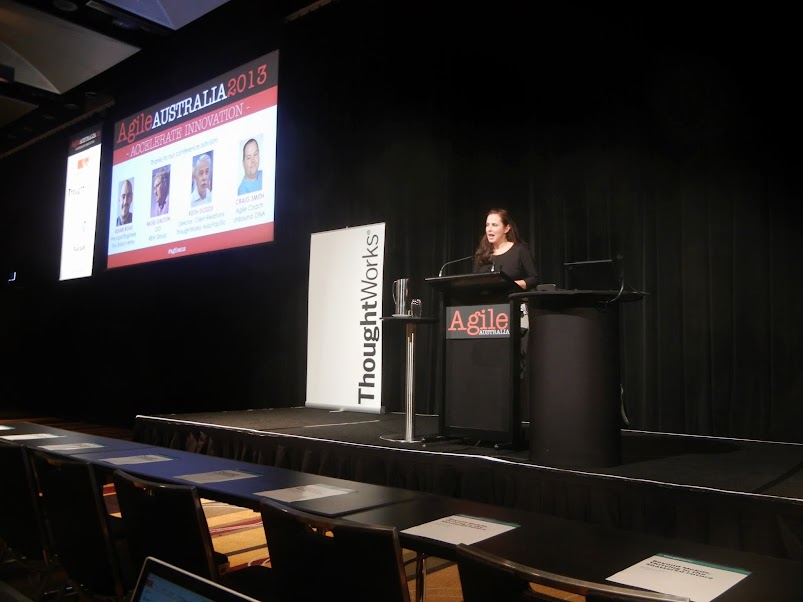
I was once again one of the conference advisors, although this year we introduced the role of Stream Chairs and Reviewers who took the bulk of the review of the 240 plus submissions and, I think, went some way to making the whole selection process more transparent and community driven.
There were a number of pre-conference workshops running on the day before the conference, and on behalf of Software Education I ran an Introduction to Agile workshop for a small but engaged group of people new to Agile. According to the course overview:
This course provides an independent one-day introduction and overview of Agile Software Development. We look at the underlying philosophy and motivation for this trend in software development and examine the core values, principles, practices and techniques that fall under the broad “Agile” umbrella. Independent of any single brand, this course looks at the key factors that are needed to apply Agile effectively and provides an experiential introduction to working this way.
InfoQ was a media sponsor for Agile Australia this year, and being the Australian based Agile Editor for InfoQ, I undertook the organisation iof the recording of sessions and interviews. I recorded a number of interviews throughout day 1 of the conference and I look forward to seeing them available on InfoQ in the coming months.
The session I presented with Renee Troughton had a great turnout and plenty of questions afterwards. The slides are available in a separate post.
In relation to the sessions that I attended, here are my notes.
Mary Poppendieck delivered the opening keynote, her slides are available here.
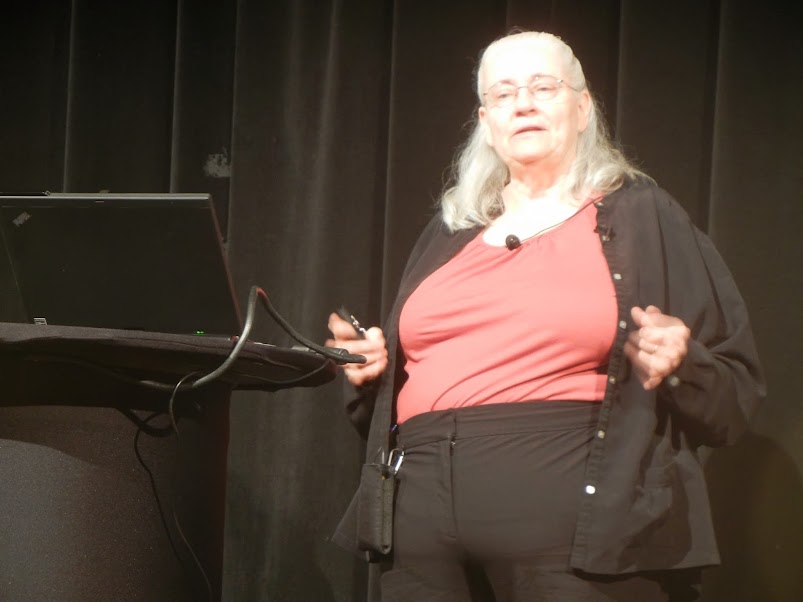
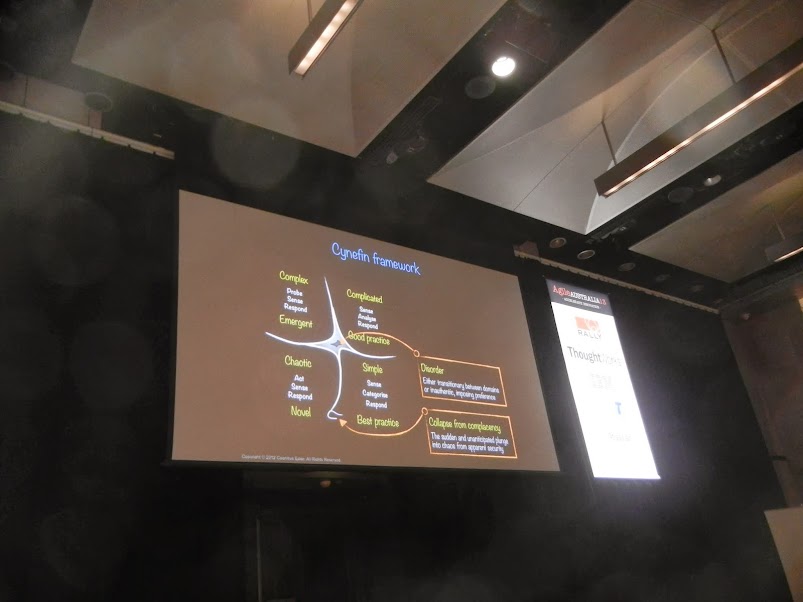
I was quite looking forward to seeing Dave Snowden and hoping his talk would cement in my mind the Cynefin Framework. His slides are available here.
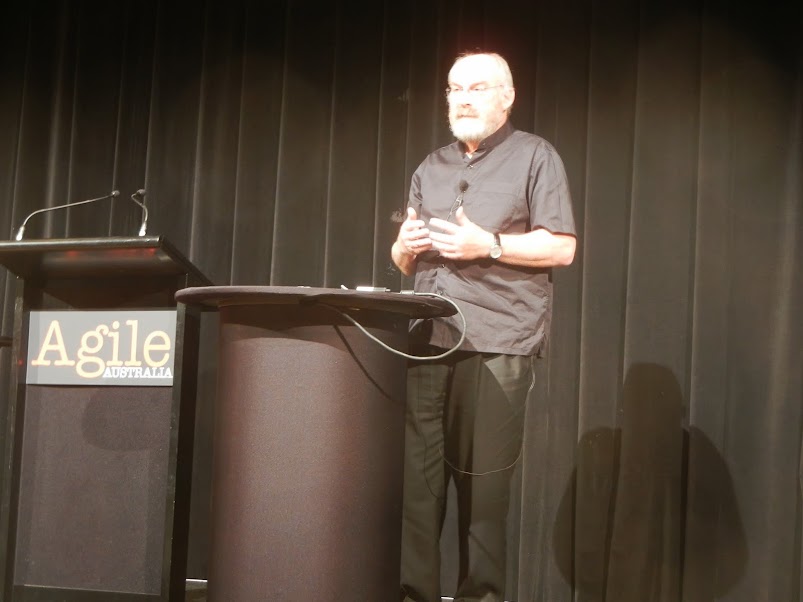
The highlight of the conference for me was to meet and hear from Bjarte Bogsnes, as I have long been a fan of his Beyond Budgeting work. His slides are available here.
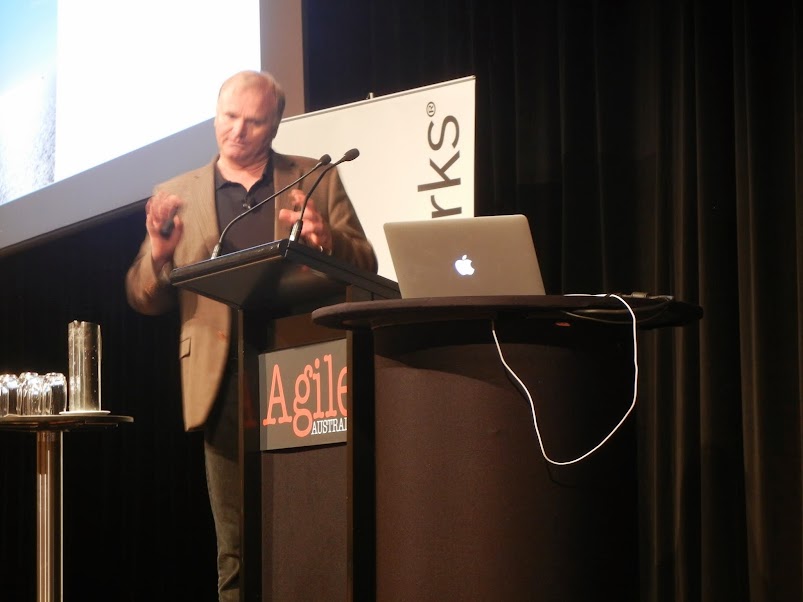
Neil Killick has become the voice of the #noestimates discussion in Australia (whether he likes it or not). His slides are available here.
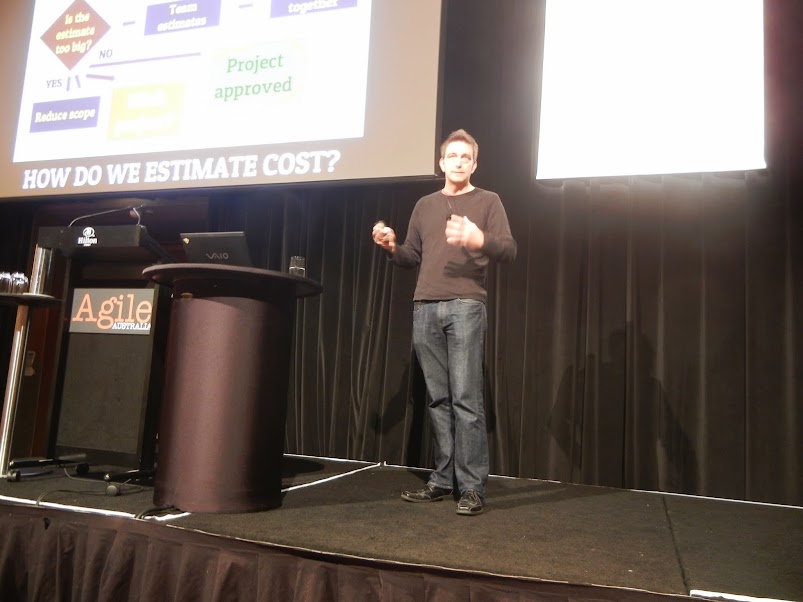
I was the MC for this session that was a coffee table conversation between Beverley Head and Patrick Eltridge, the CIO of Telstra. When I introduced this session, I made the comment that it was interesting to see how Telstra was progressing on their Agile journey and Patrick was at the conference for his third year now; in the first year we didn’t really believe they would be able to make an Agile transformation and in the second year we weren’t sure how much was fact and fiction. In 2013, they are certainly making their presence felt with over 70 people at the conference, a title sponsorship and a number of sessions being presented.
I did not get to hear all of the session, but hear are some snippets I picked up
This discussion also spawned some news articles around graduates mentoring CEO’s and five day interviews.
 Craig and Renee are in Sydney and dangerously podcast after Renee’s one (1) drink and Craig’s two (2) drinks. Along the way they fumble over the following topics:
View original post 147 more words
 My presentation with Renee Troughton from the Agile Australia 2013 conference called “Visual Management: Leading With What You Can See” is available on Slideshare.
Using task boards or story walls is a key Agile practice, but are you making the most of it? Visual Management is more than just putting cards on a wall, it is a growing style of management that focuses on managing work only by what you can see rather than reports or paper being shuffled around. Visual Management allows you to understand the constraints in the system, mitigate risks before they become issues, report on progress from the micro to the macro. Visual Management can also be used to demonstrate to customers and clients where the work they care about is at. This presentation is all about taking the management of your work to the next stage of transparency. Discover:
* How to identify when your story wall isn’t telling you everything and how to adjust it
* What the three different types of story walls are and which one is more suitable to certain circumstances
* Different ways to visualise your product backlogWhy queue columns and limiting work in progress is so important regardless of whether you are using Scrum or Kanban
* How symbols and tokens can be used to give more information
* What else can you use other than story walls to visualise information
* How to ingrain Visual Management into both the team and management structures of your organisation
* Visualising Your Quality, Testing and Team
* What is systemic flow mapping and why is it important
Lynne Cazaly did an awesome visualisation of the talk!
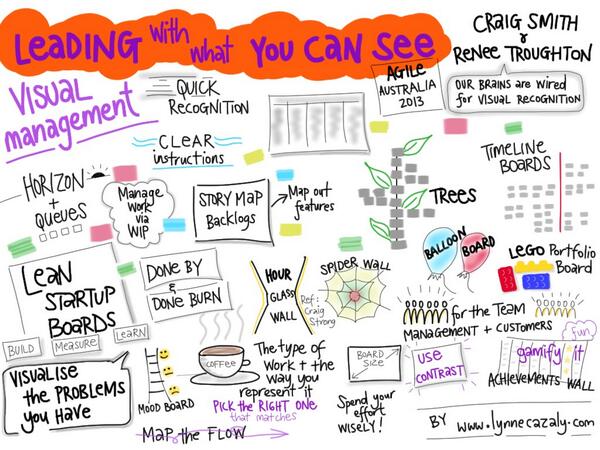
We had some great feedback from people after the talk as well as via Twitter.
Renee also has a (slightly earler) version of the slidedeck online via her Slideshare, with one slide change and one omission…
 Tony, Renee and Craig meet in sunny suburban Sandgate and have an intense debate about the world of Agile while dealing with the 4:01 to Shorncliffe and beeping out Tony’s references to seagulls and respect.
View original post 80 more words
 My presentation from the Brisbane Agile Meetup in May 2013 called “Scrum Masters: The Full Time Role Conundrum” is available on Slideshare.
A replay of the talk delivered by Craig Smith at the recent Scrum Australia gathering in Sydney
The Scrum Guide defines the Scrum Team as being made up of three primary roles: Product Owner, Development Team and Scrum Master. The role of the Scrum Master is often misunderstood, particularly by management, so often questions start to get asked such as “can I share the Scrum Master across teams”, “can the Scrum Master do Project Management” and “can the role be rotated”?
In this talk we will take a look at some of the misconceptions around the Scrum Master role, discuss how it fits into the organisational structure and tackle the age-old question of whether the Scrum Master is a full time role. We will also look at an improvement plan template to help Scrum Masters improve in their role.

Here are some comments from Meetup:
 -world presso… (Juan)
 Craig and Renee rendezvous in Sydney for Scrum Australia and clear the backlog for a way overdue podcast. Whilst Craig battled a cold and Renee a fit of giggles, they discussed:
View original post 37 more words
 My presentation from Scrum Australia 2013 called “Scrum Masters: The Full Time Role Conundrum” is available on Slideshare.
The Scrum Guide defines the Scrum Team as being made up of three primary roles: Product Owner, Development Team and Scrum Master. The role of the Scrum Master is often misunderstood, particularly by management, so often questions start to get asked such as “can I share the Scrum Master across teams”, “can the Scrum Master do Project Management” and “can the role be rotated”?
In this talk we will take a look at some of the misconceptions around the Scrum Master role, discuss how it fits into the organisational structure and tackle the age-old question of whether the Scrum Master is a full time role. We will also look at an improvement plan template to help Scrum Masters improve in their role.
Some of the comments from Twitter included:
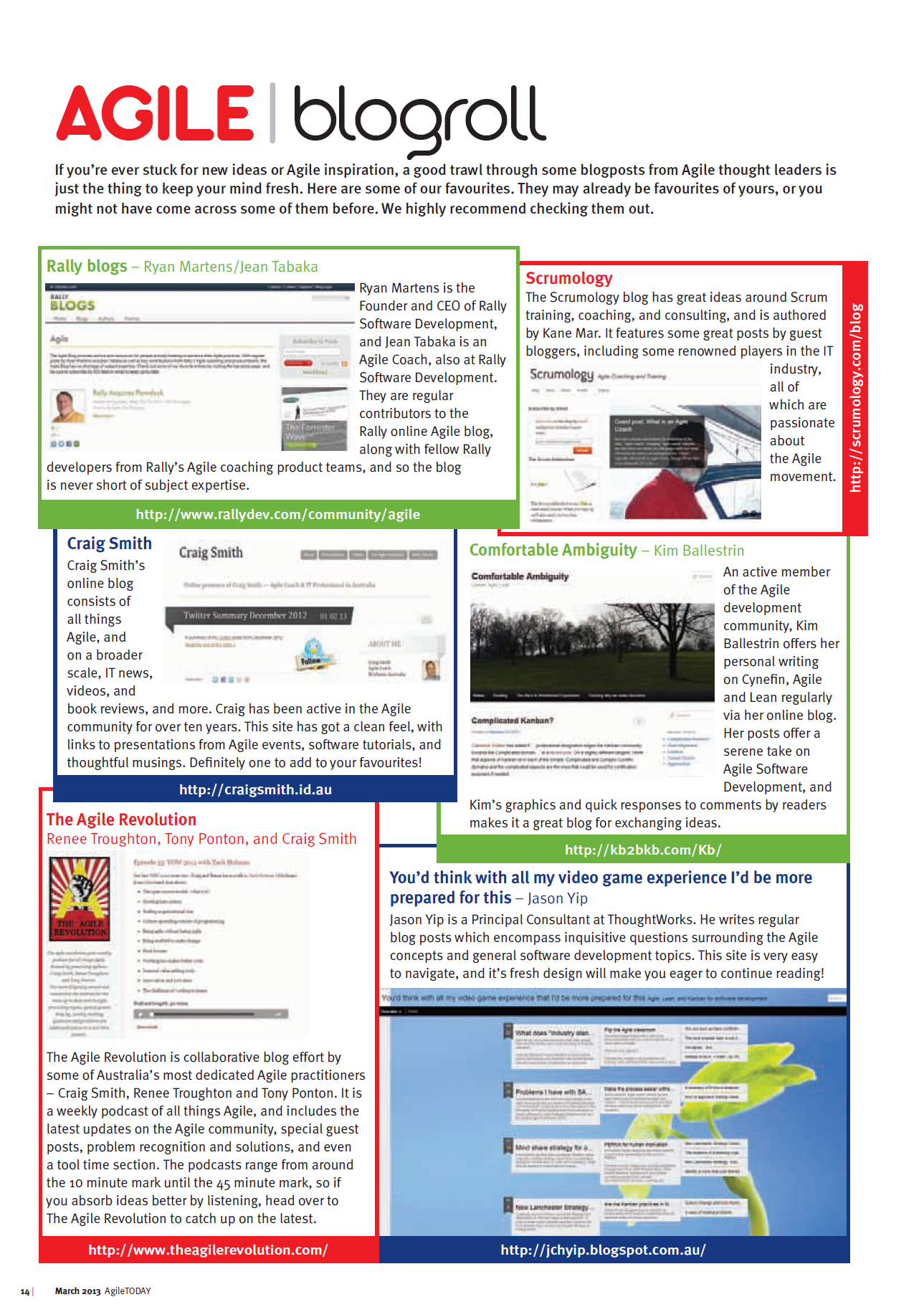
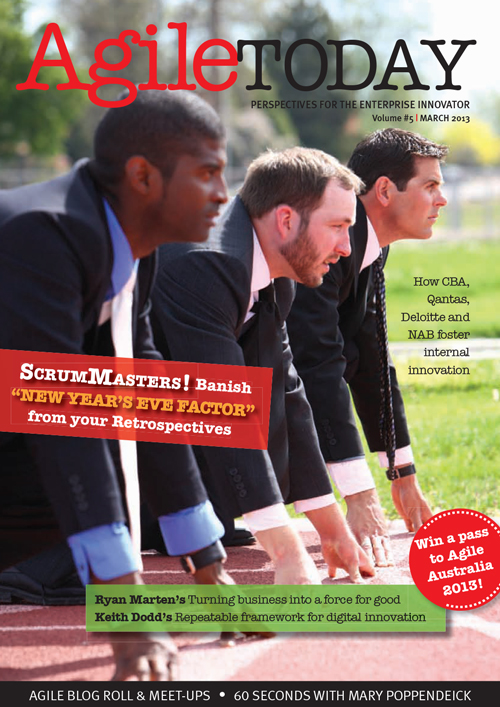 AgileTODAY is a publication associated with the Agile Australia conference. In the March 2013 edition I was featured twice in the Agile Blogroll article for both my personal blog as well as the Agile Revolution podcast.
 Craig Smith
You must be logged in to post a comment.