The Agile Political Landscape Series: DevOps and Teal Independents

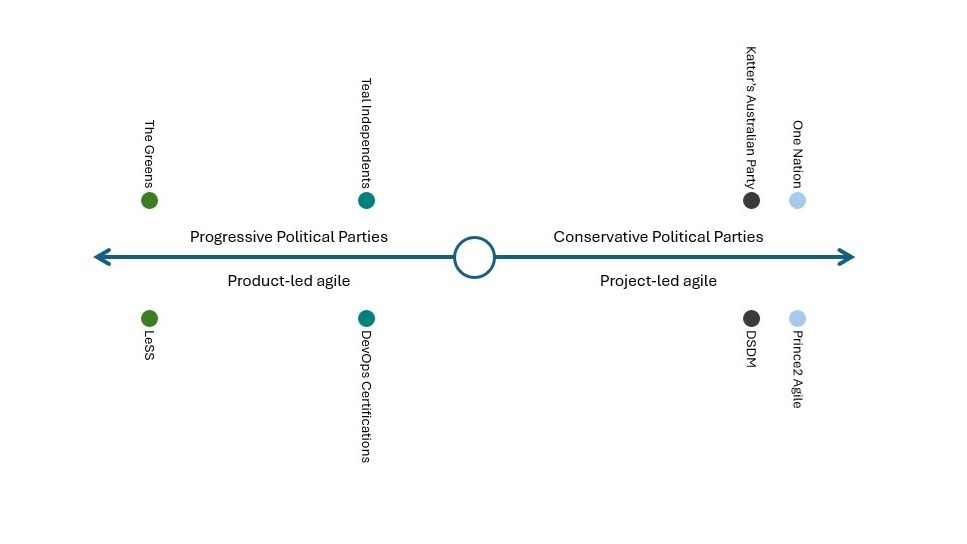
Please note: This is the fourth article in a series that explores mapping agile certifications to what Daniel Luschwitz and I have coined the Agile Political Spectrum. The previous blogs in the series are available here:

  1. What if Agile Certifications were a Political Party?
  2. The Agile Political Landscape Series: PRINCE2 Agile and One Nation
  3. The Agile Political Landscape Series: LeSS and The Greens
  4. The Agile Political Landscape Series: DSDM and Katter’s Australian Party

A note on our political comparisons: These political comparisons are playful metaphors designed to illustrate philosophical positions on the agile spectrum. No certification body was harmed in the making of this analysis.

Every political spectrum needs its bridge-builders. Movements that refuse to fit neatly into traditional categories, that challenge established divides, and that prioritise outcomes over ideological purity. In the agile certification world, that’s DevOps.

DevOps emerged in the late 2000s from frustration with the fundamental divide between software development and IT operations. Developers wanted speed and change; operations wanted stability and control. The result was organisational silos, blame cultures, and slow, unreliable software delivery. In 2009, Patrick Debois organised the first DevOpsDays conference in Belgium, crystallising a movement that had been brewing in organisations struggling with this dysfunction.

The core insight of DevOps was never primarily technical, it was cultural. Yes, automation, continuous integration, and infrastructure as code became associated practices, but the fundamental shift was breaking down the wall between Dev and Ops: shared responsibility, collaborative problem-solving, and optimising for the whole system rather than individual silos. You can’t buy DevOps in a box. You must become it.

There is no single definition of DevOps as it became a set of practices and principles defined by the community. A number of bodies and vendors emerged offering certifications, including those focussed on culture and principles (DevOps Institute, ICAgile, and SAFe), and those on technical implementation (AWS, Microsoft, Google, and others). Like the Teal Independents, these certifications are themselves independent. There is no single governing authority, no party platform, only a shared set of principles. This is part of what makes DevOps sometimes misunderstood. And like the Independents movement itself, the ecosystem continues to grow, with DevSecOps, GitOps, and MLOps extending the same philosophy into new domains.

So who is DevOps’s political counterpart? As our left-progressive but pragmatic certification movement, DevOps maps to the Teal Independents.
The Teals emerged in 2022, winning traditionally Liberal seats by offering something that didn’t fit conventional party lines.  They are progressive on social and environmental issues, yet centre-right on economic policy, focused on fiscal responsibility and business effectiveness. They rejected the false choice between environmental action and economic pragmatism.

DevOps certifications mirror this exactly. Progressive on culture by breaking down silos, challenging hierarchies, emphasising collaboration; but pragmatic on delivery through efficiency, automation, reliable systems, measurable outcomes. Just as the Teals blended blue economics with green values, DevOps blends cultural progressiveness with operational pragmatism. Both movements emerged from rejecting a false dichotomy that had paralysed their respective fields.

This positioning explains where DevOps sits on the agile political spectrum. It sits firmly on the left-progressive side because it enables something fundamental – continuous delivery. The technical foundation that makes product operating models possible.

Think of it this way. An organisation might reorganise around product teams, leadership might embrace product thinking, but if it still takes weeks to get a change into production with manual testing, change approval boards, scheduled release windows and the like, then the organisation chart has changed but the operating model hasn’t. DevOps is what closes that gap. Without it, the transition to product-led ways of working stalls at the delivery pipeline.

For practitioners, DevOps certifications provide essential frameworks for understanding software delivery as a sociotechnical system.  It speaks to developers who need to care about operational concerns, and to operations professionals who need to embrace change and automation. For organisations, DevOps practices aren’t optional extras to bolt on after establishing product teams. The capability to deliver continuously must be built deliberately, and that requires both cultural change and significant technical investment.

Like a good independent MP, DevOps certifications won’t hand you a four-phase implementation plan. But they will help you understand what genuinely needs to change (culturally and technically) to make continuous delivery real.

This article was originally published on LinkedIn by Daniel Luschwitz. The next article in the series is Kanban and the Australian Democrats.
Episode 191: Accelerating DevOps with Jez Humble

The Agile Revolution's avatarThe Agile Revolution Podcast

Craig and Tony are at Agile Australia in Sydney and after many years of chasing him around finally get to speak to Jez Humble, co-author of many fine books including “Continuous Delivery“, “Lean Enterprise“, “The DevOps Handbook” and “Accelerate” and they discuss:

View original post 69 more words

Episode 187: Domain Driven Yak Symmathesy with Jessica Kerr

The Agile Revolution's avatarThe Agile Revolution Podcast


Tony and Craig are at YOW! Conference in Brisbane and chat to Jessica Kerr, software developer, consultant and symmathecist (look it up or listen to the podcast) and apart from our first live podcast sneeze they talk about:

 
  • YOW! 2018 keynote “The Origins of Opera and the Future of Programming
  • YOW! 2018 talk “Shaving the Golden Yak
  • Great teams make great people – if you want to become great as a developer, focus on the team
  • You can’t document what is obvious to you – whenever you say the word obviously, replace it with “I cant explain it, but…”
  • Yak shaving – all the tasks that you do that get in the way of your work
  • If you are an agile person but you wish agile had more code in it – go to the Domain Driven Design community
  • We need to embrace complexity…

View original post 34 more words

Episode 172: Business Agility & DevOps Health Radars with Sally Elatta

The Agile Revolution's avatarThe Agile Revolution Podcast

Craig catches up with Sally Elatta, president of Agile Transformation and the founder of Agility Health Radar and they chat about:

  • Companies struggle to get the metrics to know if their agile transformations are making a difference, hence the creation of Agility Health Radar
  • Business Agility pillars – customer seat at the table, lean portfolio management, organisation structure and design, agile framework, leadership and culture, make it stick, technology agility and agility metrics
  • DevOps pillars – faster value delivery, higher quality, culture of improvement and building the right product

TheAgileRevolution-172 (27 minutes)

View original post

Episode 149: Continuous Delivery with Dave Farley

The Agile Revolution's avatarThe Agile Revolution Podcast

Craig, Tony and honorary Revolutionist Pete Sellars are at YOW! Conference and sit down with Dave Farley, co-author of “Continuous Delivery” and they chat about the following

  • There are anti-patterns with doing XP at scale, continuous delivery was born from the learnings from that
  • Continuous delivery is just extending continuous integration to more of the software development practice (and continuous integration requires test driven development)
  • Continuous delivery works because it is the application of the scientific method to software development
  • If you work in an iterative, imperative, experimental way and you take continuous learning seriously and take cycle time as a serious measurement you will naturally drive out agile, lean, systems theory and DevOps
  • YOW! 2016 presentation “The Rationale for Continuous Delivery
  • Most common two ways to introduce continuous delivery to your organisation – need to get cover from senior management to make change or…

View original post 250 more words

Episode 142: Agile and SSLM at cPrime with Zubin Irani

The Agile Revolution's avatarThe Agile Revolution Podcast

Craig sits down with Zubin Irani, the CEO of cPrime, at the Agile 2016 conference in Atlanta and chats about:

  • CPrime is the largest Atlassian implementer and platinum partner
  • Need to make sure that ALM products work with your process and support and enable it
  • One of the big gaps in the Coaching world is coaches are staying away from technology – we have to leverage technology
  • SSLM (Software Service Lifeycle Management) – Agile, DevOps and ALM initiatives are fragmented, they need to interact and have dependencies on each other
  • 5 big trends – Agile beyond development, DevOps is taking centre stage, every company is a software company, digital transformation and the talent crunch
  • Agile Hardware – how do you build hardware in a more iterative way, how do we think about hardware and software being built together, how do we think about different about hardware design to…

View original post 25 more words

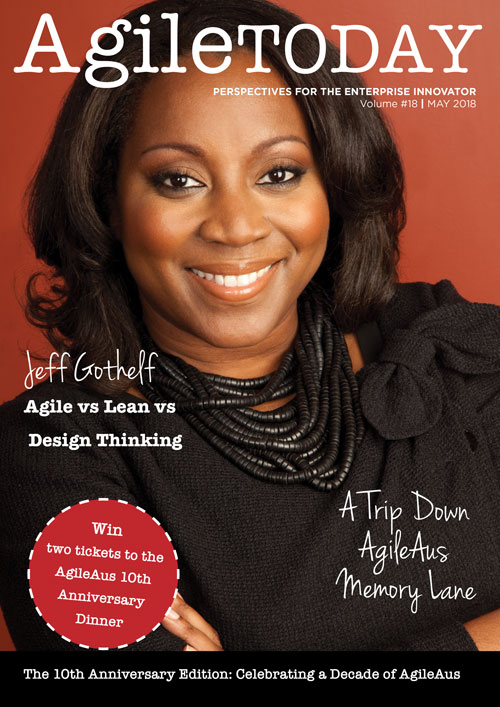
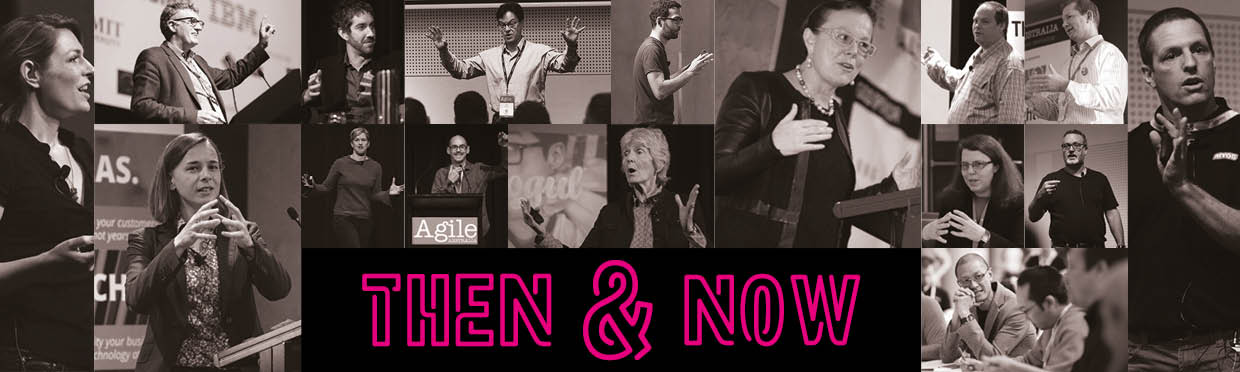
Agile Australia Then & Now (AgileTODAY)

AgileTODAY is a publication associated with the Agile Australia conference. In the May 2018 edition I was invited to reflect on one of my past presentations and how it stood the test of time.

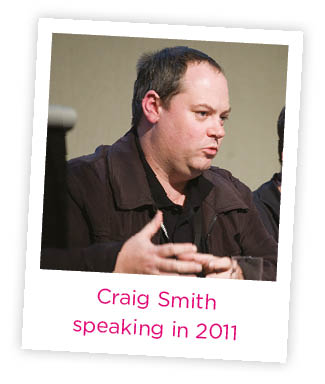
Craig spoke on “The Speed to Cool: Valuing Testing and Quality in Agile Teams” at Agile Australia in 2011. Craig is an Agile Coach and Director at Unbound DNA and works as a Trainer and Consultant at Software Education.

In 2011, my talk highlighted the need for a greater understanding of the changing role of testing in Agile environments and the need to build quality into our solutions from the beginning.

Fast forwarding to 2018, the community is improving in this space but still has a long way to go. The rise in popularity of DevOps has helped immensely in this area, although it astounds me how many teams and organisations I work with still do not have some of the basic building blocks in place (like continuous integration or sometimes, worryingly, version control). Many organisations still have a large focus on manually testing via the UI which becomes increasingly riskier and slower as the importance of digital continues to rise.

In my talk, I spoke about what is now referred to as the “three amigos” concept. In the ‘conversation’ around a user story, three key principles outline how to actually implement the work:

  1. When developers and user representatives collaborate we get a better understanding of the specification or the requirements.
  2. When testers and user representatives collaborate we get a better understanding of the acceptance criteria and how we will meet our agreed definition of ‘done’.
  3. When testers and developers collaborate we get a better understanding of quality, but also get the value of pairing on automated testing.

Approaches such as Behaviour Driven Development have risen in popularity and support the above model well but, as I highlighted in the talk, this requires behavioural changes across the team. Mainly:

  • User representatives need to have a greater testing involvement, working closer in real time with testers.
  • Testers need to build technical knowledge and work closer in real time with developers, understanding developer tests and interfaces to avoid rework and improve quality.
  • Developers need work closer with the user representatives on the requirements collaboration, as well as with the testers to ensure that testing artefacts are left behind.

We need to appreciate testing as a team skill set and not as a job or an anchor. While this now occurs more frequently in the Agile community, many organisations still have a long way to go. Testing remains an important skill, but mindsets and skill sets need to change to fully embrace an Agile way of working.

Episode 135: DevOps & Electric Cloud with Anders Wallgren

The Agile Revolution's avatarThe Agile Revolution Podcast

Craig speaks to Anders Wallgren from Electric Cloud about Continuous Delivery and DevOps at the Agile 2016 conference in Atlanta. The topic of conversation included:

  • Release It!” by Michael Nygard
  • We can’t declare victory on Agile, but it is the winning methodology
  • We are now plumbing the last mile of deployment and we also need to move it left
  • Joshua Kerievsky Agile 2016 keynote on “Modern Agile
  • Software process is like human DNA, we are different but essentially the same
  • Gene Gotimer Agile 2016 talk “Experiences Bringing Continuous Delivery to a DoD Project
  • You will fail if you don’t pay attention to the cultural aspects of Agile and DevOps
  • State of DevOps Report
  • Critical to automate everything to eliminate manual process errors and loss of valuable data
  • DevOps is starting to push into complex and regulated environments like finance, health and aerospace with an…

View original post 58 more words

Jenkins Gets a Facelift with Release of Blue Ocean 1.0

Jenkins, the popular open source automation server that is used by development teams worldwide for continuous integration and continuous delivery pipelines, has recently announced the general availability of Blue Ocean 1.0.

Source: Jenkins Gets a Facelift with Release of Blue Ocean 1.0

Episode 118: YOW! 2015 Brisbane Vox Pop

The Agile Revolution's avatarThe Agile Revolution Podcast

yow_2015_conference_-stacked-pngCraig and Tony are once again roaming the lunch hall at YOW! 2015 in Brisbane, where they catch up with a number of people including:

View original post 27 more words