 Lyssa Adkins and Michael Spayd discuss the discipline of professional coaching, leading and facilitating conflict and the right view when thinking about conflict.
Source: Lyssa Adkins and Michael Spayd on Professional Coaching and Leading Conflict
Lyssa Adkins and Michael Spayd discuss the discipline of professional coaching, leading and facilitating conflict and the right view when thinking about conflict.
Source: Lyssa Adkins and Michael Spayd on Professional Coaching and Leading Conflict
 My lecture for students in SWEN302 Agile Methods at Victoria University of Wellington called “Going All XP On Your Business” is available on Slideshare.
 My presentation from Fusion 2012 called “Going All XP On Your Business” is available on Slideshare.
When XP and Scrum were devised over 10 years ago, they were created to improve the delivery of software development projects. As many enterprises have matured in the Agile adoption, many of the business users on IT projects are now attempting to use Agile approaches on their own non-IT projects.
In this session we will cover using Agile in a non-IT environment and demonstrate how the original XP practices map extremely well over to business processes. And how those in SD can help your business counterparts.
Throughout the talk I will be referencing back to specific examples and case studies that we have experienced
in our organisation as we have rolled out agile processes across the enterprise. We’ll look at:
- Agile values for non-software development, including an updated look at the agile manifesto.
- Agile principles and why they make good business sense.
- Agile practices (such as TDD, standups, retrospectives, storycard elaboration and acceptance criteria
and planning approaches) and how to adapt them effectively into a business process (using case
studies as specific examples).- Mapping the XP, Scrum and Kanban practices to work in a business context.
- Agile vs Kanban and how to decide when which is most appropriate.
- What a business storycard looks like and why the elaboration and acceptance criteria are important.
- Project delivery and how iterative delivery applies (and what delivery looks like in a non-software development project).
 Craig chats with Peter Saddington (an Agile Coach and Consultant who is probably best known as the face behind Agile Scout) at Agile 2012 in Dallas, Texas about Agile in the US Military, the top lists on Agile Scout, his newly rewritten book “The Scrum Pocket Guide” and the state of Agile (or “Raccoon”!)
Peter is also the Co-Founder of Action & Influence and his upcoming book “The Agile Pocket Guide” will be released via Wiley in late 2012. His talk at Agile 2012 was entitled “Scaling Product Ownership at the US Air Force“. Look out for a longer video interview coming soon on InfoQ.
TheAgileRevolution-46 (13 minutes)
Henrik Kniberg discusses the journey to writing his latest book “Lean from the Trenches”, the translation of the Agile Manifesto as well as his recent travels and Lean Startup projects.
Source: Henrik Kniberg on Lean From The Trenches, Translating the Agile Manifesto and Living Agile
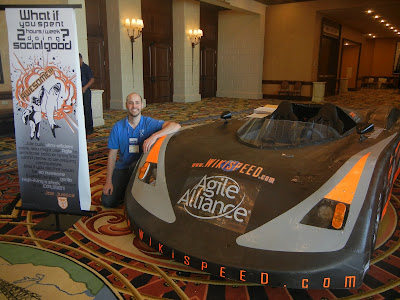
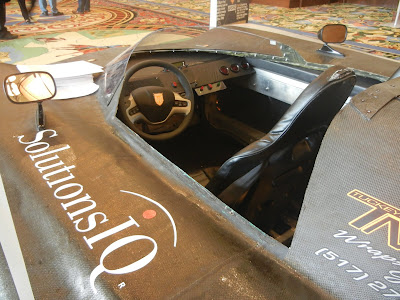
 Craig chats with Joe Justice from Wikispeed at the Agile 2012 conference about extreme manufacturing and using Agile for social good to create a 100 mile per gallon car.
Joe is the founder, CEO and team leader at Wikispeed (by night) and an Agile Consultant for SolutionsIQ (by day).
 |
| From Agile 2012 |
 |
| From Agile 2012 |
You can also view Joe’s Q&A and keynote from the Agile 2012 conference, as well as his interview with InfoQ.
TheAgileRevolution-45 (27 minutes )
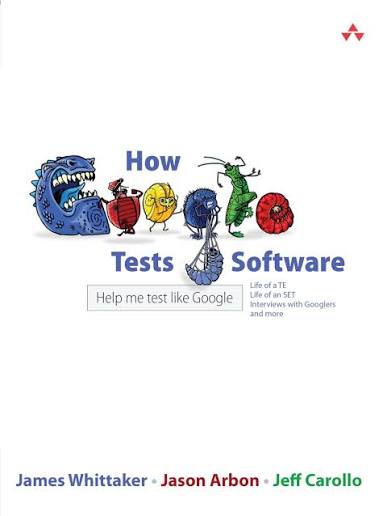
“How Google Tests Software” is an informative and interesting look beneath the covers of how a large technical organization like Google deals with the complexity of software testing.
Source: Interview and Book Review: How Google Tests Software
 The final day of Agile 2012 in Dallas, Texas and a morning of keynotes. It was announced that they had received over 800 submissions and selected 200 presentations. Also interesting was the fact that the band of volunteers have 2 daily scrums and self organise their sessions!
This keynote was from Dr. Sunita Maheshwari from Teleradiology Solutions, a video of the keynote is available here.
 |
| From Agile 2012 |
Joe Justice from SolutionsIQ and Team Wikispeed delivered this keynote. A video of the session is available here.
 |
| From Agile 2012 |
|
| From Agile 2012 |
Here are some closer pictures of the other Wikispeed car that was on display near the Agile Alliance lounge.
 |
| From Agile 2012 |
|
| From Agile 2012 |
 |
| From Agile 2012 |
And, then everybody parted ways, until next year…
Finally, I recorded a short audio podcast for The Agile Revolution wrapping up Day 5 of the conference.
Day 3 and 4 at Agile 2012 meant a large number of interviews for InfoQ, as well as some podcast interviews and numerous hallway discussions. As a result I have combined both days into one post. Here are my notes from the sessions that I attended.
Ellen Gottesdiener led this workshop, her slides are available here.
 |
| From Agile 2012 |
Agile team values, starter list:
 |
| From Agile 2012 |
They are a set of values that impact how we will make decisions.
Traps, risks and blunders:
Decision making styles:
 |
| From Agile 2012 |
4S – stake, stakeholders, speed and sustainability of a decision
We then created a 2D gradient to map out decison styles – delegate -> democratic -> consultative -> consensus
 |
| From Agile 2012 |
Ellen then introduced some decision making research, success was a decision that was used for greater than 2 years
 |
| From Agile 2012 |
We then talked about values:
Group versus individual decision making:
We then had some final thoughts and questions:
David Parker led this workshop, his slides are available here.
 |
| From Agile 2012 |
We started the workshop bu being given 5 minutes to draw a fact about the group we were sitting in, and could not use any numbers.
 |
| From Agile 2012 |
We then created our own dashboard based around a scenario that were given.
 |
| From Agile 2012 |
 |
| From Agile 2012 |
 |
| From Agile 2012 |
 |
| From Agile 2012 |
 |
| From Agile 2012 |
 |
| From Agile 2012 |
In keeping with the theme of Agile in non-software, I was very interested in hearing about this initiative from Luke Hohmann from Innovation Games. A copy of his slides from SXSW appear to be similar to those he presented here.
 |
| From Agile 2012 |
The final story Luke told was how one disadvantaged woman was almost not going to turn up the session because they had always been a waste of time. At the end of the game she stood up and said that she felt empowered because she ” had the same amount of money as everybody else at the table” and was able to make real decisions. Enough said.
Robert “Uncle Bob” Martin presented this session. I had seen most of this content before and did not hear anything much new (I also had to sneak out 10 minutes early to meet up for an InfoQ interview). What was much more interesting was a discussion I had Andrew Prentice from Atlassian at the Conference dinner about the validity of many of the claims that were made in the session (I think we should strive for them but Andrew seemed to think it depends on time and place and the developer).
 |
| From Agile 2012 |
These are my expectations from craftsmen:
Wednesday night was the Rodeo Circuit which was an opportunity to collect stamps while visiting all the exhibits. I was lucky enough to win a netbook from the Agile Alliance.
 |
| From Agile 2012 |
Thursday night was the conference dinner that kicked off with a comedian and followed up with a really good band called Emerald City.
 |
| From Agile 2012 |
 |
| From Agile 2012 |
Finally, I recorded a short audio podcast for The Agile Revolution wrapping up days 3 and 4 of the conference.
 Craig, Renee and a little bit of Tony continue on their Agile journey covering…
Quotes:
TheAgileRevolution-44 (41 minutes)


You must be logged in to post a comment.