Lisa Crispin and Janet Gregory talk about how they came to collaborate on the “Agile Testing” books, the testing skillset and approaches to learning, and new and interesting approaches to testing.
Em Campbell-Pretty shares her journey from being a business leader to an Agile Coach and early adopter of the Scaled Agile Framework, as well as how to best thaw middle management in organizations.
Mark Kilby, Stephanie Davis and Rick Regueira share their tips around reinvigorating their respective user groups and together building a statewide learning network as well working remotely Agile.
My presentation from YOW! 2015 called “40 Agile Methods in 40 Minutes” is available on Slideshare. The video is also available on YouTube.
With 73% of the world using Scrum as their predominant Agile method, this session will open up your eyes to the many other Agile and edgy Agile methods and movements in the world today For many, Agile is a toolbox of potential methods, practices and techniques, and like any good toolbox it is often more about using the right tool for the problem that will result in meaningful results.Take a rapid journey into the world of methods like Mikado, Nonban, Vanguard and movements like Holocracy,Drive and Stoos where we will uncover 40 methods and movements in 40 minutes to help strengthen your toolbox.
WHO SHOULD ATTEND
Software developers, Agile coaches / Scrum Masters, technical leaders, business analysts, testers and anyone with an interest in the variety of approaches available to Agile teams and organisations.
It was a privilege to be invited to speak at YOW! 2015 which is considered to be the leading software development in Australasia. The talk was delivered in 3 cities: Melbourne, Sydney and Brisbane. It was also an honour to have some of the most influentional people in the Agile community attending including Dave Thomas, Dan North and Don Reinertsen.
Here are some of the live tweets from each of the 3 conference talks:
David Mole talks about implementing Spotify inspired squads and tribes at Trade Me, as well as the results of experiments in self-selection of teams and inspiration from the work of Daniel Pink.
Mik Kersten talks about current and future trends in ALM and the support for approaches like large scale Agile, DevOps, Docker, Big Data, functional languages and the Internet of Things.
Bas Vodde and Craig Larman talk about Large Scale Scrum (LeSS), its origins, and the focus on simplicity, as well as the corresponding website and their new book “Large-Scale Scrum: More with LeSS”.
Adam Weisbart talks about using improv and magic to make Agile more fun and shares a bunch of practical tools and resources that should be of interest to anybody leading or coaching an Agile team.
Balance the appropriate batch size for communicating with your team the work you have completed versus the appropriate batch size for if you mess up you can easily go back – this is typically 2-10 lines of code to the local repository
Most teams just need a master branch that is always releasable and all work done on feature branches that are merged into master
 Lisa Crispin and Janet Gregory talk about how they came to collaborate on the “Agile Testing” books, the testing skillset and approaches to learning, and new and interesting approaches to testing.
 Source: Lisa Crispin and Janet Gregory on (More) Agile Testing, Learning and New Approaches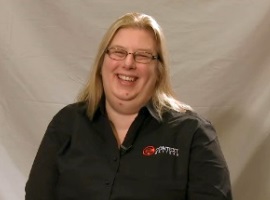


 Craig joins
  My presentation from



 Craig Smith
You must be logged in to post a comment.