
During that class, Lyssa had mentioned a new program called the Competency Cohort and mentioned that she would live me to be a part of it. One of the selling features for me was the pathway to the ICAgile Coaching Expert certification that I had been pondering for over a year. In typical fashion I mulled on the program for a number of weeks until the last responsible moment (about 48 hours before tickets closed) I mafe the decision to join.
This decision was not one that I took lightly. Firstly it is not a cheap program (not helped by the conversion rate to the Australia dollar and being a freelancer) and an initial 9 month commitment was going to be difficult with my workload, but I decided that a program with ACI and the opportunity to be part of something and new groundbreaking, along with the certifications that would be gained was worth the investment of time and money.
Here is the outline of the initial program:
Competence Cohort for Agile Coaching Mastery
A Rigorous Practice-Based Program for Building Competence and Confidence
The Agile Coaching Institute (ACI) creates transformation agile coaches who can shift individuals and whole teams to leverage agile to its best benefit. To do this, we strive to build real world competence and confidence in those we teach and coach.
The Competence Cohort paves the way to proficiency, culminating in ACI’s first-ever certification, Certified Transformation Coach – Teams™ (CTC-T). It is the next step after taking ACI’s classroom learning for those ready to radically expand their capabilities, build solid competence and achieve industry certification recognition.
Proficiency in the skills of agile coaching requires practice. This rigorous 10-month program places an emphasis on practice and feedback opportunities through skill drills, peer coaching, ongoing group work, and one-on-one supervision of actual agile coaching, mentoring, teaching and facilitation sessions. In addition, upon successful completion of four supervision sessions in the program, you will be eligible to attain the ICAgile Expert in Agile Coaching Certification (ICE-AC), an important milestone and cause for celebration during the program.
Outcomes of the Competence Cohort Program
- Close the gap between learning and application of agile coaching competencies and skills through modeling, in-cohort practice, real-life practice and graded supervisions.
- Integrate agile coaching skills into your everyday real-world situations, including professional coaching, facilitating, teaching, and mentoring.
- In-depth personalized assessment and feedback about your agile coaching from ACI’s top-notch faculty.
- Achievement of two industry certifications: Certified Transformation Coach – Teams™ (CTC-T) and ICAgile Expert in Agile Coaching (this certification is optional, and requires an additional, significantly discounted fee payable to ICAgile). If you opt out of the ICAgile Expert certification process, ACI will conduct a competency check to ensure your level of skill meets what’s needed to participate in the rest of the program (an additional fee of $250 applies). Our philosophy: Competence is the product; certification is the byproduct.
- Belong to a powerful network of professional agile coach change makers who are achieving the highest standard of competence in the industry.
Prerequisites
- Classroom Learning. Complete The Agile Facilitator (2 day course) and Coaching Agile Teams (3 day course). Acceptance based on completing other ICAgile-accredited facilitation or agile coaching courses on a case-by-case basis.
- Experience. 1-2 years agile coaching experience, having been the ScrumMaster or coach of 3 or more teams, at least one of which you started up.
- Intention. A strong desire and intention to significantly expand your agile coaching competence and confidence.
- Intrinsic Motivation. An internal motivation to attain a significant level of professionalism in agile coaching. A drive that yields the stick-to-it-ness needed to complete the program’s rigorous requirements and achieve a significant rite of passage.
Components of the Program
The Competence Cohort is divided into two phases.
Phase one is six months long and focused on practice and skill building up to (and beyond) the level of skill needed to achieve the ICAgile Expert in Agile Coaching.
Phase two is four months long; including a 3-day residential that catapults the agile coach into the deeper skills and knowledge of transformational agile coaching and the chance to apply them to the difficult agile coaching situations we call Quests.
Phase One: Competence up to the level of ICAgile Expert in Agile Coaching
Components of Phase One the program are:
- 12 Group Coaching Calls. The program includes twelve 90-minute group coaching sessions where we will focus on a monthly theme (see below). The group calls will be held twice a month and will vary in format to include skill drills, case studies, triad coaching, and group supervisions. Prior to each call there will be required pre-work. The pre-work will be sent out a week ahead of time and may include reading, reflection, journaling, or preparation of a case study. Calls will be every other Monday 5:30 – 7:00p Eastern.
- 4 Supervisions. The program includes 4 hours of Individual (one-on-one) Supervision, where you bring a video (or audio) showing your skills in facilitating, teaching, coaching or mentoring. The Supervisor will assess your Agile coaching against a set of open, transparent competencies and provide feedback and growth opportunities.
- 20 Hours of Peer Coaching and Mentoring. During the program, participants must complete at least 20 hours of peer coaching and mentoring. Ideally, this will come from at least 2 colleagues/peers with whom the participant establishes an explicit coaching relationship.
- 20 Hours of Team Coaching and Mentoring. During the program, participants must complete at least 20 hours of coaching and mentoring with individuals on a team or a whole team.
- 24 Hours of Facilitation and Training. During the program, participants must complete at least 24 hours of facilitation and training practice. Participants should identify at least one opportunity per month to either facilitate and/or teach with a team.
- Reading and Journaling. Developing the skills of an agile coach requires attention to your own development first. Participants will complete reading and journaling assignments designed to expand knowledge and self-awareness and help prepare for the group calls and individual supervision calls.
Group Coaching Call Topics:
- Designing the Alliance and Program Overview
- Team Development and Your Approach
- Facilitation: meeting design practice
- Facilitation: supervision example using a participant’s facilitation video
- Facilitation: quandaries and hold-backs
- Professional Coaching: listening and powerful questions skill drill
- Professional Coaching: quandaries and hold-backs, supervision example using a participant’s coaching video/audio
- Professional Coaching: arc of the coaching conversation skill drill
- Mentoring + ICAgile Gate Preparation Q&A: expert demo, information questions vs powerful questions
- Mentoring: arc of the mentoring conversation skill drill
- Teaching: adult human learning and teaching about (and safely altering) the agile practices
- Articulating your Agile Coaching Stance
Phase 2: Competence up to the level of ACI Certified Transformation Coach – Teams™ (CTC-T)
Phase Two goes beyond the foundations and deepens the skill to transformational agile coaching. Phase Two is four months in duration and includes the following components:
- 3 Day Residential. You will attend an intense, fun and transformational three-day Residential Training with your cohort colleagues. Topics include professional coaching, human systems attunement, large group facilitation and transformation mastery. (Held in the US. Travel expenses not included.)
- Deep dive into more professional coaching skills such as Articulating What’s Going On, Curiosity, Intuition, Designing an Alliance, Acknowledgement, Clearing, Requesting, Accountability and, of course, more Self-Management.
- Transformation mastery models and applications (ie Integral Agile, constellations)
- Large group facilitation techniques and practice
- Revealing the system (observation vs. evaluation)
- 4 Agile Coaching Quests. After the residential, you will apply your new knowledge and sharpened skills to the more challenging situations. We call them Quests. You must complete four Quests of your choosing. The main criterion of a Quest is that it is a significant challenge and something you have never done before (and something you’re a little afraid to do). Sample Quests:
- Coaching a manager with more organizational power than you on their role transition
- Coaching someone with resistance
- Facilitating a conflict conversation
- Applying coaching skills at the team level (listening, PQs, self-mgmt, revealing the system to itself)
- 8 Post-Residential Colleague Calls. You will take part in bi-monthly support and accountability calls to help you integrate what you learned at the residential. ACI will provide the structure/accountability, you will be leading the calls with your colleagues!
- 8 Professional Case Consultation Calls. A bi-monthly case consultation call will be held, post-residential, with an ACI faculty member. These calls will continue the path towards transformation and focus on a monthly ‘quest’ case that a participant brings to the call.
- Community Contribution. Agile coaches support and grow other agile coaches. The Community Contribution allows you to apply your agile coaching knowledge skills to benefit others’ growth. It can be a new tool, a new blog post, a user group presentation, or many other things. It just needs to be something more than you contribute today, and ideally begin charting your course as an important voice in the agile coaching world.
- Completion Presentation. Create and deliver a Completion Presentation: of your portfolio, your unique contribution to the agile field, your “my model” for doing agile coaching work. It’s a self-evaluation. It conveys your now-evident competence and confidence in your own authentic and professional Agile Coaching Stance. Delivering this presentation results in the formal acknowledgement of your accomplishment and attainment of the CTC-T™.
To successfully complete the program, complete all program components, including:
- 64 hours of real-life Coaching, Facilitation, Training and Mentoring.
- 4 Agile Coaching Quests.
- Coaching journal entries.
- Calls. Make the commitment to yourself and your colleagues to attend group coaching calls, colleague calls and consultation calls. If unavoidable, you may miss up to 3 of these calls during the program, but will need to make up the session by listening to the session recording and completing a make up assignment. (Note: You may only miss 1 of each type of call.)
- 4 one-on-one supervisions. Submit at least one video each of live facilitation and teaching sessions for supervisions. Submit at least one audio or video each of coaching and mentoring sessions for supervisions. (or do a combined supervision of facilitation/teaching and then your 4th supervision is a “make up” in case you do not pass the first time).
- Create and submit facilitation guides for facilitation and teaching sessions.
- Be currently coaching at least one agile team. (Please note: you will need to show experience of coaching a total of 3 teams for the ICAgile gate, and coaching one team through a start-up.)

So after almost twelve months and two certifications later what did I learn?
- The big one is the power of a coaching community. On this journey with other Agile Coaches who have a bond around learning and improving has been an incredible privilege. I have watched relationships grow and empathy for learning, and my only hope is that this little group continues its relationship well past the completion of the cohort. I would like to personally thank each of my cohort colleagues for their support and friendship throughout the program
- Doing a program like this via audio really sucks! In the beginning of the program I felt extremely isolated and whilst the facilitation of the program was all about bridging the gap, it really wasn’t until the residential and introduction of video that I truly felt part of the group. Partly this was due to the timing of the calls in Australia (often at 7am or 8am when I was either in transit of preparing for a class and partly as prior to the program I did not have any relationship with the other attendees (whereas many of the North American attendees had met each other during other ACI classes or bootcamps)
- The fact that the cohort inspected and adapted all the way through – from tools to determining what was adding value for the group, the group certainly lived by the Agile values
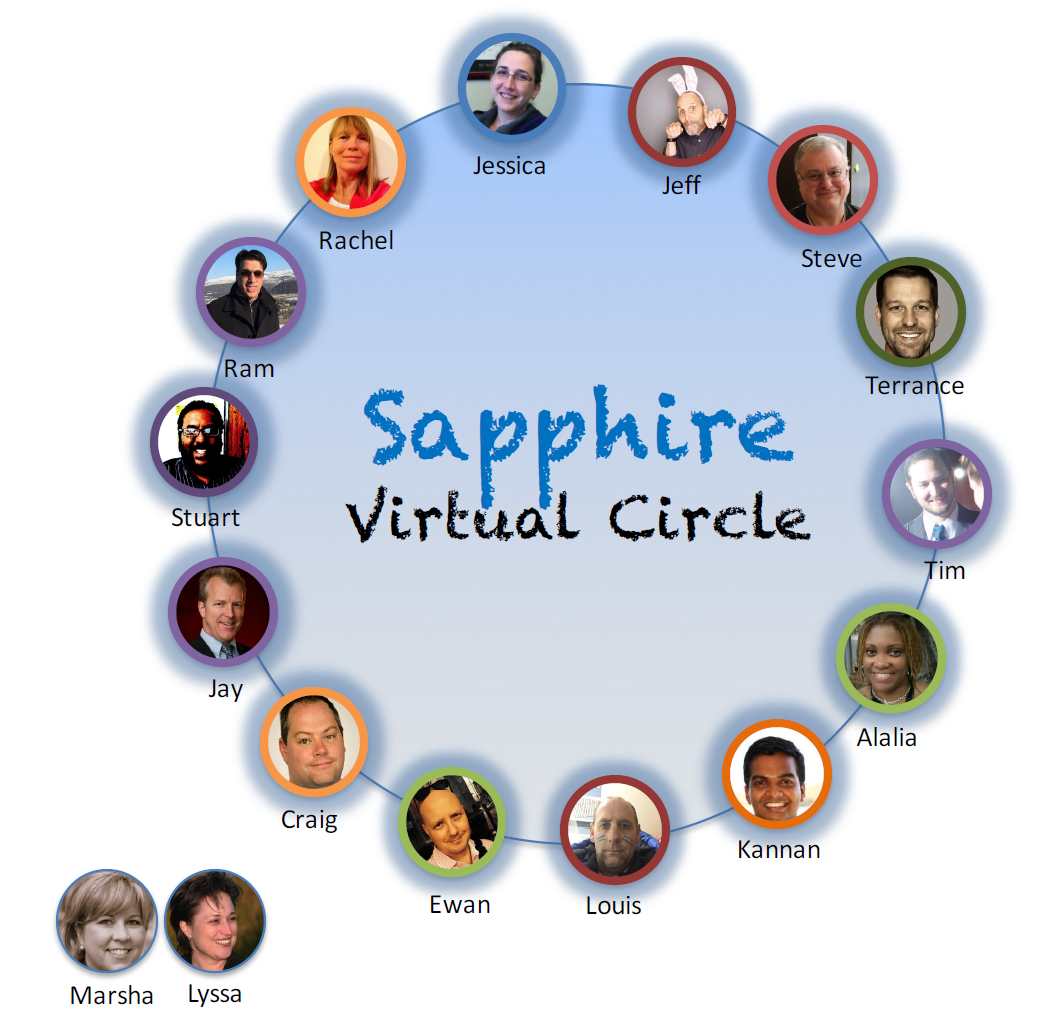
- If you are using audio, you need a virtual circle and need to announce who is speaking. The virtual circle is simple but something I now introduce to virtual teams all the time!
- A recap on some of the important parts of Agile Coaching and the opportunity to practice – presence, powerful questions and active listening and all three levels
- A recap and ability to practice the coaching arc in 10 minute coaching sessions; create the environment, what’s their agenda, explore the topic, narrow down actions, commit to action. The big lesson was not to own the coachees actions, but to ask what sort of accountability they need from me
- The importance of a designed alliance between the coach and the coachee (something I have always believed in as a coach, a concept that was introduced to me by Johanna Rothman many years ago
- The clear differences between mentoring and coaching and an observation that you often are doing both in your conversations
- The importance of a facilitator guide, which is something I still need to get better at moving forward (especially when I have time to prepare)
- Holding space and making the space safe
- Teaching design, the hero’s journey and the importance of 24 hour reviews (I have always done these but give them much more importance now)
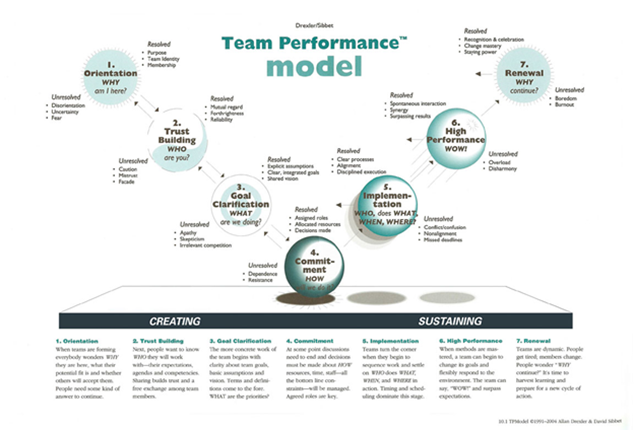
- Probably my main takeaway, especially after Michael convinced me it is much more useful than the simplistic Tuckman model, is the Drexler-Sibbet Team Performance Model
The residential was held outside Washington, DC in February and was 3 day immersive retreat. For me I had to cut into a European holiday to attend (flew out of Venice and back to Rome), and some standouts (apart for physically meeting my cohort colleagues) were:
- Observing what happens when a coach or a coachee gets to their edge
- the power of giving and, more importantly, receiving acknowledgements (“I want to acknowledge your…”)
- resistance and how the coach needs to make the shift, not the client and the skills of articulation and making a request
- the power of clearing when dealing with resistance
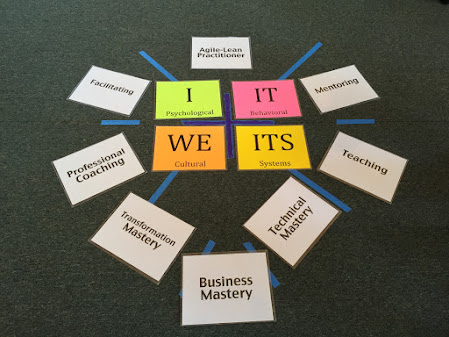
- a better understanding of the Integral Agile Roadmap, fully understanding the “I”, “It”, “We” and “It’s” quadrants and thinking about the team as a system
- The case consultation process and the interesting insights of observing this process directly and the role of a system scout observing the system
- a different approach to constellations in how you can learn more about your relation and the relationships of others to the system. This one was very interesting in how you can actually feel the system, something I would not have believed until I tried it
- the simple joy of tossing a football with friends (even if it was American football)

 After completing the calls, the residential and completing my two assessments (coaching and mentoring which I was able to do live at the residential and teaching and facilitation which was done with video evidence remotely), plus a final call with ICAgile, I then obtained my ICAgile Agile Certified Expert in Agile Coaching (ICE-AC).
The final part of the program consisted of Case Consultation calls and Sapphire Colleague calls.
- The case consultation calls consisted of an ACI faculty member leading a session using the Integral Roadmap with one of the cohort members as the coachee. The rest observed with someone taking the role of a system scout.
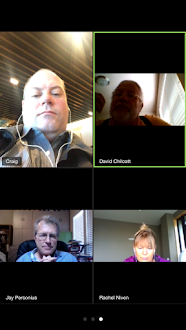
- The Sapphire Colleague calls I really enjoyed as different members of the cohort brought different exercises and discussions to the cohort.
The last part of the program, in order to get the ACI Certified Teams Transformation Coach™ (CTTC) certification, was the completion of four personal quests. My quests were:
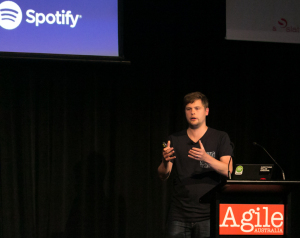
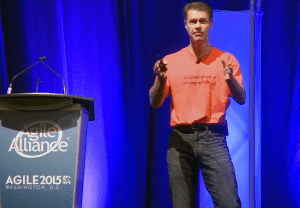
- Confidence to speak on Agile Coaching – I delivered a coaching talk at Agile Australia 2016 (with my colleague Renee Troughton) and solo at Agile 2016 conference around Agile Coaching skills and katas
- Move from teaching and coaching teams to more of an enterprise level – Have started doing this at a client site, through the delivery of Agile Portfolio training and now helping them make changes up to the executive management level
- Coaching for conflict – be more aware of conflict, mine for it, and facilitate the discussion
- Blog experiences rather than just learning – you are seeing this now and I have committed to do this more in the future
- My community contribution was probably my desire to bring Agile back to technical mastery, so I agreed to be part of the organising committee for the Agile Alliance Technical Conference. This as well as my other contributions that include Agile Australia, reviewing for Agile 2016, co-organising Agile Brisbane and running YOW! Conference with a desire to continue building the Agile community but more importantly delivery quality solutions that make a difference
So finally, if you are an Agile Coach should you join the Cohort? The answer, absolutely – as a coach it has been a year long learning experience and one I am so glad I committed to, despite numerous times questioning whether I had the time to do the pre-work and the regular calls, The final question is what next on my coaching learning pathway.










You must be logged in to post a comment.