Episode 141: Agile Coaching with a Latin Touch with Martin Alaimo

The Agile Revolution's avatarThe Agile Revolution Podcast

Craig is sitting by the pool at the Agile 2016 conference and chats to Martin Alaimo who is an Agile Coach from Kleer in Buenos Aires and they discuss:

  • South America has a number of language, cultural, economic and business differences between Brazil and the Spanish speaking countries, Agile is starting to go mainstream across many of the countries, collaboration is difficult in countries that have a generation of social and dictatorial government
  • Craig’s talk “Coaching Nightmares: Lessons We Can Learn From Gordon Ramsay
  • Coaching Canvas template – based off the Business Model Canvas to aid coaching conversations using sticky notes to help refocus and keep conversations on track
  • Martin’s workshop with Olaf LewitzPowerful Questions Workshop for Agile Coaches” (and how Craig is garbage at using them on the podcast)
  • His third book “Agile Team Facilitator” which is about the skill of facilitation for…

View original post 44 more words

YOW! Hong Kong / Singapore 2017 – Agile Coaching Nightmares: Lessons We Can Learn From Gordon Ramsay

My presentation from YOW! Hong Kong 2017 and YOW! Singapore 2017 called “Agile Coaching Nightmares: Lessons We Can Learn From Gordon Ramsay” is available on Slideshare.

When you look for inspiration in the Agile Coaching community, the name Gordon Ramsay is probably not the first name to come to mind. He has been known to be belligerent, condescending and downright rude, but underneath this brute facade is a treasure trove of skills and talents that influence change.

In this presentation we will draw insights from his ‘Kitchen Nightmare’ escapades and draw parallels with how much his work aligns with that of an Agile Coach and the goal to successfully drive change and introduce a number of models and techniques that are indispensable in the coaching toolkit.

https://www.youtube.com/watch?v=H3LGBscYXfU

Here are some tweets and feedback from the talk:

Agile Brisbane – Agile Coaching Nightmares: Lessons We Can Learn From Gordon Ramsay

AgileBrisbaneMy presentation from the Agile Brisbane meetup called “Agile Coaching Nightmares: Lessons We Can Learn From Gordon Ramsay” is available on Slideshare.

When you look for inspiration in the Agile Coaching community, the name Gordon Ramsay is probably not the first name to come to mind. He has been known to be belligerent, condescending and downright rude, but underneath this brute facade is a treasure trove of skills and talents that influence change.

In this presentation we will draw insights from his ‘Kitchen Nightmare’ escapades and draw parallels with how much his work aligns with that of an Agile Coach and the goal to successfully drive change and introduce a number of models and techniques that are indispensable in the coaching toolkit.

Some pictures:

Here are some tweets and feedback from the talk:

First time to Agile meetup, exceeded expectation, will be back – Steve S

Awesome presentation. Thanks very much Craig! – Emi

This was my first Agile meetup. A great presentation and a well run event. – David Wilkinson

Excellent presentation. Some great reminders! – BronwynSC

This was my first time and it was a great presentation – Arthur

Always a pleasure hearing you speak Craig. I’ll be sharing your slides with the Elabor8 team! – Ryan McKergow

Thanks for a great presentation – Rob Lawes


Agile 2016 – Coaching Nightmares: Lessons We Can Learn From Gordon Ramsay

Agile2016-SPEAKER-300x250My presentation from Agile 2016 called “Coaching Nightmares: Lessons We Can Learn From Gordon Ramsay” is available on Slideshare.

When you look for inspiration in the Agile Coaching community, the name Gordon Ramsay is probably not the first name to come to mind. He has been known to be belligerent, condescending and downright rude, but underneath this brute facade is a treasure trove of skills and talents that influence change.

In this presentation we will draw insights from his ‘Kitchen Nightmare’ escapades and draw parallels with how much his work aligns with that of an Agile Coach and the goal to successfully drive change and introduce a number of models and techniques that are indispensable in the coaching toolkit.

Learning Outcomes:

Understand the difference between coaching, advising and mentoring

Approaches to having confronting coaching conversations

Dealing with denial and unengaged staff

The criticality of a burning platform to invoke change

Why it is important to have coaches as experts

Agile coaching is more than the GROW model (or other coaching models)

It was extremely disappointing that my partner in crime on this talk Renee Troughton could not make the trip to Atlanta to deliver this with me, I certainly hope I did her parts of the talk justice.

Here are a few of the tweets from the talk:


Agile Australia 2016 – Coaching Nightmares: Lessons We Can Learn From Gordon Ramsay

Agile-Australia-2016-Resources-Badge-Speaker-600x100pxMy presentation with Renee Troughton from Agile Australia 2016 called “Coaching Nightmares: Lessons We Can Learn From Gordon Ramsay” is available on Slideshare.

When you look for inspiration in the Agile coaching community, the name Gordon Ramsay is probably not the first name to come to mind. He has been known to be belligerent, condescending and downright rude, but underneath this brute facade is a treasure trove of skills and talents that influence change.

In this presentation we will draw insights from Ramsay’s Kitchen Nightmares escapades and explore parallels with how much his work aligns with that of an Agile Coach and the goal to successfully drive change. We will introduce a number of models and techniques that are indispensable in the coaching toolkit.

The talk was also recorded and is available to view on InfoQ.

Here are some of the live tweets from the talk:


Episode 94: Agile 2015 Wrap Up

Agile Australia 2012 Pre-Conference Workshops Review

The day before the Agile Australia 2012 conference in Melbourne was workshop day, and I presented a couple of sessions as well as sitting in on others. There was a good mix of local talent delivering workshops this year. One of my hopes for next year is to make them inclusive of the conference proper somehow, so more people can benefit from and experience them.

First Steps With Agile

On behalf of the Agile Academy, Rene Chappel and I presented First Steps in Agile to a large enthusiastic class (in fact, the class was four times larger than we were expecting and much larger than the numbers I have had in similar classes for the last few years).

New to Agile and wondering where to start or want to know what all the fuss is about? This workshop will start you on your journey and help you become familiar with the core values and principles of Agile. You will gain an understanding of what is meant by the term ‘Agile’ and learn about some of the key practices and processes of an Agile approach (while having some fun along the way!)

Agile Coaching Workshop

The session I presented with Adrian Smith had a capacity turnout  The slides are available in a separate post.

Below is a picture from the workshop where we are getting attendees to move around the room and identify their coaching strengths.

From Agile Australia 2012

Think Like An Agilist

I had one session free and sat in on this session delivered by Jason Yip. The workshop exercises presented scenarios and encouraged participants to practice speaking aloud their process to solving the scenario.

From Agile Australia 2012
  • novices understand the formulas but not what is happening
  • superficial (understand the formula), semantic understanding (understand what is going on), qualitative understanding (know instinctively what is true)
  • “Think like a Commander” – US Army exercise to expose and correct weaknesses
  • learning is not a comfortable experience, it is an experience of confusion
  • sits between classroom study (learning basic concepts) and a full scale simulation (you use your strengths to achieve an aim)
  • use the think aloud protocol
  • fallacy of thinking – can’t help from a learning perspective, you obviously didn’t think about it
  • cognitive themes – things to think about
  • people will never discuss what is working well  when dealing with a problem
  • what someone tells you is mostly their interpretation, they can encourage you to miss things
  • your strengths and weaknesses sometimes blind or endear you to different roles
  • need to practice to answer reflexively

Agile Australia 2012: Agile Coaching Workshop

My workshop from Agile Australia 2012 with Adrian Smith called “Agile Coaching Workshop” is available on SlideShare.

The Agile Coach is a critical role in helping leaders, teams or individuals understand, adopt and improve Agile methods and practice. Additionally, an Agile Coach helps people rethink and change the way they go about their work. For a individual to be effective in a coaching role, they must poses a wide range of skills and experience. In this workshop we will explore Agile coaching skills in the context of a competency framework and provide participants with lessons from real-world coaching experience. The workshop will provide an opportunity for participants to learn about coaching, identify areas of Agile development and to broaden skills through hands-on group and individual exercises and games.

You will:
» Understand role of an Agile coach and the typical development pathways
» Identify personal areas of strength/weakness in relation to a broad range of Agile and related skills
» Learn situational specific coaching techniques for common Agile dysfunctions
» Understand the use of maturity models in helping teams learn and adapt to Agile
» Understand organisational and role specific Agile challenges
» Learn how to adapt Agile practices to suit team specific challenges

UPDATE: Due to some requests for the competency matrix, a PDF version is available for download

8 Tips For Agile Coaches (AgileTODAY)

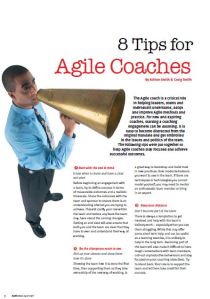
AgileTODAY 3A couple a months ago, Adrian Smith and I were asked to put together an article for the third edition of AgileTODAY to complement a workshop we plan to run at Agile Australia  2012. Adrian and I had a whiteboard session, and we put together these 8 tips which will hopefully help aspiring Agile coaches.

Introduction

The Agile coach is a critical role in helping leaders, teams and individuals understand, adopt and improve Agile methods and practice. For new and aspiring coaches, starting a coaching engagement can be daunting. It is easy to become distracted from the original mandate and get embroiled in the issues and politics of the team. The following tips were put together to help Agile coaches stay focused and achieve successful outcomes.

Start With The End In Mind

Before beginning an engagement with a team try to define success in terms of measurable outcomes and a realistic timescale. Share the outcomes with the team and sponsor to ensure there is a shared understanding of what you are trying to achieve. This will help clarify your role within the team and can help reduce any fears the team may have about the coming changes. Setting a clear end date will also ensure that both you and the team are clear that the team have to own and understand their way of working.

Be The Change You Want To See

Showing the team how it is done the first time then supporting them as they take ownership of the new way of working is a great way to bootstrap new practices and build trust in new practices. Role model behaviours you want to see in the team. If there are techniques or technologies you cannot model yourself, you may need to mentor an enthusiastic team member or bring in an expert.

Keep Your Distance

There is always a temptation to get involved and help with the team’s delivery work – especially when you see them struggling. While this may offer some short term help and can be useful as a learning exercise, it is unlikely to help in the long term. Becoming part of the team will also make it difficult to have tough conversations with team members, call-out unproductive behaviours and stay focused on your coaching objectives. Try to stand back, your role is to support the team and let them take credit for their success.

Ask The Team

The team has probably faced a majority of the issues long before you got involved. If they are to own the solution after you have gone, it is important to have them involved in the decision making process. Remember you are trying to help the team learn to work without your help. This sometimes means you have to let them make a decision that goes against your best judgement. Teams need to learn by their mistakes (and sometimes their idea works out which means you can learn something too).
Step By Step

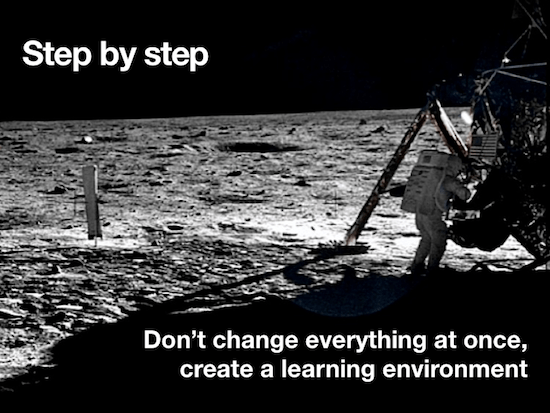
People can adapt to change more easily when it happens slowly and they see how it aligns to an overall plan. Additionally, change becomes natural when you are able to create a safe learning environment for the team that encourages experimentation. Try to change the practices that are causing problems first replacing them with simple alternatives. If you take away all the old practices that a team depended upon they can lose their way and not see the dysfunctions for themselves.

Just The Facts

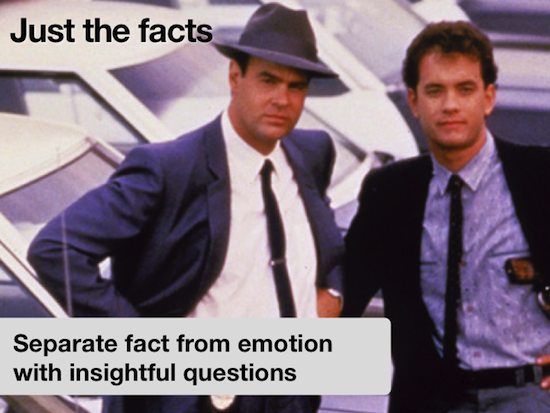
Asking questions is a fundamental skill for an Agile coach and can be used to drill down to the root cause of problems a team is facing. Don’t be afraid to ask “why” a couple of times to get to the facts behind a problem or to introduce the elephant in the room. As a coach you are in the privileged position of being able to raise sensitive issues and to legitimise discussion of difficult issues.

You Make What You Measure

Helping the team identify what is important (especially from a customer’s perspective), making it visible and updating it regularly will focus a team. Example metrics include: throughput, cycle time, delivered value and many others. The corollary to this suggestion is that you need to be careful what you measure because you can incentivise behaviour that has the potential to be counter-productive.

Agile Is Only A Means To An End

Although the Agile journey is important, Agile perfection is not the end goal. What does matter is delivering what your stakeholders want in a sustainable way. For this reason it is important to use Agile maturity assessments and other metrics with care. Helping a team become agile should focus on instilling Agile values and principles, while selecting and adapting Agile practices to help the team deliver.

Summary

Becoming an Agile coach requires a deep understanding of Agile, the confidence to drive change and a willingness for self-reflection. The role of an Agile coach is a rewarding one that allow you to use a wide range of skills across technical, social, business and communication disciplines.
8 Tips For Agile Coaches8 Tips For Agile Coaches

If you are interested in reading AgileTODAY, you can subscribe to the print copy or access the past issues online.

This article is also available on Adrian’s blog.

Agile 2011 Day 2 Review

Agile 2011Day 2 at Agile 2011 in Salt Lake City kicked off with Todd Little advising that the conference this year had 1604 attendees from 43 countries and from 968 submissions we ended up with 268 sessions. Here are my notes.

Keynote – Why Care About Positive Emotions

Barbara Frederickson led with a keynote, but unfortunately I didn’t get to stick around for much of it as I needed to prepare for my session following. Two brief notes I picked up were:

  • positive psychology is about resilience, the closest concept in psychology to agile
  • positive emotions open us – we are more creative and can see more in the periphery, we have more resilience to bounce back, better performance on exams
From Agile 2011

The Speed To Cool: Agile Testing And Building Quality In

The session that I presented with Adrian Smith from Ennova was close to a full audience and was also one of a handful of sessions that was chosen to be recorded. We received lots of great feedback. The slides are available in a separate post. The following pictures were Adrian and I outside the room prior to the session:

From Agile 2011
From Agile 2011

Agile Coaching Self-Assessment – Where Do You Stand on the Competencies?

This session was limited to 32 participants, so it was with good luck and planning that I was able to sit in workshop facilitated by Lyssa Adkins and Michael Spayd.

Coaches are energy shifters and are tuned into the atmosphere of the room. We were invited to walk around the circle and reflect on the following areas:

  • agile-lean practitioner – people who know the tools and practices
  • business mastery – know what the business needs
  • coaching -professional coaching
  • mentoring – help people access what they already know
  • technical mastery – help people create great software
  • transformation mastery – help people change
  • teaching – teach people what we know
  • facilitating – neutral assistance to a group
From Agile 2011

We were then invited to walk around the circle and land at:

  • the area of strength where I am drawn to
  • area of nervousness
  • area that would make the most difference in your role

and we discussed and shared out thoughts with others standing in the same quadrant as well as the rest of the group.

We then reflected on where we stand right now and where we want to stand, before pairing up with another participant for a short one on one session.

Finally we reflected that the coaching stance and catalyst leader are the heart of the wheel.

This was an awesome session and something I look forward to running with some of my colleagues as well as reflecting on my strengths myself.

Refactor Your Wetware

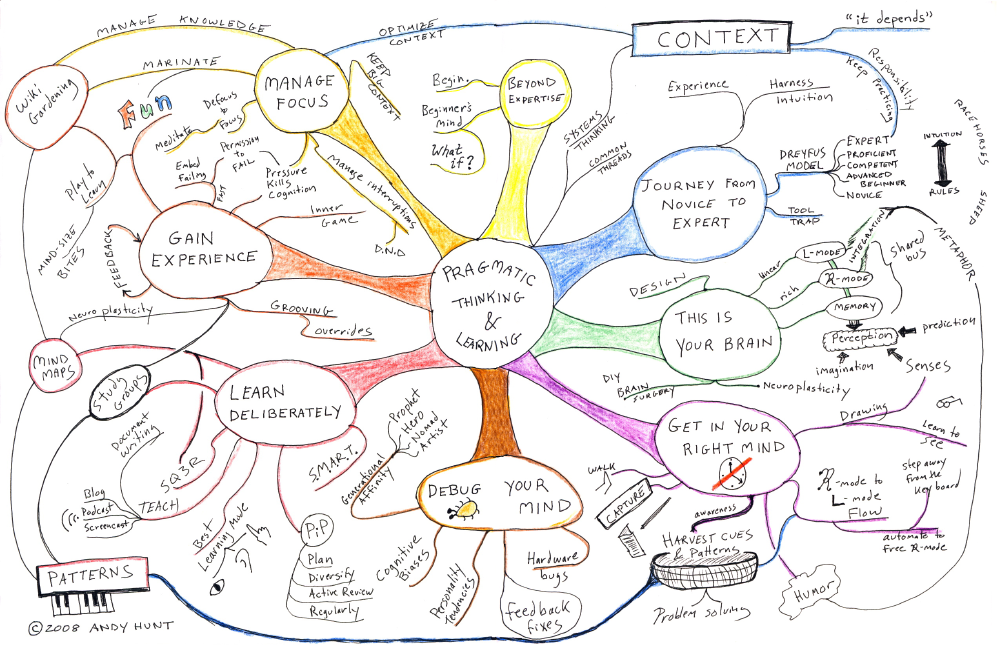
Andy Hunt (of Pragmatic Programmer fame as well as Agile Manifesto signatory) delivered this session based on his latest book Pragmatic Thinking and Learning: Refactor Your Wetware. Here are my notes from the session:

From Agile 2011

Software is written in our heads, that is where the problem starts!

Context patterns neuroplasticity:

  • context – need to not look at a whole object but how it fits into the whole system
  • patterns – in pair programming, the navigator can see patterns because they are not concerned with the symbols and syntax, pattern matching is the key to expertise
  • neuroplasticity – humans can grow new neurons, but not sitting in a cage or a cubicle, work with enlightened people or in a sensory rich environment you will grow new neurons, but if you don’t use parts of your brain it will get rewired

If you study in an artificial environment you will get artificial results.

Skills – the Dreyfus model – rules –> intuition, consider everything –> relevant focus –> detached observer –> part of system

  • novice – no experience, accomplish a goal, want to get it done, don’t know how respond to mistakes, only way to be effective is to have contact-free rules (ie working in a call centre, following a script), need recipes to follow, can’t get much productivity from this level
  • advanced beginner – start trying tasks on your own, don’t want the big picture
  • competent – build conceptual models, troubleshoot on your own
  • proficient – want to understand the big picture, want to understand why, frustrated by oversimplified information, self correct previous poor task performance (retrospectives are a good example of why they need an experienced coach), learn from previous experience, can understand and apply maxims
  • expert – primary source in their field, continually look for better methods, work from intuition, world does not really work on rules it works on experience
  • second order of incompetence – know what you don’t know and admit to it
  • nursing practice shares a lot of similarity to software development – you need to solve problems then and there – need to become outcomes-based, importance of the individual, keep experts in practice, pay based on value added to the company
  • South American monkey trap is like the tool trap – confuse model with reality, de-value traits that cannot be formalised, legislating behaviour that kills autonomy, alienated experienced practitioners, demand for conformity of tools, insensitivity to contextual nuances
  • brain is not a computer – made up of L mode and R mode and we switch between them – spinning girl exercise – creativity and intuition works better in R mode
  • image streaming – pose a problem to yourself, close your eyes for 10 minutes and then for each image that crosses your mind describe it out loud, image it with all five senses and describe it in the present tense
  • free form journalling – first thing in the morning, write three pages long hand, uncensored, don’t skip a day – way to get it out
  • Thomas Edison used to take a nap with a cup of ball bearings and when it dropped he would wake up and write down what he was thinking about
  • whack on the head – look at problems from a different point of view or the opposite – a good tool is the Creative Whack Pack iPhone app
  • ten mental locks – the right answer, that’s not logical, follow the rules, be practical, avoid ambiguity, ……
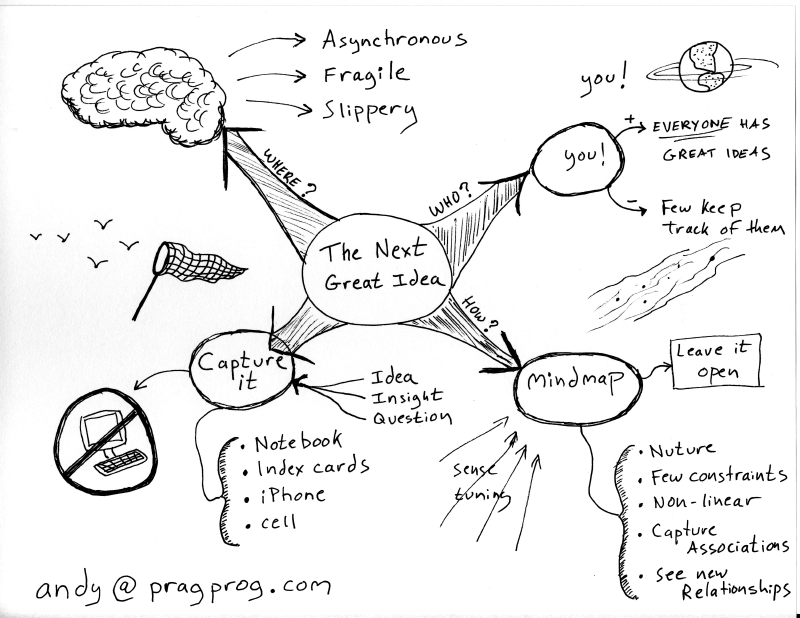
  • you need to keep track of your ideas, otherwise you will stop having them – everyone has great ideas, fewer keep track of them, even fewer act on them and very few can pull them off
  • carry something with you all the time to record notes – tools like The Pocket Mod or Evernote
  • mind maps
  • we miss things that change slowly – this happens on projects on all the time
  • 90 cognitive biases that people suffer – memory stinks – every read is a write that can create false memories, anchoring, fundamental attribution error, need for closure (agile estimation) – we will take any information even crap information for closure – in agile we want to keep things open ended, exposure effect, Hawthorne effect, relativity
  • ask yourself how you know what you know
  • your age group changes the way we view and understand things
  • some people need auditory, visual, kinetic
  • how to read – SQ3R – survey, question, read, recall, review
  • how to take notes – make a mind map, the sensory of pen and paper is better
  • use a wiki – has a category
  • use affinity mapping with post it notes – Behind Closed Doors describes this in more detail
  • get your ideas out there and blog it, tweet it, present it
Warnings:
  • multitasking – when you get interrupted your memory is blown, constantly checking email is an IQ drop of 10 points, three times as much as smoking a joint!
  • send less email and you will receive less email – pick up phone, walk down the hall
  • choose your tempo for an email conversation
  • don’t context switch – scan queue once, put things into piles, no mental lists (GTD)
  • set cues for task resumption when you get interrupted, leave a quick mote in code or on a notebook – gets back to resuming task much faster
  • set team interruption protocols – most teams say this is the happiest times they have coding
  • second monitor is a 20-30% productivity gains – ALT-TAB in windows is context switchin
Change is hard:
  • start with a plan
  • avoid inaction not errors
  • new habits take time (3-4 weeks)
  • belief is physical
  • take small next steps

This was a great session with so many techniques to look (and re-look at). As a result I think I will also add this book to my reading list (especially given that The Pragmatic Programmer in one of may favourite books). Finally, Andy reminded everybody that the Pragmatic Programmers also have a free magazine that is worth checking out.

After Dark

Tuesday night is typically the night that most of the vendor parties happen. I managed two invites – one to the Atlassian Drink-Up (which unfortunately due to talk preparation I ended up missing) and one to the Celebrate with Rally party which I was able to make for a couple of hours at the end.

Podcast

Finally, I recorded a short audio podcast for The Agile Revolution wrapping up Day 2 of the conference.