“The aim for any company is for everybody to gain – shareholders, employees, suppliers, customers, community, the environment – over the long term” – Deming
The myth "if you can’t measure it, you can't improve it" is easy to bust. Babies learn to walk without metrics.
I first started using Yammer back in 2009 after hearing about it winning TechCrunch50, and was user number 1 on our company domain (now we have thousands of users). Its been interesting to see the organic growth from the first time I used it (I had nobody to talk to), to a community of early adopters (who treated it like a corporate Twitter) to its usage now as an important communication channel and groupware solution.
My colleague and friend Teale Shapcott arranged the guys at Yammer to come into our organisation last week to give a bunch of people an informal train the trainer session on “Yammer – Getting Started with Groups”. Steve Hopkins and Ross Hill conducted the session, and here are my notes:
Metcalfe’s Law essentially confirms that things get more useful the more people you have in the group
the problem with email is that if you send an email to 12 people, you get 12 responses!
a Yammer group is an way to replace email in a team (basically an easy way to setup a distribution list)
Yammer are currently launching new things to the site every week
Yammer recently acquired oneDrum. Essentially what this will do is put a Yammer folder on your desktop for Office integration, as well as being able to follow files and get updates when things change.
The point of the training was to help get people using Yammer for collaboration. A good exercise to start is get people to log into Yammer (set up a private group for training) and get people to say hi. Next get people to enter what they are currently working on and then get everybody to respond on others posts to get people familiar with the value of the tool.
Pages are a new feature:
pages are a good way to collaborate and brainstorm on ideas
pages can have 10 editors maximum at the same time. It will auto save. When you publish it will notify all the followers that there is a new draft. You can revert back to old versions
pages are useful for meetings, use an iPad and throw the notes or actions up on a page, you can link actions to people or files as well
coming soon is the ability to mark a page as official
documents don’t need to be run by any person specifically, they are now crowd sourced
groups are like rooms in a house
One thing that is new that I did not know about is that you can now use the share feature to share a message across groups (you used to have to duplicate the message).
In the session, one of the other participants shared their approach to getting their team to use Yammer:
they created a new private collaboration group
it took a conscious effort to use yammer by getting the leader to share things on Yammer, this took a few months
they have seen a massive reduction in email but communicating a lot more
they also created a larger department group as well
gains comfort for people using a team group rather than the All Company feed or a public group
takes time to get the comfort up and you have to make enemies
people for the most part are learning something new
you need leadership and you need to take a hard line about just using Yammer
use followed conversations mode, set their preferences to only follow groups that I follow as it removes the noise – everything you see should be relevant, you also need to clean up the feed and email notifications settings for them
update the information tab and use it for information and quick links
needed to be hardcore and had to keep asking “are you logged into Yammer” in order to cement the habit
direct people to engage with your content, rather than just posting something
use announcements to get everybody in the group
get people to follow a hash tag for things like events
Generation Y folks are good advocates to get on side
As a second exercise, we then created a page and collaborated on out own checklist of an approach and tips to setting up a group. Many of the participants (who I assume were not familiar with wikis or collaborative tools like Google Docs were in awe of seeing people collaborating at the same time).
When introducing groups, you are bound to get resistance, so the Yammer has a bunch of great case studies that cover lots of different team types.
Another use, relating this back to Agile, is one team were using it for showcases by doing a live webcast and getting people to comment on Yammer (also the posting the video to Yammer so people could talk about it later as well). In the vain of standup, another organisation would, on a Monday, start a post on what are you working on this week. There are lots of potential usages for the features of Yammer for distributed teams. Another suggestion was to organise in everyones calendar a YamJam to discuss something on Yammer a a certain time.
Finally, there are a lot of Australian companies using Yammer, and the following videos are worth a look.
So there have been a lot of posts out there about Moneyball and how it directly relates to Agile and the Lean Startup. However, I finally got around to watching the move tonight (thanks to my colleague Renee Troughton for lending me the Blu Ray) and had to note down my own thoughts. There are so many good quotes and scenes from the movie, but here are just a couple of standouts (warning, some folks may consider these to be spoilers if you have not seen the movie!)
Right at the start of the movie Billy Beane is talking to the team owner about needing more money (sounds like the start of any typical traditional project to me!)
Billy: I can’t compete against a hundred and twenty million payroll with thirty eight million dollars. Schott: We’re not gonna compete with these teams that have big budgets. We’re gonna work with the constraints that we have and you’re gonna get out and do the best job that you can recruiting new players. We’re not gonna pay seventeen million dollars a year to players.
And a little later in the scene, Billy sets his goal.
Billy: That’s my bar. My bar is here. My bar is to take this team to the championship.
At the scout’s meeting, their discussion is all about appearances rather than understanding and building a team.
Scout: Ugly girl friend means no confidence.
In that same meeting, I really enjoyed the scene where Billy is in the position of a coach/facilitator and keeps asking them if they understand the problem!
Grady: We’re trying to solve a problem here. Billy: Not like this you’re not. You’re not even looking at the problem. Grady: We’re very aware of the problem. Billy: Okay, good. What’s the problem? Grady: Okay, Billy. We all understand what the problem is. We have to replace… Billy: Good. What’s the problem? Grady: The problem is we have to replace three key players. Billy: No. What’s the problem? Poloni: Same as it’s ever been. We’ve gotta replace these guys with what we have existing. Billy: No! What’s the problem, Barry? Barry: We need three eight home runs, a hundred twenty R.B.I’s and forty seven… Billy: Aaahhh! The problem we’re trying to solve is that there are rich teams and there are poor teams, then there’s fifty feet of crap, and then there’s us. It’s an unfair game. And now we’re being gutted, organ donors for the rich. Boston has taken our kidney’s, Yankees takin’ our heart and you guys are sittin’ around talkin’ the same old good body nonsense, like we’re selling deeds, like we’re looking for Fabio. We got to think differently!
A little later in that scene, Billy is really trying to make the committee think differently, but they are just thinking in the same old ways.
Billy: If we try to play like the Yankees in here, we will lose to the Yankees out there Grady: Boy, that sounds like fortune cookie wisdom to me, Billy. Billy: No, that’s just logic.
I really liked the scene where Billy is talking with Art about his contract. The final line of the conversation reminded me of many wasted meetings.
Billy: Good meeting. Everytime we talk, I’m reinvigorated by my love of the game.
And then there are always the nay-sayers and (in the case of Grady) those who will always try to bring your approach down.
Announcer: Do you see this as a decimation of the whole team? Grady: I think that he bought a ticket on the Titanic. Announcer: Oh, boy! He’s tried to come up with a new approach, my hat’s off to him. It won’t work.
The discussion between Billy and Peter about cutting players was a good reminder of being honest and transparent.
Billy: They’re professional ball players. Just be straight with them. No fluff, just facts. ‘Pete, I gotta let you go. Jack’s office will handle the details.’ Peter: That’s it? Billy: Would you rather get a bullet to the head, or fire to the chest or bleed to death? Peter: Are those my only two options?
There was an interesting little scene regarding soda, that is a good reminder that sometimes you can be penny smart but pound foolish (the little things are sometimes what keeps individuals and teams motivated).
Justice: And how come soda is a dollar in the club house? Cause I’ve never seen it like that. Peter: Billy likes to keep the money on the field. Justice: Soda money? Really? Where on the field is the dollar I’m paying for soda?
The scene where Billy shakes up the team by firing some of his all-stars was the turning point that shows that sometimes your superstars are hiding the real talent (and sometimes you need to do something extreme to make a change). Art is the classic Project Manager in this scene.
Art: Yeah, I don’t wanna go through team rounds, Billy. The line up card is mine. And that’s all, okay? Billy: The line up card is definitely yours, I’m just saying you can’t start Pena first. Art: Well, I am starting him at first. Billy: I don’t think so, he plays for Detroit now.
There are some good inspirational pieces in the film (like when Billy asks Justice to step up and be a leader for the younger guys). This quote is my favourite though.
Billy: Everybody, listen up! You may not look like a winning team, but you are one. So, play like one tonight.
The big speech when Billy is at the Red Sox resonates with anybody who has tried to implement Agile in a team before.
For forty one million, you built a playoff team. You lost Damon, Giambi, Isringhausen, Pena and you won more games without them than you did with them. You won the exact same number of games that the Yankee’s won, but the Yankee’s spent 1.4 million per win and you paid 260 thousand. I know you’ve taken it in the teeth out there, but the first guy through the wall. It always gets bloody, always. It’s the threat and not just the way of doing business, but in their minds it’s threatening the game. But really what it’s threatening is their livelihoods, it’s threatening their jobs, it’s threatening the way that they do things. And every time that happens, whether it’s the government or a way of doing business or whatever it is, the people are holding the reins, have their hands on the switch. They will bet you’re crazy. I mean, anybody who’s not building a team right and rebuilding it using your model, they’re dinosaurs. They’ll be sittin’ on their ass on the sofa in October, watching the Boston Red Sox win the world series.
Near the end, when Peter shows Billy the video about the guy hitting the home run, they starting mentioning metaphors (I was so thinking about the metaphor in XP at that point!)
Also, the Lenka song “The Show” made me think about why as Agile coaches we get up in the morning and do this (plus good to see Australian music in the movie!)
I am just a little lost in the moment
I’m so scared but I don’t show it
I can’t figure it out
It’s bringing me down I know
I’ve got to let it go
And just enjoy the show
For those who haven’t seen the movie, it is well worth the time spent. I hadn’t realised Aaron Sorkin had worked on the screenplay, so for that alone it had to be good!
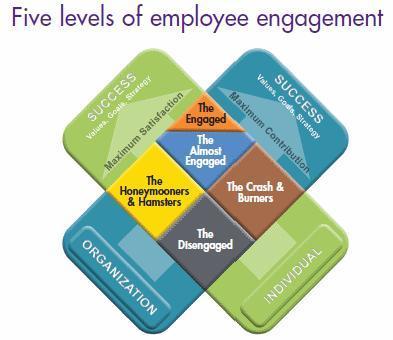
It demonstrates a good model for engagement, defining the roles as hamsters, crash and burners, the engaged, the disengaged, and the almost engaged. Full engagement is the intersection of the maximum contribution for the organisation and maximum satisfaction for the individual. The video makes a good point that because the “almost engaged” are good performers and a large proportion of the organisation, it is tempting to focus your coaching effort on the other areas that are far more disengaged.
It also has a good model to follow so that engagement happens all the time (not just a survey or once a year thing). Employees need to ACT (Assess, Coommunicate and Take Action), Managers need to CARE (Coach, Align, Recognise and Engage) and Executives need to CASE (Communicate, Authentic, Significance and Excitement).

 Craig, Tony and Renee talk about Apple, RFID story cards and ponder who is agile?

 Craig Smith
You must be logged in to post a comment.