 In this podcast the InfoQ Culture & Methods editors, along with special guest Sandy Mamoli, discuss what they have seen over the last year and the trends they see going forward.
Source: InfoQ Culture & Methods Trends Report March 2022
In this podcast the InfoQ Culture & Methods editors, along with special guest Sandy Mamoli, discuss what they have seen over the last year and the trends they see going forward.
Source: InfoQ Culture & Methods Trends Report March 2022
Hybrid work needs careful redesign and reassessment of the workplace and will be a significant challenge going forwardThis year’s trends report is definitely the most pessimistic we’ve seen in the last decade. Some trends we saw last year have hit bumps and roadblocks and some early cultural successes have dropped back.
Many of the points we made in last year’s trend report are still true, and sadly there has not been a lot of movement in the topics on the left of the technology adoption curve. 2021 was a year of consolidation, massive movement of people and more pressure being put on already tired teams.
Source: InfoQ Culture & Methods Trends Report – March 2022

COVID-19 was the biggest driver of culture change in the last yearCOVID-19 was the largest influence of change in the culture and methods space in 2020 and the knock on effects in 2021 are driving many of the trends we see at this time. The previous trends report was released early in the pandemic and we now have a year’s worth of content to explore how the IT world has adapted and responded. There have been many examples of great collaboration, teamwork and adapting to new ways of working along with plenty of stories of hardship, Zoom Fatigue, mental and physical health challenges and other impacts as people have adapted to working from home, managers have changed long-held beliefs about remote work and organisations have adopted new technologies to support the shift.
Source: Culture & Methods Trends Report March 2021
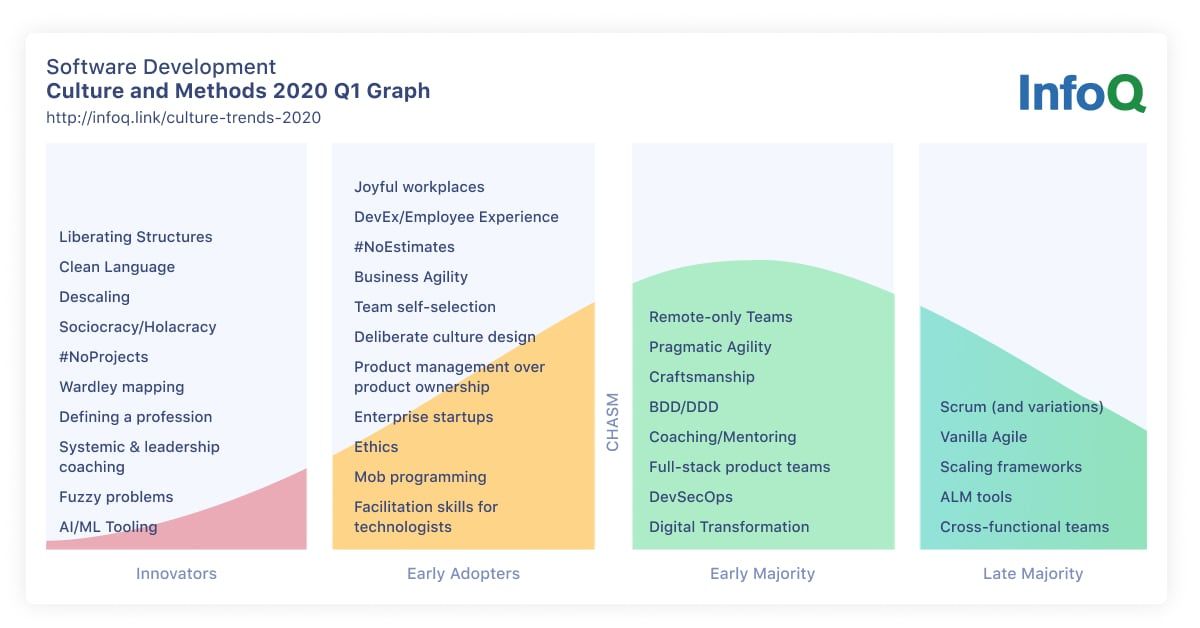
In this podcast the Culture and Methods editorial team discuss their views on the current state and trends in the Culture and Methods area that they monitor. The editorial team consists of Ben Linders, Craig Smith, Doug Talbot, Raf Gemmail, Shaaron Alvares and Shane Hastie. Unfortunately Shaaron was unable to join in the recording, however her perspectives are included in this and in the accompanying trends report article.
Source: Software Teams and Teamwork Trends Report Q1 2020

 Craig Smith
You must be logged in to post a comment.