This is the Engineering Culture Trends Report for 2026. Featuring a panel of QCon speakers and InfoQ contributors, they discussed AI adoption maturity and risk.
Source: Culture & Methods Trends 2026: The Human Side of AI Engineering
This is the Engineering Culture Trends Report for 2026. Featuring a panel of QCon speakers and InfoQ contributors, they discussed AI adoption maturity and risk.
Source: Culture & Methods Trends 2026: The Human Side of AI Engineering
This report summarizes how the InfoQ Culture and Methods editorial team sees the ongoing and emergent trends in the culture and methods space in 2026.

In the annual Culture & Methods Trends Report podcast, a panel of QCon speakers and InfoQ contributors discussed AI adoption maturity and risk, the transformation of engineering team structures and roles, and the human dimensions of software development that must not be lost in 2026. The discussion was hosted by Shane Hastie (Lead Editor, Culture & Methods) and included Ben Linders, Rafiq Gemmail, Craig Smith, Vanessa Formicola, Shawna Martell, Phillip Mortimer, and Yinka Omole.
Source: InfoQ Culture and Methods Trends Report – 2026

I was quoted in the article:
It’s the gap between the good and the not so good and the haves and the have-nots. Some organizations have embraced this and ran with it, but there are many organizations… they never really made the leap to agility practices in the twenty-five year span that we had in order to do that. And now they’re trying to adapt to these new practices and still building it on organizations that are still tending software’s being built in 1995.
This is the 2025 Engineering Culture Trends Report. The InfoQ editorial team and special guest Charity Majors discuss how AI is transforming software development and team performance.
Source: InfoQ Culture & Methods Trends in 2025
This report summarizes how the InfoQ Culture and Methods editorial team sees the ongoing and emergent trends in the culture and methods space.
In the annual Culture & Methods Trends Report podcast, InfoQ’s Culture & Methods editorial team, with special guest Charity Majors, explored the shifting landscape of software development culture, tools, and practices. The wide-ranging discussion revealed several key trends shaping how software teams are working in 2025, from the profound impact of AI tools on development practices to evolving perspectives on team performance and observability.
Source: InfoQ Culture and Methods Trends Report – 2025

In this podcast the Culture and Methods editorial team discuss their views on the current state and trends in the Culture and Methods area that they monitor. The editorial team consists of Ben Linders, Craig Smith, Doug Talbot, Raf Gemmail, Shaaron Alvares and Shane Hastie. Unfortunately Shaaron was unable to join in the recording, however her perspectives are included in this and in the accompanying trends report article.
Source: Engineering Culture Trends Report – March 2021
 Craig is at YOW! West in Perth and sits down with Dr. Anita Sengupta, a rocket scientist and aerospace engineer at NASA Jet Propulsion Laboratory (and since this interview was recorded now a Senior Vice President at Hyperloop One). They geek out talking about space exploration as well as the important topic of diversity:
View original post 25 more words
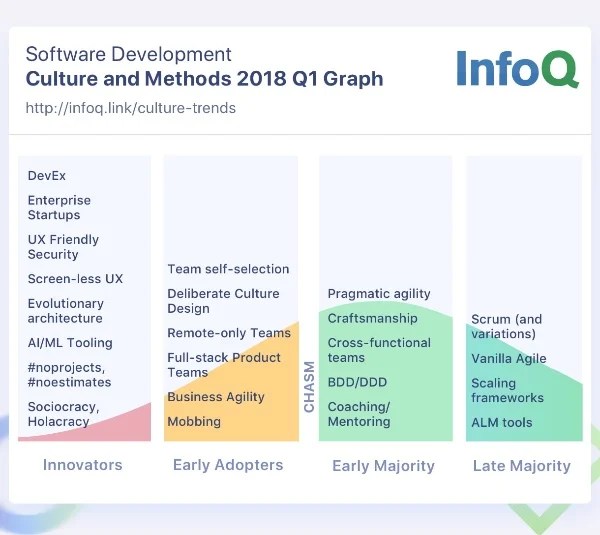
At InfoQ we regularly revisit the topics we focus on based on the technology adoption curve. This article provides a view of the topics which are important to the community at the beginning of 2018.
Source: Engineering Culture and Methods InfoQ Trends Report – January 2018


You must be logged in to post a comment.