Agile Australia 2012 Day 1 Review

Agile Australia 2012 was held a few weeks ago at the Hilton on the Park Melbourne in front of a record (and venue busting) 850 attendees. This year I had the privilege of being a plenary session host and speaker, present at two workshop sessions and be an MC at a number of different sessions.

Furthermore, I was a member of the advisory committee with the role of program overview along with the usual duties of reviewing and shepherding conference speakers. This year the review process was open to comments and voting from the community and overall I think we ended up with a good mix of proposals.

With all my duties I was quite busy this year, but here are my notes from day 1.

Keynote: When The Stakes Are High

Dr. Fiona Wood, Plastic Surgeon and Director of the WA Burns Unit, was the keynote speaker and undoubtedly for many people was the highlight of the conference. The advisory committee (and particularly Martin Kearns) had been aiming to get somebody from the medical profession for a couple of years, and her talk was nothing short of inspiring.

From Agile Australia 2012
  • you either engage in the landscape or whine about it
  • we need to enjoy what we do, but it is our passion that drives us
  • when you see what you think is the answer, step back and look for the rest of the jigsaw
  • learn something from everyday, so that tomorrow is better
  • time is precious, understand what is out there rather than reinventing the wheel, start in front of the start line
  • had to look for nozzles to spray skin, ended up using Italian mouth freshener!
  • you need to articulate the vision so that the team will get it, passionate leadership alone won’t bring people along for the journey
  • no better way to manage a disaster than having planned for it first
  • how can we mould our resources to deliver at a better level
  • leadership has to be very flexible
  • respect those people that have changed your life, if you realise it say thank you, you may miss your opportunity in the future
  • nobody does anything in life in isolation, need to communicate well so we can contribute
  • why can’t we celebrate being the best we can be every day
  • criticism is essential, but criticism and walking away is a total waste of time
  • I use energy to find better solutions to the patients I treat rather than waste that energy arguing with somebody
  • we access our thoughts by communicating, facilitating and shaking the tree
  • today is not as good as it gets, that’s what gets me up in the morning
  • it’s not get to the top of the mountain and stick the flag, it’s the journey
  • “who am I not to dream”, dream but anchor it in reality

Keynote: Agile: Looking Back, Looking Forward: Adapt, Innovate, Collaborate & Deliver

Following on from Dr. Fiona Wood was a tough act, but in front of 850 I took the stage with Nigel DaltonDavid Joyce and Simon Bristow to deliver this session. The slides are available in a separate post.

From Agile Australia 2012

Mainframe Test Automation Within SCRUM – How Did We At The BNZ Get It To Work?

Bram Surti and Rob White from BNZ delivered this session. Essentially I was interested to see if they did anything different to what I had already tried myself in this space. Sadly, I didn;t learn much new, but I was pleased to see they were using a lot of the same tools and approaches that I had used myself in this space. Their slides are available here.

From Agile Australia 2012
  • needed a Java expert to help with the writing and debugging of tests
  • used Concordion – developers instrument the tests and used JUnit under the covers
  • used Jenkins for continuous integration
  • COBOL is a dinosaur, it is scary and big and hard
  • used stored procedures to inject messages – could be dropped and tested on the mainframe and invoked from any language
  • used Concordion Logging Tooltip Extension to get the debugging output
  • used FreeHost 3270 to drive the green screens, old software that needed some upgrading
  • got buy in from mainframe developers as driving green screens was very useful for upgrades, got exposure to another language
  • took 30% longer to write test than originally thought, but testers said at the end it saved 50% of their time
  • isolating data for the test suite was imperative

What Happened To People Over Process?

I was MC to this session by Sarah Taraporewalla from ThoughtWorks, her slides are available here.

From Agile Australia 2012
  • we don’t spend enough time understanding people
  • as a leader we don’t have all the answers, but we know we can do better
  • Kinder Surprise in relation to people – wrapper is the actions of people, but it is a thin layer, peel off the actions you get to the attitudes that govern what we do, apply a bit of pressure and you get to the values, open up the inner canister and you get to people’s belief system
  • don’t really understand our belief system until you are challenged by somebody else’s – a good example of this is people and their attitudes to attending meetings – you may need to understand what drives people
  • there is a lot of literature around this!
  • transactional analysis – Games People Play (Eric Berne) and I’m OK – You’re OK (Thomas A. Harris) – at any given state we have a mental state of an adult, parent or child
  • child – react to world around you as if you were a child (when I grow up, I wish, I want)
  • parent – react like a parent based on imprints of how our parents reacted (should, ought, could)
  • adult (analytical side – who, what, why, I think)
  • even if you know yourself, you don’t know jack! – people talking on the same plane have harmonious discussions, they break down across the positions (what people know about the world)

Practical Kanban for Software Development

I was MC for this session delivered by Perryn Fowler from ThoughtWorks. I had high hopes for this talk as Kanban is still not well understood in the wder community. It covered a lot of good topics (and, as he stated at the top, the talk was the thoughts of Perryn), but it fell victim to running out of time for the meaty stuff and unfortunately was a little rushed at the end. Furthermore, his slides do not seem to be available either.

From Agile Australia 2012
  • Kanban is not just cards on a wall, even though literally it is a visual indicator
  • Kanban is not an entire methodology, it is a technique
  • Kanban is a tool to tackle particular situations and problems, we often treat these situations as normal, but there is a better type of normal
  • limiting your WIP, the manageable level is probably a lot lower than you think
  • Kanban dots – stick them on your wall to indicate WIP
  • Kanban is about stop starting and start finishing
  • utilisation is not throughput, high utilisation damages throughput
  • Kanban is working as a team
  • business goal burnup – when do we start making revenue – keep your eyes on the prize
  • we are trying to achieve flow – Kanban will make poor flow visible
  • layered teams (multiple technologies) – technical layer stories don’t make sense and teams get out of synch, use task cards for the work and put WIP limit on the cards
  • reduce WIP to learn about your process
  • bugs and rework – it counts towards WIP, can put in the development or test column, whatever you are most comfortable with
  • blocked is nothing we as a team can do anything with – does not count towards the WIP limit
  • people will cheat – the rules aren’t important, it is the principles you want to achieve
  • use a green sticky for done rather than a done swim lane
  • small cards gives us good flow
  • Kanban will feel like it is causing problems, it is just making it visible

Value and Culture OVER Practices and Processes – Driving Agility at Bankwest

I was MC for this session delivered by Sandra Dalli and Sarah McAllister from BankWest. I really enjoyed this session. They kicked off the session with a great video with music and time lapse pictures (unfortunately it does not seem to be available publicly). Most enjoyable was their honesty about their journey and this mistakes they made along the way (they started by spending three months in a cubicle writing a document about Agile!). It also appears that their slides are not available currently.

From Agile Australia 2012
  • apply Agile principles to your transformation
  • you don’t have to be on an Agile project to be Agile – agility can be applied to everything
  • people drive the change
  • executive sponsorship is really important

Failure: A Love Story

I was MC for this session for Tom Sulston from ThoughtWorks. The highlight of this talk was the fail cake! His slides are available here.

From Agile Australia 2012
  • fear can be a motivator, but it is not useful
  • flight or fight – flight is the default response
  • systematic desensitisation – common technique for getting rid of fear
  • we always plan to succeed, so we don’t plan for failure
  • failure is a really great learning tool – if you made the failure you know it, the hard part is sharing with the team
  • taking fear of failure to the brink that you don’t know what to do is really bad
  • retrospectives give you a coping mechanism – share with others and make it better
  • continuous integration – fail early and stop the line
  • automated testing – removes doubt, they fail for a good reason
  • showcases – we find out we are going to fail early
  • sustainable pace – a failure because we still get a crunch at the end of the project, allows us to build slack because you can’t run at 100%
  • it’s about learning not winning
  • continuous delivery – you can go to production at any time, remove the fear of go live
  • aim for simplicity and feedback
  • fail cake – if you break something, you need to buy cake for the team, nobody is afraid of cake, nobody can yell at you with a mouthful of cake!

Safe To Fail

I was thrilled to be MC to Phil Abernathy (he was my MC last year and I have worked alongside him for a number of years). He had a great set of slides at the start of this talk to illustrate his experience. Given I knew the content of this talk quite well I did not take any notes, but I did like his analogy around the $100 strategy (for every $100 spent, where did it go – pull the strategic levers to figure out where you can change, these become your strategic programs). His slides are available here.

From Agile Australia 2012

Other Stuff

At the beginning of the day, IBM sponsored a speakers breakfast, and they recorded an Agile song called “Wake Up To Jazz” (video and audio).

At the same time, Renee Troughton and I took the opportunity to record a conference kickoff podcast for the Agile Revolution.

Some of my colleagues presented talks on day 1 including Dipesh Pala (Easy Ways to Break Up) and Renee Troughton and Paul Watson (Panel: Agile Governance – The New Disinfectant).

The night wrapped up with a student event called Activate Agile. I sat in the back of a number of presentations, with the standout for me being being an overview from Andy Sheats about their journey at health.com.au.


Episode 35: Scrum Shortcuts Without Cutting Corners

The Agile Revolution's avatarThe Agile Revolution Podcast

Ilan GoldsteinRenee, Craig and Ilan Goldstein talk at Agile Australia 2012 about Scrum Masters, conferences, writing a book and the state of Agile amongst other things.

Ilan is the Director at AxisAgile, and he is the author of the Scrum Shortcuts Without Cutting Corners blog. He is currently writing a new book with the working title “Scrum Shortcuts Without Cutting Corners” for Addison Wesley as part of the Mike Cohn Signature Series.

TheAgileRevolution-35 (33 minutes)

View original post

Brisbane Agile & Lean Meetup: Agile Lightning Talks + OpenMRS

MeetupRecently the Agile Academy decided to get out of running community meetups and hand them back to the community. At the same time, Adrian Smith and I had been talking about the lack of meetup groups in Brisbane. As a result, we took over the established group that existed and created the Brisbane Agile and Lean User Group.

We held our first meeting last week at the Villager Hotel who kindly sponsored the venue and some nibbles. We had about 30 attendees turn up to listen to a discussion about OpenMRS as well as having some group discussions on distributed Agile and selling Agile.

For our first meetup (under our new identity), we are going to run some lightning talks in an open space format. With a number of members having just attended Agile Australia and a long time since our last meetup, we are looking for members to share their stories.

For those that attended Agile Australia, there was a calll to action to support the OpenMRS project (http://openmrs.org/). With groups already kicked off in Melbourne and Sydney it would be great to canvas interest for a similar group in Brisbane.

If you are interested in giving a Lightning Talk please contact us and propose a topic. Alternatively, feel free to speak with us on the night as we setup the agenda.

We are also looking for suggestions on where and where to best host our meetup as well as looking for upcoming topics that the group is interested in hearing or speaking about.

After an overview of the new group and some discussion on potential upcoming topics, Michael Harrison led a discussion with Cathie Hagen on OpenMRS:

We then broke into two groups to talk about Distributed Agile:

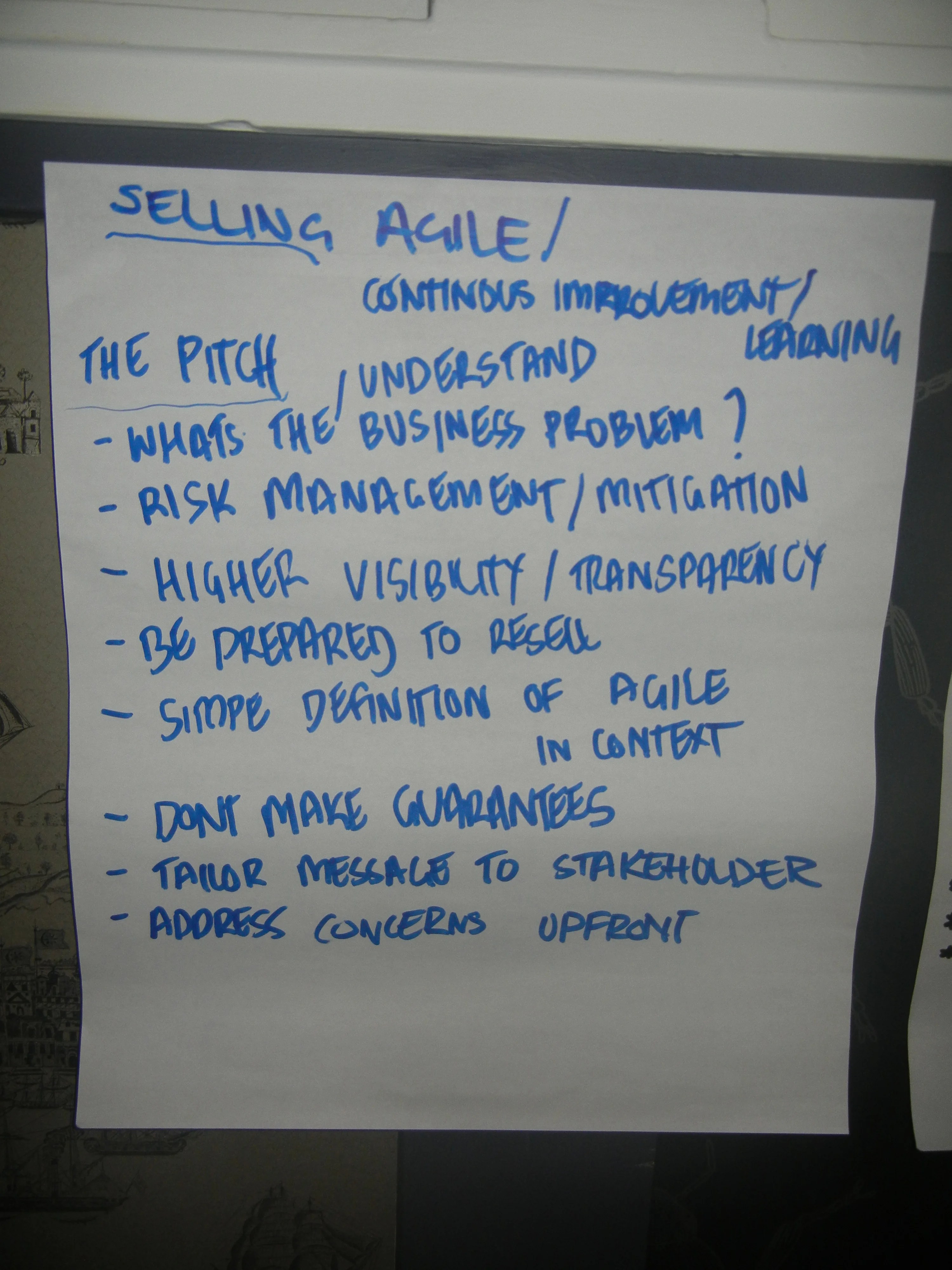
Here is the output:

The other group talked about Selling Agile:

Here is the output:

Episode 34: Agile Australia 2012 Wrapup

The Agile Revolution's avatarThe Agile Revolution Podcast

Agile Australia 2012Craig and Renee returned from the Agile Australia 2012 conference in Melbourne and share their highlights including:

View original post 30 more words

Agile Australia 2012 Pre-Conference Workshops Review

The day before the Agile Australia 2012 conference in Melbourne was workshop day, and I presented a couple of sessions as well as sitting in on others. There was a good mix of local talent delivering workshops this year. One of my hopes for next year is to make them inclusive of the conference proper somehow, so more people can benefit from and experience them.

First Steps With Agile

On behalf of the Agile Academy, Rene Chappel and I presented First Steps in Agile to a large enthusiastic class (in fact, the class was four times larger than we were expecting and much larger than the numbers I have had in similar classes for the last few years).

New to Agile and wondering where to start or want to know what all the fuss is about? This workshop will start you on your journey and help you become familiar with the core values and principles of Agile. You will gain an understanding of what is meant by the term ‘Agile’ and learn about some of the key practices and processes of an Agile approach (while having some fun along the way!)

Agile Coaching Workshop

The session I presented with Adrian Smith had a capacity turnout  The slides are available in a separate post.

Below is a picture from the workshop where we are getting attendees to move around the room and identify their coaching strengths.

From Agile Australia 2012

Think Like An Agilist

I had one session free and sat in on this session delivered by Jason Yip. The workshop exercises presented scenarios and encouraged participants to practice speaking aloud their process to solving the scenario.

From Agile Australia 2012
  • novices understand the formulas but not what is happening
  • superficial (understand the formula), semantic understanding (understand what is going on), qualitative understanding (know instinctively what is true)
  • “Think like a Commander” – US Army exercise to expose and correct weaknesses
  • learning is not a comfortable experience, it is an experience of confusion
  • sits between classroom study (learning basic concepts) and a full scale simulation (you use your strengths to achieve an aim)
  • use the think aloud protocol
  • fallacy of thinking – can’t help from a learning perspective, you obviously didn’t think about it
  • cognitive themes – things to think about
  • people will never discuss what is working well  when dealing with a problem
  • what someone tells you is mostly their interpretation, they can encourage you to miss things
  • your strengths and weaknesses sometimes blind or endear you to different roles
  • need to practice to answer reflexively

Episode 32: Agile Australia 2012 Kickoff

The Agile Revolution's avatarThe Agile Revolution Podcast

Agile Australia 2012Craig and Renee are at the Agile Australia 2012 conference speaker breakfast where they discuss the workshop day, the upcoming conference and their respective talks and a Lean Startup story about monkeys and bananas.

TheAgileRevolution-32 (9 minutes)

View original post

Agile Australia 2012: Agile: Looking Back, Looking Forward: Adapt, Innovate, Collaborate & Deliver

My plenary presentation from Agile Australia 2012 with Nigel Dalton, David Joyce and Simon Bristow called “Agile: Looking Back, Looking Forward: Adapt, Innovate, Collaborate & Deliver” is available on SlideShare.

Agile adoption in Australia and across the world is now becoming more mainstream and, as a community, we are struggling to address the issue of how to take experienced Agile practitioners to the next level, while still supporting those who are beginning their journey. With the “agile” word getting so overloaded, the challenge is to continually innovate without assigning labels or losing focus on our prime objective – to deliver!

Join Craig Smith with Nigel Dalton, Simon Bristow and David Joyce (on the couch) as they explore different viewpoints on all things Agile – then, now and future!

Some of the comments on Twitter included:

@jchyip: #adapt discussion is similar to our Agile cult discussion at this morning’s Lean Coffee. #agileaus

@carolineggordon: Issueing a challenge to the women in the audience at the panel, I want to see one of us up there next year #agileaus — #deliver

@stephlouisesays: Always look forward to hearing @smithcdau at #agileaus -didn’t disappoint! Valuable messages and images that make you think (and giggle!)

@lukasm: Great start to #agileaus Inspiring talk by Dr Fiona Wood followed by a thought provoking panel on where agile is, has been, and going.

@kiwihoria: Are we there yet? There’s no #Agile destination, just a journey.http://ow.ly/i/EYyW #AgileAus

@agilerenee: Hmm not sold that Perth was the highest per capita ad a community – Wellington rocks with 467 people for 200k city #agileaus @smithcdau

@andrewlitvak: Why paper documentation is the worst way to collaborate – no rich interaction, not effective communication #agileaus

@kiwihoria: Is your organisation retrenching to waterfall? Hold stand-ups in stairwells, hide kanban boards under the desk – #guerillaagile #agileaus

@Prash_Sagar: agile will not solve the problems, it will help you identify them @simonbristow #agileaus #adapt

@rowanb: Great to hear @dpjoyce call out “veneer agile”… “doing Agile vs *being* Agile”. Let’s stop saying “doing Agile” #agileaus

@SMRobson: #agileaus @smithcdau agile adoption is like playing Donkey Kong. Level 1 is hard & everyone throws barrels at you…but level 2 is harder!

@kiwihoria: Renew or decline? http://ow.ly/i/EYtO It’s up to us to keep improving teams, products and communities #agileaus

@agilerenee: “our job as a community is to keep renewing the product – the product that is #agile” @smithcdau #agileaus

@SMRobson: #agileaus Nigel Dalton – take agile beyond IT, your job is to work with the business, principles can apply to everyone

@kiwihoria: #Agile job demand increased steadily in AU/NZ – lots of emphasis on Product Management now http://ow.ly/i/EYsd #AgileAus

@andrewlitvak: UX is now a strong focus for Agilists. Woohoo! #agileaus

@rowanb: “At a team level it is job well done but… In terms of business agility, we still have a fair way to go.” @dpjoyce #agileaus

@andrewlitvak: Delivery agility, we’re nearly there… Business agility? Not so much. Yet. #agileaus

@lukasm: Either me or that couch need some stilts! #agileaus

@vivierose: So great to see @smithcdau on the main stage opening #agileaus

@justinhennessy: Great intro from @smithcdau #agileaus

@SMRobson: #agileaus cool potted history of Agile from @smithcdau & even better – lets change it to Raccoon so we get over the name

Agile Australia 2012: Agile Coaching Workshop

My workshop from Agile Australia 2012 with Adrian Smith called “Agile Coaching Workshop” is available on SlideShare.

The Agile Coach is a critical role in helping leaders, teams or individuals understand, adopt and improve Agile methods and practice. Additionally, an Agile Coach helps people rethink and change the way they go about their work. For a individual to be effective in a coaching role, they must poses a wide range of skills and experience. In this workshop we will explore Agile coaching skills in the context of a competency framework and provide participants with lessons from real-world coaching experience. The workshop will provide an opportunity for participants to learn about coaching, identify areas of Agile development and to broaden skills through hands-on group and individual exercises and games.

You will:
» Understand role of an Agile coach and the typical development pathways
» Identify personal areas of strength/weakness in relation to a broad range of Agile and related skills
» Learn situational specific coaching techniques for common Agile dysfunctions
» Understand the use of maturity models in helping teams learn and adapt to Agile
» Understand organisational and role specific Agile challenges
» Learn how to adapt Agile practices to suit team specific challenges

UPDATE: Due to some requests for the competency matrix, a PDF version is available for download

Episode 31: An Apple A Day

The Agile Revolution's avatarThe Agile Revolution Podcast

AppleCraig, Tony and Renee talk about Apple, RFID story cards and ponder who is agile?

Quotes:

“The aim for any company is for everybody to gain – shareholders, employees, suppliers, customers, community, the environment – over the long term” – Deming

TheAgileRevolution-31 (43 minutes)

View original post

Moneyball

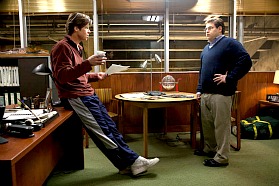
MoneyballSo there have been a lot of posts out there about Moneyball and how it directly relates to Agile and the Lean Startup. However, I finally got around to watching the move tonight (thanks to my colleague Renee Troughton for lending me the Blu Ray) and had to note down my own thoughts. There are so many good quotes and scenes from the movie, but here are just a couple of standouts (warning, some folks may consider these to be spoilers if you have not seen the movie!)

Right at the start of the movie Billy Beane is talking to the team owner about needing more money (sounds like the start of any typical traditional project to me!)

Billy: I can’t compete against a hundred and twenty million payroll with thirty eight million dollars.
Schott: We’re not gonna compete with these teams that have big budgets. We’re gonna work with the constraints that we have and you’re gonna get out and do the best job that you can recruiting new players. We’re not gonna pay seventeen million dollars a year to players.

And a little later in the scene, Billy sets his goal.

Billy: That’s my bar. My bar is here. My bar is to take this team to the championship.

At the scout’s meeting, their discussion is all about appearances rather than understanding and building a team.

Scout: Ugly girl friend means no confidence.

In that same meeting, I really enjoyed the scene where Billy is in the position of a coach/facilitator and keeps asking them if they understand the problem!

Grady: We’re trying to solve a problem here.
Billy: Not like this you’re not. You’re not even looking at the problem.
Grady: We’re very aware of the problem.
Billy: Okay, good. What’s the problem?
Grady:  Okay, Billy. We all understand what the problem is. We have to replace…
Billy: Good. What’s the problem?
Grady: The problem is we have to replace three key players.
Billy: No. What’s the problem?
Poloni: Same as it’s ever been. We’ve gotta replace these guys with what we have existing.
Billy: No! What’s the problem, Barry?
Barry: We need three eight home runs, a hundred twenty R.B.I’s and forty seven…
Billy: Aaahhh! The problem we’re trying to solve is that there are rich teams and there are poor teams, then there’s fifty feet of crap, and then there’s us. It’s an unfair game. And now we’re being gutted, organ donors for the rich. Boston has taken our kidney’s, Yankees takin’ our heart and you guys are sittin’ around talkin’ the same old good body nonsense, like we’re selling deeds, like we’re looking for Fabio. We got to think differently!

A little later in that scene, Billy is really trying to make the committee think differently, but they are just thinking in the same old ways.

Billy: If we try to play like the Yankees in here, we will lose to the Yankees out there
Grady: Boy, that sounds like fortune cookie wisdom to me, Billy.
Billy: No, that’s just logic.

I really liked the scene where Billy is talking with Art about his contract. The final line of the conversation reminded me of many wasted meetings.

Billy: Good meeting. Everytime we talk, I’m reinvigorated by my love of the game.

And then there are always the nay-sayers and (in the case of Grady) those who will always try to bring your approach down.

Announcer: Do you see this as a decimation of the whole team?
Grady: I think that he bought a ticket on the Titanic.
Announcer: Oh, boy! He’s tried to come up with a new approach, my hat’s off to him. It won’t work.

The discussion between Billy and Peter about cutting players was a good reminder of being honest and transparent.

Billy: They’re professional ball players. Just be straight with them. No fluff, just facts. ‘Pete, I gotta let you go. Jack’s office will handle the details.’
Peter: That’s it?
Billy: Would you rather get a bullet to the head, or fire to the chest or bleed to death?
Peter: Are those my only two options?

There was an interesting little scene regarding soda, that is a good reminder that sometimes you can be penny smart but pound foolish (the little things are sometimes what keeps individuals and teams motivated).

Justice: And how come soda is a dollar in the club house? Cause I’ve never seen it like that.
Peter: Billy likes to keep the money on the field.
Justice: Soda money? Really? Where on the field is the dollar I’m paying for soda?

The scene where Billy shakes up the team by firing some of his all-stars was the turning point that shows that sometimes your superstars are hiding the real talent (and sometimes you need to do something extreme to make a change). Art is the classic Project Manager in this scene.

Art: Yeah, I don’t wanna go through team rounds, Billy. The line up card is mine. And that’s all, okay?
Billy: The line up card is definitely yours, I’m just saying you can’t start Pena first.
Art: Well, I am starting him at first.
Billy: I don’t think so, he plays for Detroit now.

There are some good inspirational pieces in the film (like when Billy asks Justice to step up and be a leader for the younger guys). This quote is my favourite though.

Billy: Everybody, listen up! You may not look like a winning team, but you are one. So, play like one tonight.

The big speech when Billy is at the Red Sox resonates with anybody who has tried to implement Agile in a team before.

For forty one million, you built a playoff team. You lost Damon, Giambi, Isringhausen, Pena and you won more games without them than you did with them. You won the exact same number of games that the Yankee’s won, but the Yankee’s spent 1.4 million per win and you paid 260 thousand. I know you’ve taken it in the teeth out there, but the first guy through the wall. It always gets bloody, always. It’s the threat and not just the way of doing business, but in their minds it’s threatening the game. But really what it’s threatening is their livelihoods, it’s threatening their jobs, it’s threatening the way that they do things. And every time that happens, whether it’s the government or a way of doing business or whatever it is, the people are holding the reins, have their hands on the switch. They will bet you’re crazy. I mean, anybody who’s not building a team right and rebuilding it using your model, they’re dinosaurs. They’ll be sittin’ on their ass on the sofa in October, watching the Boston Red Sox win the world series.

Near the end, when Peter shows Billy the video about the guy hitting the home run, they starting mentioning metaphors (I was so thinking about the metaphor in XP at that point!)

Also, the Lenka song “The Show” made me think about why as Agile coaches we get up in the morning and do this (plus good to see Australian music in the movie!)

I am just a little lost in the moment
I’m so scared but I don’t show it
I can’t figure it out
It’s bringing me down I know
I’ve got to let it go
And just enjoy the show


For those who haven’t seen the movie, it is well worth the time spent. I hadn’t realised Aaron Sorkin had worked on the screenplay, so for that alone it had to be good!