“BDD In Action” is a book that aims to cover the full spectrum of BDD practices from requirements through to the development of production code backed by executable specifications and automated tests.
Episode 88: Scrum Australia Anticast
Adam Weisbart turns the tables hosting an anti-podcast where he interviews Craig, Renee & Tony at Scrum Australia 2014 in Sydney on their highlights from the conference. The conversation included:
* Adam Weisbart’s “Agile Antipatterns” talk and his awesome Agile Antipatterns cards
* Craig Smith’s “40 Agile Methods in 40 Minutes” talk (and the methods on the cutting room floor)
* Agile movements are just as important as methods
* Tony mentions the original Winston W. Royce “Managing the Development of Large Software Systems” waterfall paper – why??
* Henrik Kniberg’s “Scaling Agile @ Spotify” keynote
* Matthew Hodgson’s “Backlogs, Story Mapping and Star Wars” talk
* Knowing one of the organisers like Star Wars helps!
* Renee Troughton’s “Darth Vaderless Daily Scrums” talk
* Important to know the expectations that everyone else should be having on each other to…
View original post 83 more words
Episode 87: Coffee From The Trenches with Henrik Kniberg
Renee and Craig catch up with Henrik Kniberg at Scrum Australia 2014 where he tries coffee for the first time in ten years at the Paramount Coffee Project (the best coffee in Sydney according to Renee). Apart from getting his verdict on the brew, they also talk about:
- First time back in Australia in a long time to keynote at Scrum Australia 2014
- Craig’s interview “Henrik Kniberg on Lean From The Trenches, Translating the Agile Manifesto and Living Agile” from Agile 2012 in Dallas on InfoQ
- “Scrum and XP From The Trenches” and how the book was written in 3 days
- Ivory Tower Syndrome – you can get good at describing crap in a believable way if you don’t have connections to reality
- “Kanban and Scrum: Making The Most of Both“
- Spotify – 25 coaches with 25 pet approaches, the culture and the fundamentals in…
View original post 264 more words
Episode 86 : Sticky Notes and Agile Stuff
Renee sets the tone for the Podcast, talking sticky notes and a great new app Post it plus by 3m and tests them live on the podcast .
This week the team talk about :
- Are performance reviews a waste of time ? Review from the Business insider
- @agilescout Remove your constraints article piques Tony’s interest and then ends up with a debate around star treks relevance
- Renee interrupts to provide the results of her tests with the sticky notes app
- We discuss the new update to the LeSS (large scale scrum) framework by @less_works
- Craig asks questions of Renee and Tony from an Agile Coaching course
- Tony proves it’s live as he runs off to sooth his daughter, Craig and Renee take the opportunity to have some fun in his absence
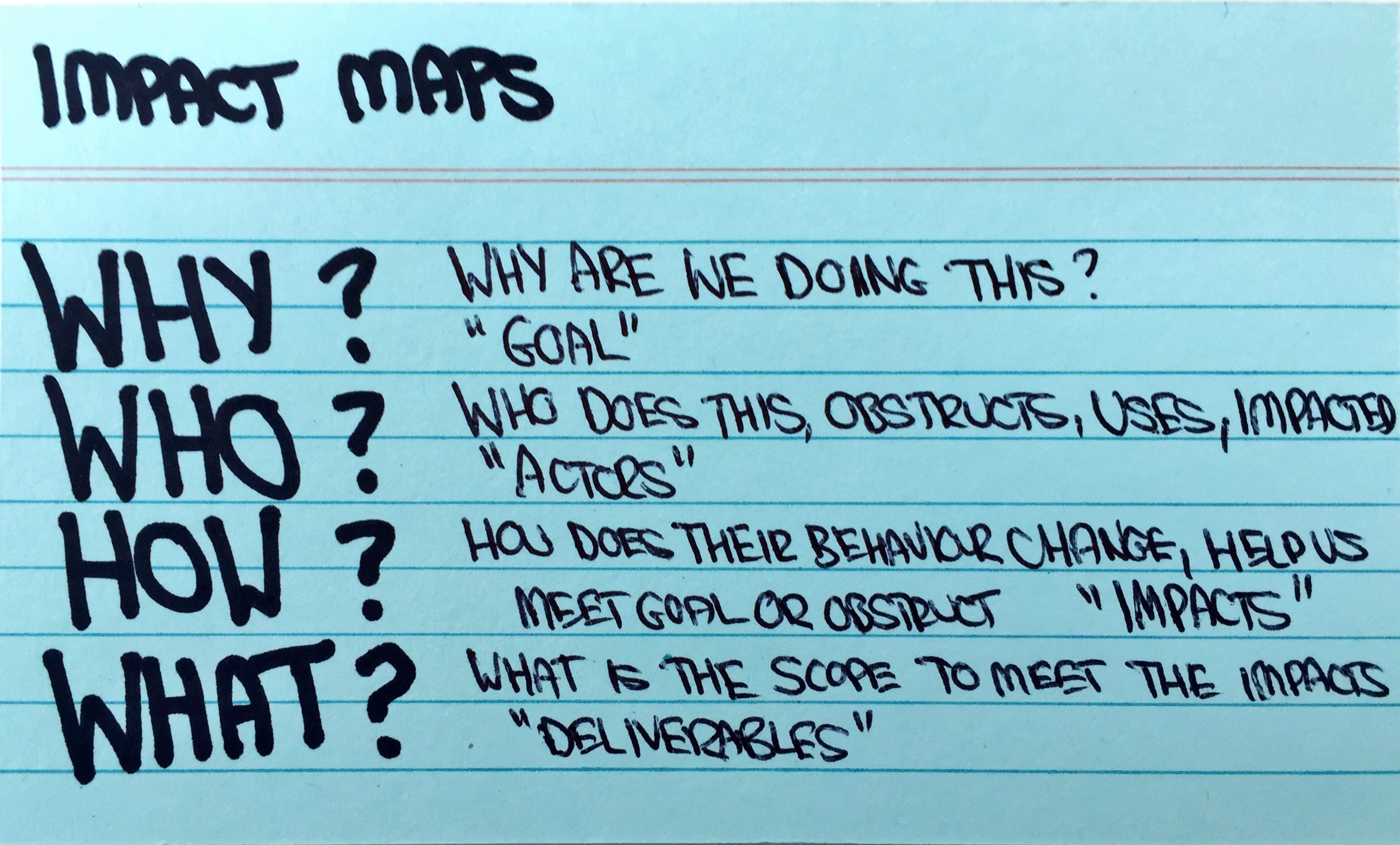
- Books The Revolutionists are Reading: Impact Mapping (Gojko Adzic), Lean Startup (Eric Ries), Bridging the Communication Gap (Gojko Adzic)
View original post 57 more words
The Value of Values
Talk of values came up recently, and Atlassian as always was held up as an inspiration. The video covers it all, but I have always admired their values:
- Open Company, No Bullshit
- Build with Heart and Balance
- Don’t #@!% the Customer
- Play, as a Team
Episode 85: Scrum Australia 2014 Vox Pop
Tony and and sometimes over modulated Craig (with Renee popping up from time to time) roam the floor at lunchtime at Scrum Australia in Sydney and talk to some interesting Scrum folks along the way about their thoughts on the conference and the Scrum community in general:
- Shane Sendall (Suncorp) – end to end delivery and design patterns for teams, minimum loveable products, looking at flow efficiency
- Justin Urbanski (Rally) – Scrum Alliance Coaching Clinic, minimum viable bureacracy, scaling
- Ben Hogan (Tabar) and Martyn Frank (CBA) – teams overcommitting, Scrum in 60 seconds, visual facilitation inspired by Lynne Cazaly, kanban in curriculum development in universities
- Neil Killick (MYOB) – spoke with Craig Brown running the #noestimates Puzzle Game, 40 Agile Methods in 40 Minutes, Tony suggests #lotsofestimates, Neil’s posts on #noestimates
- Jason Yip (ThoughtWorks) and Sunish Chabba –…
View original post 125 more words
Learn Me A Haskell Development Tool Setup
I attended the Brisbane Functional Programing Group meetup this week, and one of the talks was by Chris McKay on “The Whirlwind tour of Haskell Development Tools”. I always enjoy these talks because often the books don’t adequately explain these things and the experts often assume that these things are known.
Here are my notes:
- getting started books – Real World Haskell, Learn You A Haskell For Great Good, Thiinking Functionally with Haskell
- ghc – core compiler, supported pretty much everywhere
- Cabal – package management system for Haskell, general purpose build tool
- Haskell Platform – bundle of the previous 2 bundled for your platform, plus commonly used libraries, safe place to start
- Windows – pressure for the committers to kept his up-to-date, Haskell platform takes care of the hard parts
- OS X – ghcformacosx for an installer or via brew / macports
- sandbox – supported by Cabal – will check here before going to the system libraries
- src/Main.hs is the starting point
- licences – choosealicence.com or tldrlegal.com
- default-language – Haskell2010
- GHCi – REPL console, also use for inspections at the command line, used by editor
- GHCi-NG – extension with better debugging and extra features, required for some plugins
- Hlint – like lint on other languages, looks for code smells (patterns of functional rules), good for beginners
- Hoogle is Google for Haskell – idea of what you want to do and want to know a function to do it
- Hackage – repository of all Haskell knowledge
- GhcMod – used by plugins, may need to install it, unlikely to use it directly
- Emacs – haskell-mode (syntax highlighting, indentation, REPL integration), ghc-mod (access to a whole bunch of tools, nice place to start), flycheck-haskell (syntax checking, can’t use with ghc), company-ghc (auto completion), shm (structured Haskell mode, write code in a tree and it edits for you)
- https://github.com/chrisdone/emacs-haskell-config – good place to start and works out of the box
- vim – vim2hs (syntax highlighting), syntastic (syntax checking and lint), neco-ghc (auto completion), ghcmod-vim (compliation errors and warnings, not as good as syntastic)
- other editors that work OK – Sublime, EclipseFP, Atom (from Github, still immature), intelliJ-haskell, FP Haskell Center
Instantly Better Presentations
At a recent YOW! Night, Damian Conway gave an excellent presentation on “Instantly Better Presentations”. His notes are online and the video of the presentation is below.
My notes from the session:
- if you need to give the audience bad news, give it first
- instantly does not mean effortlessly
1. Talk about your passion
- to feel more confident, you need competence – talk about subjects you genuinely understand
- seeing someone who is excited… is exciting
- energy, enthusiasm and passion through your actions and speech will translate to your audience
- find something in the required topic that gives you passion – even if you loathe the topic or have been forced by your boss to present it
2. Tell them a story
- our memory is very volatile – stays for 8-10 seconds unless we do something with it
- 7+/- 2 is horribly optimistic and not backed by research, real number is 4 +/- 1
- stories are our oldest information processing tool
- stories have a flow to assist acquisition and memorisation (all our memories are reconstructed from a storyline), have a hierarchy to assist comprehension and recollection
- tell the historical story or the story of what happened, process or funny anecdotes
- story is for your benefit to get the sequence and content right – audience don’t necessarily need to know
- stories make complexity comprehensible, structure recognisable, information easy to remember, make audiences feel more comfortable
3. Don’t search for content, select it
- what should I say is the wrong question, question you should start with is what could I say
- humans are good at recognising important stuff rather than recalling important stuff
- start with a blank sheet and write down everything you know about the topic that you might want to say – stream of consciousness
- whittle down to 3-5 most relevant and important topics to talk about
- these 5 points becomes the chapters, so go looking for the narrative that connects them – they may not connect so look for a couple of lesser topics that better connect the 5 important things
- competency – think about the questions you were asking when you were learning
4. Simplify your slides
- tools encourage a bad job
- content matters but not as much as style
- content is your payload to explode the audiences brains
- style – the stuff the audience doesn’t see that prevents them seeing what they should see
- bad style – anything that prevents the audience seeing what they should see
- a wall of text – technical audience will read everything, regardless of whether it is relevant or not
- Apple is good at presentations – simple but effective
- big words – people at the back can still read them
- slide numbers turn your presentation into a death march – get rid of background, name and title on every slide, get rid of the logos (audience sees salesperson)
- slide deck is to focus audience on the presentation – if they need context give them a separate PDF or notes
- each message is a different slide
- cluttered is overwhelming and as a result they switch off the attention channel as they are trying to read everything
- show less on more slides
5. Manage the questions
- a presentation should always be for the benefit of the audience – give them what they need
- have an explicit questions policy – hold to the end of each topic, end of the talk, or interactive through the talk (can however affect the flow)
- always be keen to take questions – shows you care
- make the questions fit in with your question – “that’s a really good question” makes others more comfortable to ask question
6. Animate code simulations
- explain code temporally, not spatially
- use animations to reveal information one thing at a time
- walk through code as an animation and highlighting
- low tech animations – use the same slide over and over – cell animation
- don’t export your slides – notes
- live coding – synthesise, automate or have a partner – need to keep contact with the audience
7. Deliver your message fearlessly
- use your nervousness – turn fear into energy
- never give a presentation for the first time – practice it live at least 3 times
- use an audience image on a big screen
Merry Christmas – Make It So!
Thanks to Lyssa Adkins and Shane Hastie for pointing me to this one!
Episode 84: Retrospectives in Middle Earth with Rachael Tempest Wood
Rachael Tempest Wood from Nomad8 in Wellington joins Tony and Craig in the Brisbane Queen Street Mall over lunch with a bonus busker on saxophone and they discuss:
- PMI and Agile are completely different mindsets, PMI Project Managers are “the CIOs of their projects”
- AgileWelly – strength through the struggle of doing Agile in government
- Wellington Agile community led by TradeMe, Snapper, BNZ
- Gojko Adzic – Specification by Example and Impact Mapping
- Agile NZ conference
- Retrospective design – creativity in facilitation is a gap
- Esther Derby’s model for restrospectives
- Paper Airplane game – using an abstract process to apply learnings to the real process
TheAgileRevolution-84 (25 minutes)


You must be logged in to post a comment.