This is a special mashup episode recorded in Auckland, New Zealand. Craig catches up with Mark Derricut from the Illegal Argument podcast and Craig Aspinall from the Coding By Numbers podcast. Not your usual Agile podcast, the discussion starts around the definition of Agile (“crash often, crash regulary”) and trying to define quality and ends up in a chat about wicked problems, devops and software development skillsets.
This episode has been released on the other channels as well (take a listen if you haven’t already)
ThoughtWorks recently published the latest update to its Technology Radar; a report produced to help technology decision makers understand emerging trends in software development techniques, tools, languages and platforms. There are some interesting observations of interest to Agile software development teams.
The YOW! 2011 Australian Developer Conference was held a couple of weeks ago in both Brisbane and Melbourne and I was able to attend with thanks to Dave Thomas and the organisers of the conference on my press credentials for InfoQ. I had the ability to record some podcasts for The Agile Revolution and Coding By Numbers as well as chat with most of the Agile related speakers. Here are some of my notes from the sessions I got the opportunity to sit in.
Dave Thomas kicked off proceedings with some Lady Java:
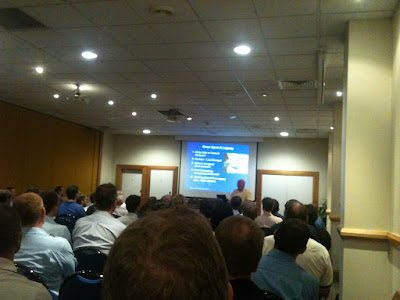
Keynote: Top 10 JVM Erroneous Zones
Cameron Purdy from Oracle presented this session. Whilst it is good to see management levels talking about and understanding the core business, I found this keynote rather average. The presentation is available here.
immutability – no concept in Java, introducing would be good for thread safety but would also improve garbage collection (stop the stop -the-world clauses)
primitive types – binding between interface and implementation, improving would simplify and fix auto-boxing and generics, would need to make sure code compiles the same way
interface vs implementation – they are all the same thing, a problem that we all inherit from the same parent
properties – very fixed contract currently, need to loosen this up
obvious intrinsic types – Decimal needs to follow IEEE standard 754-2008 (754r), need to upgrade to a 128- bit world
real runtime model – JVM must provide predictability, need more access at code level
constants – no constants for intrinsics or other similar types
alternate class file format – limited to 64KB in methods, hierarchies make no sense like inner and anonymous classes
Getting the opportunity to see Mary Poppendieck speak is always a pleasure, for this conference she delivered her talk on Continuous Design. As the program host for the Lean and Agile track, I also had the pleasure of introducing Mary. Her presentation is available here.
continuous delivery misses design and feedback – how do we know what to develop if we are thinking about continuous delivery, has created a need
continuous delivery uptake is increasing, takes about a year to get going
need to assemble a diverse team – frame, ideaton, experimentation then iterate
3M – make a little, sell a little, learn a little (repeat) – the fastest through this loop is the winner – fastest can be four times faster
need good people (pay attention to hiring) and a whole team (need all the functions which can break the agile 7 +/- 2 model), measure success in customer satisfaction
start with customers – Amazon (working backwards – write a press release, write FAQ, describe customer experience, write user manual)
disruptive design – companies like GE are starting to design products for different markets like China and India rather than USA and Europe – resulted in different design , thinking, price point
need to decide when it is time for people to see it – it’s hard to refactor books, hardware and first impressions but you need to take a chance and find out that you are wrong – a balance trade-off
minimum viable product – biggest waste is building the wrong thing followed by complexity – build it and measure the response (learn)
implement a show me more button and forward to to an under construction page and measure the clicks
avoid vanity metrics, need actionable metrics, use innovation accounting – start with a hypothesis, build MVP, target initiatives at improving a growth metric in your hypothesis, measure done as adding value
use A/B tests to change your conversion rate
test early – don’t waste your time arguing
cohort metrics – operate on data, as people run into my product how do they behave
feature toggles – switch features on/off on demand, wrap entrance to feature with toggle code, control via configuration file – customers love it
canary releasing – take a small amount of users and give them a new version, need to be able to tell a good change from a bad change very fast – monitor key thresholds and roll back fast if required – make sure when something goes wrong it never goes wrong again
Apple – ” it’s not about money” – understand customer problem and the revenue will turn up
Google – “it’s best to do one thing really, really well” – stay focussed
Amazon – “think long term” – you don’t want make a lot of money off your best customers, some things don’t always make financial sense
3M – “hire good people and leave them get on with it”
I also had a great half hour chat with Mary on the second day of the conference where we talked in-depth about continuous design as well as size of the product team. She believes the key is to enable the complete development cycle and discover good engineering products. We should stop using software words, including Agile, and start using system level engineering. As for the team size debate, we should use system engineering and break our teams into appropriate sub-components.
60 Years of Innovative and Agile Work Practices
Nigel Dalton led this entertaining and informative trip down memory lane, and as the program host for the Lean and Agile track I also had the pleasure of introducing him. The presentation is available here.
people who pay your wages don’t know your stuff, this is a heavy duty approach that has been used for the last 100 years
1930’s Cabinet War Room – as close to an agile room design as you can get, war is a fairly big project!, agile does scale (WWII), lucky it did or this presentation would have been in German!, military and politicians were in the same room, no battle plan survives contact with the enemy
1950’s U2 and SR71 – if you do good engineering, you will be amazed how long it lasts
1960’s moon race – iteratively learning through doing, working rockets are the primary measure of focus
1970’s Luna Tractor – Russians were striving for a different question, what is on the moon?, different question and cost a lot less money, Apollo 13 is the greatest example of an agile project, ask the right question…
1980’s cold war fears – madness of strategic parity, Russians learnt a space shuttle program cost a lot of money after duplicating it, took the USA 30 years to learn it
product engineering is overarching, top down and empathetic
think about what you are going to do before you do it…
million dollar idea – ideas don’t matter and are usually terrible, originality does not matter, it is quality
ideas – it’s like a blank but with blank…
consider your customers – start at the end by making a commercial (30 – 90 seconds on the problem you are going to solve and how you are going to solve it)
your best product tester is your arch nemesis
in user interface – it is much more important to be consistent than correct
real artists ship – plan, design, ship on time!
don’t ship the rough draft
fear social debt much or more than technical debt – you can fix technical debt (you can but you won’t!)
shipping a product is like giving birth to a kid – there is a heck of a lot more work to come
endeavor to kill your own, you are never done, when people are raving about the first one, you are already finishing the second, you want an army of evangelists
Appsterdam – the most important thing we have is the community
the hook is the difference to a defining product, but need to keep being innovative
Better Testing With Less Work: QuickCheck Testing in Practice
no scientific experiments that show agile is any better
we need sleep – but average time is dropping, naps are good too…
we are hardwired to look at the horizon, so lift your eyes and look around and blink
lying down improves your cognitive performance
research from University of Queensland – the longer you sit the sooner you will die
the startling ideas come at a time when you are doing nothing
eat before you’re hungry, drink before you’re thirsty – when the brain is lacking energy, the default is to say no
we are hardwired to be close to nature – we do better with natural light and real plants around us, take 5 minutes outside in a natural environment
explain the problem to your dog or a stuffed toy
in meetings, when at an impasse, get each person to explain each others version of the problem
fearless change experiments – test the waters, reflect, small success, step by step
I also had the opportunity to sit in on a very interesting interview with Linda Rising on the Coding By Numbers podcast with Craig Aspinall and Steve Dalton.
Domain-Driven Design for RESTful Systems
Jim Webber delivered this entertaining session, perhaps the most entertaining part was when he tried to explain a cassette tape to a young audience member (I remember loading Commodore 64 games off tape…). His slides are available here.
continuous deployment – eliminate the fear around doing deployment
tests – a version of feedback, need confidence
automated deployment strategy – need to be repeatable using tools, need to be able to do quickly
need architecture that can handle inconsistencies in the system at any one time – different versions of API’s, etc. in the system at the one time
feature toggles – need on the technical and business side, toggles for beta users, power users, need to be able to work on one code stream all the time for it to work
traffic – need traffic for this to be successful, especially to get useful metrics
monitoring and feedback – what characteristics are being used, monitoring and qa are the same thing (see Steven Yegge’s rant on big SOA)
Apollo program was basically Agile and continuous deployment in the 1960’s – 61 launches until they landed on the moon – only way they made progress was because they were monitoring everything
record all the values all the time
pay attention to long term metrics, not just instantaneous
should use the word anomoly more (not bug) – use feedback to understand and fix our anomalies
Other Stuff
Joshua Kerievsky gave two talks at the conference that I unfortunately did not get to see live (Lean Startup and The Limited Red Society), but I did get the opportunity to speak to him in-depth with Renee Troughton for the Agile Revolution podcast.
Renee and I also did a wrap-up podcast.
I have also published a news article for InfoQ where I asked all of the Agile speakers at the conference what the Agile community needs to embrace in 2012.
What is the most important thing that the Agile community needs to embrace in 2012 and beyond? InfoQ had the opportunity to attend the recent YOW! Australia Software Developer Conference and took the opportunity of having such a large number of Agile speakers in one place to sit in on the sessions and ask them their thoughts on this question.
Last month, Dave Thomas came to Brisbane for YOW! Nights to deliver his always insightful and entertaining presentation entitled “Mature Legacy Seeking Sexy New Technology for Fun and Profit: Extracting Gold from Legacy Code”. It’s been a pleasure to work with Dave on the last couple of Agile Australia conferences and I always try to make sure I catch his presentations when he is in town.
The following are my notes from the session:
a common complaint is that my boss does not let me do anything neat – legacy is a challenge
go where there is a big need rather than wherever everybody is – solve a problem that is important to them in a clever way
legacy code is code that has no tests
only if you have a product that matters you will have legacy – you can make bloatware even in new systems
legacy – the big ball of mud – OO is one of the biggest creators of technical debt
developers are the source of legacy debt – the developer solution is we can always rewrite it in my language – most rewrites fail
outsourcing often works short term – but you lose your business knowledge and you realise your requirements stink
vendor solution – start with a technology you don’t need
agile solution – just refactor it, there are no tools or practices that can fix millions of lines of code, it will take forever
need to figure out what the legacy is about – get the metaphor and a picture – write stories and put them on a wall, invest in getting the legacy programmers to sit down and talk about it
most companies are living on their legacy – new products are not paying the way
pair legacy and non-legacy developers to tackle the problem
use modern IDE, use modern SCM, new continuous build infrastructure is cheap, need fewer developers if your whole world is in memory
when everybody is using agile, how can it be the best practice – it is the only practice
prove your way through the old systems – there are very few greenfield projects
do TDD using live transaction roll back
automate from the data definition not screen scrape
people only do innovation when they are screwed – agile is predictability and quality not productivity
rewrite the contracts so that vendors can only install if they have automated acceptance tests – acceptance tests are the only way of putting two distinct processes together
big resource contracts should be split because the quality of resources are usually spilt in half – give it to local resources who have the talent
an agile coach is “an unemployed Smalltalk programmer”
think outside of the box – use spreadsheets to load data to the cloud
simple innovation in a difficult problem gets you a lot of respect – don’t ask your boss if you should write some Prolog to solve a problem
look where the customers are spending money – it is usually in legacy
lots of great opportunities to make a difference to hold your nose with the legacy smell – find where the biggest bang for buck is quickly – need to do it in months
I got along to the “Googleplex” when I was in Sydney the other week, and with Steve Dalton checked out the inaugural Go Meetup. I have spent very little time looking at Go, so was interested to get some background into what it is all about.
Andrew Gerrand gave (part) of a talk on Practical Go Programming (I say part because it turned out to be a discussion with the slides rather than the talk). The slides are available here, but the talk is available as a recording from OSDC 2010.
Day 2 of the YOW! Australia software development conference in Brisbane, the following are my notes from the sessions that I attended.
Keynote: Exploring NoSQL
Erik Meijer delivered this keynote, which essentially proved that relational databases and NoSQL are mathematical opposites. The slides are available here.
“NoSQL took away the relational model and gave nothing back” – Benjamin Black
SQL is complicated and not very efficient
principle of compositionality
SQL and NoSql are opposites mathematically
Leveraging Internet Technologies to Build a New Breed of Software Development Tools
Martin Nally from IBM delivered this talk on development tools and RDF, his slides are available here.
78% of people cite delivery pressure as to why they don’t use ALM
vendors believe their tool is the centre of the universe – if that is the case you need to know the universe
AD/Cycle tried a central repository model in 1990 – did not work, but most vendors still trying to this
currently we try to use the integrated model
third option is to use the world wide web and linked data (Tim Berners Lee) – give everything an URI, use HTTP URI so people can look them up, provide useful information on lookup (RDF), include links to other URIs – this is just REST!
“tools are just a prison for data”
we still build tools like we built applications in the 50’s – need all the data
RDF – universal data representation for the web, SPARQL is the RDF query language – XML looks awful for RDF, Ntuples is much easier
decided that UX and development went separate ways and proceeded in two different stream
incrementally develop in a series of internal drops
3 stages of UX evolution – idea storming (consider all options and dismiss them), prototyping (let designers choose their tools) and user testing (ease of use, makes sense, sketchy UI)
develop the UI after interaction has been defined, so start by developing the plumbing
designers and developers should use their own tools but talk a common language (markup)
PARC(T) model – from The Modern Firm by John Roberts – People, Architecture, Routines, Culture and Technology
code wars
point kaizen (optimize points in the process)
flow kaizen (optimize the entire flow)
theory of constraints – keep working on the one problem that is causing you the most pain
systems management.theory helps bridge the gap from agile
kaizen vs kaikaku – kaizen only gets you so far because you see a slide, sometimes you need to introduce massive change
you can inspire people but they need to bring their own motivation
transforming REA – great people, cross functional teams, visual controls, agile and lean concepts, engineering practices, DevOps and hearts and minds
build a compelling vision (where do we want to go and follow)
decentralize responsibility and let go of control (people aren’t grasping in the way we expected, developers don’t grasp the business, take time to go out on sales calls, barriers they think are there are not really there)
work on the culture and the system
build a great environment (productivity gain has been huge)
look for trouble makers and throw them into teams with no trouble (wisdom of the crowd)
take risks, learn and move on
Row Together, Row in the Right Direction, Row Faster: Improving alignment and throughput in software development
Jason Yip delivered this talk, the slides are available here.
the best programmers are 10 times better than average which is 10 times better than worse
set the best performers as the standard (not the second worst performer) , teams only as strong as weakest link
need explicit time for performance and practice
lower threshold for incidents, raise threshold for incident response (fix the problem)
The YOW! 2010 Australia software development conference was held in Melbourne and Brisbane a few weeks ago. With a huge thanks to my good friend Nicholas Muldoon from the GreenHopper team at Atlassian, I had the privilege of attending the Brisbane conference. The following are my notes and thoughts from day one of the conference.
Extreme Java Productivity: Enterprise Applications in Just Minutes
Ben Alex from VMWare SpringSource gave this presentation on Spring Roo. This talk was one of the a-ha moments for me, as I really have not spent much time looking at Roo until now, and I was quite impressed with where they have taken this product. The slides are available here.
wanted to build productivity tool for Java developers
Rails in the Large: How We’re Building (One of) the Largest Rails Apps in the World (for an Enterprise)
Neal Ford is always entertaining and in this talk he shared some learning from a large Rails development project. His slides are available here.
Neal started the talk with a visualisation of the activity on the project Subversion repository using Codeswarm. This is really cool but hard to explain, so here is a similar video of the Eclipse codebase. Look for the explosions, which are essentially big commits for releases.
the pursuit – inception phase / iteration 0 – 2 to 6 weeks
ove.com – asked Thoughtworks to build in .NET or Rails because existing developers were Java!
started with 2 developer pairs and added 2 developer pairs every week until they had 11 developer pairs, 8 BA’s and 6 QA’s
found that they needed more BA’s to pairs because of the ability to move through code quicker in Rails, traditionally about has about 3 pairs to 1 BA in Java
demonstration trumps discussion, don’t convince on technology too early
3:1 ratio of test code to production code, typical for Rails
when living on a submarine, have fun!
run 8,996 unit tests in 4 seconds using unit-record
rule: unit tests don’t hit the database, mock and stub everything (under 1 minute) – fight the battle to keep tests fast and invent stuff if you need to
functional tests on the other hand can’t use stubs, run 3,964 tests in 248 seconds (under 5 minutes)
DeepTest – realised that tests were only using one core, so parallelised the tests – want to hear fans running on the machine!
Distributed DeepTest – use underutilised BAM’s (Bad Ass Machines) to run tests across the network
key to agile software development is feedback loops
Selenium Grid, used for User Acceptance Testing, problem is Selenium is really slow – took 8 hours sequentially, on grid was just over 2 hours
use continuous integration for lots of things that need automation (CruiseControl.rb)
project Mingle on the wall so there is a common canonical view
cc_board – clear view of status without needing to scroll – information radiator
jukebox.rb – plays a song when the build breaks, play a theme song upon successful checkin
pairing stations – installed Adium, no email because it is poison to developer productivity, use machine names and add the pair names to the status, laptops for personal machines
used API’s to update Mingle status on successful checkin
software is more about communication than technology
100% pair programming
have fun, work does not have to suck!
automate everything – do something that is painful more often that will force you to automate
1 click command to deploy to any development
canonical pairing stations using radmind (Linux and OSX) to keep all the machines in sync, some overhead but better than keeping 11 machines up-to-date by hand
for messaging started with message.rb as it was good enough, then moved to Starling when they needed it and understood what it would be used for
use external tests to check that external services still work
performance – use custom hand tuned SQL to do things like forcing indexes
upgrading is hard, don’t put it off for too long
you can solve anything with rock, paper, scissors and when you get really good you should check out worldrps.com
Integrated Tests Are A Scam
J. B. Rainsberger led this excellent talk on integrated tests. His blog posts (and the summary on InfoQ) on this subject go into a lot more detail. Finally his slides were impressive as they were drawn in real-time using an iPad.
slow – delays feedback which means more mistakes and more integrated tests
brittle
misleading
viral
corresponding collaboration and contract tests
the client always owns the interface
basic correctness – each layer talks to the next layer correctly
Testing Your Javascript
Corey Haines delivered this talk, which I blindly hoped would give an answer to the age-old question on how to deal with JavaScript (there was no sliver bullet though). His slides are available here.
has a bad name because it is just a scripting language
hard to test, no good tools
pain in testing means your design has problems – good design means it’s testable
BDD – not tool specific, concept specific, feature level tests driving example level isolation tests
4 rules of simple design (Kent Beck) – tests pass (you need to be able to verify it works), no duplication (knowledge has only one representation), reveals intent (name your objects / variables well) and small
SOLID principles – next level above the four rules for good design
design guidelines – stratified design (layer cake design), find canonical representation of your data and get away from the DOM and wrap these with builders and behaviors
Domain Modeling with Processes – Adventures of an “object head” in Erlang land
Kresten Krab Thorup delivered this talk which walked through the challenges of developing Erjang (Erlang on the JVM). His slides are available here.
Java designed in the client server age – coordination happened in the database
Erlang is a perfect domain specific language for event driven programming
patterns to ensure system is reliable
build reliable systems in the presence of errors – isolation + concurrency
emulator + BIF (built in functions) + OTP framework
Kilim – coroutines and asynchronous processing for Java
Release It! Design and Deploy Production-Ready Software
Richard P. Gabriel and Guy Steele delivered this keynote that covered 50 language lessons in 5o words or less. Some of the highlights for me were Piet (a language that looks like abstract art, and changes in colour affect the program flow) and Shakespeare -(a language where the code resembles a Shakespeare play – they showed a great video of how this would look which was well done). I also relived programming of languages from my past and present including COBOL, JCL, BASIC, Python Ant and Java.
A copy of the keynote delivered at JAOO in 2008 is available online if you would like to watch or relive it.
I got the opportunity today to attend Apple iPhone Management and Web Application Development training with a bunch of my colleagues direct from Apple Australia. I took a heap of notes which are available below:
on iOS4,VPN functionality is now an app supplied from vendors (Juniper and Cisco), as opposed to only built into the operating system, meaning the software can be updated outside of OS revisions
security – device (pass-codes, device restrictions and policy endorsements), network (AES-256 hardware encryption, file level encryption, encrypted backups, remote and local wipes) and platform (mandatory application signing when submitted and checked when downloaded, sandboxed applications, encrypted keychain for passwords)
Profiles
self service (configuration profiles to set mail, wi-fi, etc, distributed by USB or wi-fi, made in iPhone Configuration Utility) versus managed deployments
iPhone Configuration Utility – free for Mac and PC
identity identifier – important, certificate
can set whether configuration security can be removed or not
set passcode policies – length, autolock time, remember history, etc.
restrictions
set different wi-fi settings to appear on phone, VPN settings
if you create a profile (eg com.demo.wifi) then a user could create a profile with the same name unless you sign it (in which case it would get bounced)
deploying profiles – USB, email (not recommended because they a user could use an use old profile stored in emails and you can’t tell if profile has been loaded), web, over the air
Secure Certificate Enrollment Protocol (SCEP) – a way to get the certificate and encrypted profile onto the phone when deploying over the air, Cisco technology originally used between routers, was the cludgy way before IOS4
enrollment to confirm trusted user and device, certificates and remote configuration, additional restrictions such as disable data roaming
query the phone – model and device details, version, roaming status, applications installed on phone, settings for compliance, etc
provisioning profiles for enterprise applications to set usage and expiry dates
manage phone – install and remove settings, profiles, remotely clear (good for help desks), remote locking of device, remote wipe
third party solutions in this space from Sybase, MobileIron and Trust Digital amongst others, early days for most of these vendors and technologies
once enrolled you cannot un-enrol
no limit to number of profiles – can be all encompassing or can be small (ie just a wi-fi setting), can run at the same time, can’t disable a profile only remove it
not possible to do web filtering or block a third party application to be installed (except by disallowing access to iTunes or the App Store, with MDM you can see which apps are installed
blocking access to the application (eg camera) also blocks access to the API
iTunes
activation, sync and backup and update software
activation gets carrier settings as well as registers the device, happens whenever a new SIM card is installed, possible to put iTunes into activation only mode (what they do at the Apple Store)
Application Installation
App Store, adhoc or enterprise
build application in Xcode on a Mac and get into the AppStore
adhoc and enterprise – provision, build, deploy and install (traditionally only via a cable)
for enterprise, now Wireless App Distribution, put application on a web server and install via the iPhone via your own application catalogue app
could also build an enterprise front end to the App Store, but you still need iTunes account and deal with purchases
can gift an application but is tedious
Development
SDK – native apps written in Objective C (using XCode on a Mac)
web application – native user experience but runs from a web site using HTML5 and CSS, view optimized for Mobile Safari
hybrid applications – part SDK and part web
developer platform ($99 USD) and enterprise developer ($299 USD) – get Xcode plus emulators and resources
iPhone 51% of worldwide smartphone market, in Australia it is 93% of smartphone market
web applications cannot access secure storage, camera or address book, receive push notifications orallow rapid updates, however, can do offline access and storage
web application distribution – host on a web server, create a landing page and populate with web applications
need web development skills, any IDE and most technologies (except Flash), iPhone and iPod Touch are identical to test on, can also use emulator
examples – m.uiowa.edu and m.mit.edu to replace intranet and be useful on an iPhone
same website, different view depending on the device
applications need to be finger friendly, a finger = 44px
applications need to be aware of bandwidth and latency – Edge -> 3G -> Wifi, turn on server side compression (GZip), break data into blocks (eg Wikipedia clicking Show to get more data), reduce number of files requested, JSON for requests, optimize image size for the device, use CSS3 for design
news.com.au – 1130 files on web site versus 136 on mobile site and 43 seconds versus 8 seconds load time
give users a website escape to get to more functionality if they need it
at Apple spend much more time on design and less on code, debug and test
design for ease of use- straightforward well designed workflow (such as settings screen)
viewport – 320 x 480 screen, but can display larger, set viewport via code
home screen icon – png file and link in code
full screen mode with no navigation bars, requires home screen icon and runs in own instance
set a splash screen – image and meta tag in the Head
SVG support – good for zooming and business intelligence
PDF support
URL schemes – to display maps, telephone integration, mail integration, SMS and custom – just put URL in the scheme format
geolocation API as part of 3.0 – get current coordinates, uses battery quite considerably so use on intervals
orientation – 90, 0, -90 or 180, you code if the application looks different in different modes
user agent strings for iPhone and iPad
Css3 for transforms, transitions and animations as well as design like rounded corners
touch events and gesture events eg. touchstart, touchmove and touchend
no applets, tooltips, hover, WML, file uploads and download, mouse over, print and modal dialogs, X509 certificates
Offline Data Storage
HTML5 implementation, not unique to iPhone
offline application cache – manifest file from website, requests data then keeps synchronized, means application can run offline
key-value storage – session or local storage, persist between closing the browser, cannot be encrypted in HTML5 but could store encrypted data in the value
local JavaScript database
full support for manipulating the DOM
Frameworks
Dashcode – good for simple applications or prototypes, from Apple, part of toolkit, Mac only
Sencha – rapid tool, takes care of underlying events, templates for controls and types, iPhone and iPad
More than a few days late, but here are my notes from day 2 of Atlassian Summit in San Francisco:
General Session
Tim Buntel discussed how Atlassian develop their products and supporting the social side of development.
concept – idea is defined, unstructured information and ideas from customers, use Confluence and a Specification Template, Balsamiq to do some UI prototyping, embed Office documents such as PowerPoint
plan – project manager gathers requirements and shepherds team, turn the requirements into epics and stories in GreenHopper, embed GreenHopper card view into the Confluence page, planning meeting use projector with GreenHopper, use markers and drag and drop into each sprint
build – developers take requirements and build, build a dashboard with open social gadgets to see relevant information, wallboards to visually see status, Bamboo for continuous builds, Fisheye to view and diff versions of code, new keyboard shortcuts in JIRA to get 15 minutes back every day, Crucible for peer code reviews
launch – marketing take the product and promote, generate release notes in JIRA, write documentation in Confluence
Michael Knighten then gave an overview of JIRA Studio:
issue key linking for associations between all of the tools
integration with Google Apps, attach documents being hosted will mean it is always most up-to-date version
workflow is the future – broken build will reopen issue, passed review will close issue, etc…
Bamboo is now included and uses Amazon EC2 for builds
release cycle to get closer to products
Andrew Rallings then spoke about Customer Support:
measure support with customer surveys (get 40% response rate, 4 times industry average, 85% have positive experience), internal measurements
distributed version control systems are growing fast, support for Git and Mercurial coming soon, Fisheye has helped people move from CVS to Subversion but will help people move to distributed version control (DVCS) as well, Fisheye to help visualize DVCS coming
leading edge customers using gadgets to assist managing distributed servers, Universal Application Links to connect applications together two-way
JIRAnywhere (current code name) JavaScript libraries to allow you to bring JIRA anywhere, such as creating and working with issues in Confluence, hover over links, etc…
Lightning Talks
A series of lightning talks on various topics were held across two different rooms. Here are some thoughts from the ones I attended:
Labels Magic (Anthony Pelosi)
finding information usually involves searching or scanning pages
as an author if you know some of the general information, you can bring this to the user, the inflexible approach is trying to put everything under a parent page, organise pages by business unit rather than time and use labels and the contentbylabel macro to track time sensitive information
add labels to pages and then display related pages with contentbymacro label, then create a combined product page
works on current space (self) or across spaces
label conventions require them to be typed correctly, there are automatic label suggestions however
Auditing Your Build and Release (Jim Severino)
define your process, diagram it, Atlassian think of theirs in loops (internal and continuous integration)
measure your process because you can’t change what you are not measuring (eg. checking out trunk, browsing version control)
canary builds or control builds that should always succeed to determine that infrastructure is working
get multiple build agents
control configuration with a system like Puppet (open source) and Open VZ to get kernel based virtualisation
build needs to be a first class part of the product, Atlassian embed build engineers into the teams
get people involved and talking about the build
test release artefacts after they are assembled
Information Radiator (Brendan Humphreys)
these can be low tech like lava lamps or build lights or a scrum story board
you want fast feedback and to change culture
big and understood at a glance, should be aesthetically pleasing
new JIRA wallboard – section of the wallboard cycles between burndown, relative performance and review blockers
built as a plugin that renders gadgets, just need a wallboard view mode
Atlassian has workflows for budget approvals, kudos, audit trails for permanent records (such as approval to work on open source projects), any business process to replace a piece of paper
push process (hand off to someone else) versus pull process (unassigned, issues in waiting eg. support tasks)
issues always have a state and resolution (done or not done)
transitions are powerful, they have conditions (restrictions to move through the process), validators (fill out a field before proceeding), post functions (do things automatically)
schemes give you fine grained control, give you flexibility, be careful with how you name them
“Unresolved” == field has no value
default workflow was written with software development in mind, and that Atlassian is an open company (resolved == done and closed == shipped)
powerful + flexible = complex
what ever you do (K.I.S.S.) – the fewer steps, people will actually want to use the system
visualise your workflow, identify things to edit, plan transitions and test by walking a through issues through the workflow

 This is a special mashup episode recorded in Auckland, New Zealand. Craig catches up with Mark Derricut from the Illegal Argument podcast and Craig Aspinall from the Coding By Numbers podcast. Not your usual Agile podcast, the discussion starts around the definition of Agile (“crash often, crash regulary”) and trying to define quality and ends up in a chat about wicked problems, devops and software development skillsets.







You must be logged in to post a comment.