Inside the Valpak Manufacturing Centre

valpak_logoLast week I was lucky enough to be part of a tour through the Valpak Manufacturing Centre in St. Petersburg, Florida. Completely automated and lean, it is an excellent example of lean processes and continuous learning.

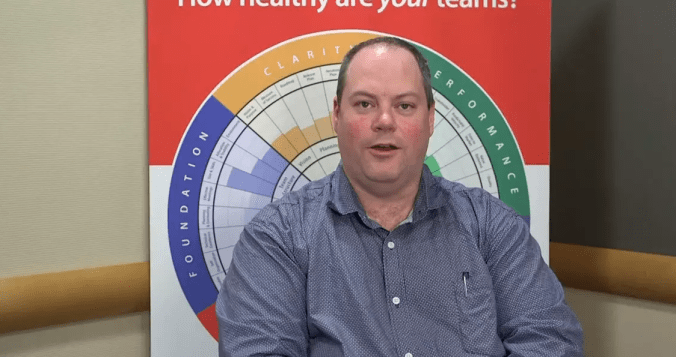
I could not take pictures in the facility, but the following official video gives an good overview of Valpak and the manufacturing centre.

Some of the key items:

  • The factory is built 18 feet above sea level and built to withstand category 4 hurricanes
  • They reframed the problem – instead of stuffing coupons into an envelope they build the envelope around the coupons
  • They etch their own printing plates and recycle the aluminium afterwards
  • Failover is built into the system – such as two print heads per press so that they can change the plates without stopping the printing
  • Loose paper is sucked off the factory floor by vaccuums
  • The coupons are wound onto rolls and then stored temporarily until needed for collation – these are also buffers for the process
  • Automated robots move the rolls around, they are smart enough to recharge themselves as well
  • The collation process is ordered to ensure they get the lowest postal prices, right down to the order the pallets are loaded onto the truck
  • The process used to take 4 days and now is about 4 hours
  • There are very few humans on the factory floor – just highly skilled workers for operations and machine repair
  • Continuous learning and improvement – can now insert different offers for different households for example

 

Episode 125: 10 Minutes with Dan North

The Agile Revolution's avatarThe Agile Revolution Podcast

dannorthAfter many failed attempts to get him on the podcast, Craig finally catches up with Dan North at YOW! Conference on his way out the door to the airport and in a quick chat they cover:

  • BDD – developing an application by looking at its behaviour from the perspective of its stakeholders (people who’s live you touch)
  • Given When Then – “given” is setting up the world in a well known way, “when” is me interacting with the application as a stakeholder and “then” is what I expect to happen
  • BDD is not the same as writing automated tests, they are orthogonal – “Test-Driven Development Is Not About Testing
  • Software, Faster – collection of patterns for people who have been around Agile and are asking “now what” – “Software, Faster” book in progress
  • YOW! 2015 talk “Delivery Mapping: Turning the Lights On

TheAgileRevolution-125 (12 minutes)

View original post

Episode 124: Talking Testing with Anne-Marie Charrett

The Agile Revolution's avatarThe Agile Revolution Podcast

16069825102_aa54010a22_zCraig is at YOW! Conference and catches up with Anne-Marie Charrett who is well known in the testing community as a trainer, coach and consultant but also for her support of the community:

  • Don Reinertsen talk “Thriving in a Stochastic World
  • Context-Driven Testing
  • Testing is a verb – it’s a doing thing and not an output, but the challenge is you cannot see doing
  • Anne-Marie’s class in Exploratory Testing
  • Where there is risk and failure, there is a job for testing
  • Exploratory testing – the key is feedback and using the learning to feedback into the next test
  • Agile testing – don’t try and test everything and don’t try and automate everything either, rather adopt a risk based approach
  • Unit testing – the usefulness depends on the programmer and the context and figuring out what you are trying to achieve
  • Sydney Testers Meetup
  • Speak Easy – Speak Easy…

View original post 67 more words

Opinion: What 2017 Has in Store for Culture & Methods

InfoQWe polled the InfoQ Culture & Methods editors for their takes on what 2017 has in store for the technology industry, what are the trends which we see coming to the fore and what the implications will be for organizations around the globe.

Source: Opinion: What 2017 Has in Store for Culture & Methods

Episode 123: Some Principles of Lean and Product Development Flow with Don Reinertsen

The Agile Revolution's avatarThe Agile Revolution Podcast

8265695783_995186c1ce_hCraig and Tony are at YOW! Conference and are privileged to spend some time with Don Reinertsen, who is considered one of the leading thinkers in the field of lean product development and author of numerous books including “Principles of Product Development Flow”

  • Principles of Product Development Flow” book and why there is a waterfall on the front
  • Japanese Manufacturing Techniques was the name before it was rebranded as Lean Manufacturing
  • Taiichi Ohno, the father of the Toyota Production System, hated math and thus preferred to sit on the factory floor and tweak processes, hence it was not a theory driven approach but rather empirically driven
  • Need to understand why things work so you can transfer it to other domains, a big shortcoming in lean manufacturing is that they don’t have much of a mathematical view on what they are doing
  • You can use magic in manufacturing…

View original post 264 more words

Episode 122: Learning to Learn with Aino Vonge Corry

The Agile Revolution's avatarThe Agile Revolution Podcast

ainoCraig is at YOW! Conference and catches up with Aino Vonge Corry who is one of our very few repeat guests on the Agile Revolution. She describes herself as someone who puts speakers on stage, makes developers communicate and messes with the heads of students!

  • Part of the YOW! conference organising committee
  • Important to find examples that relate to all of the students in the class (not just a subset)
  • Microservice lectures – no more than 15 minutes lecture and then a learning activity
  • If there is interactivity then there is a reason to turn up to a live lecture
  • YOW! 2015 talk “A Comment on How We Learn
  • Need to respect and acknowledge that other people take in knowledge at different paces, this is important in activities that we give people time to think
  • People need to relate ideas to the things they are doing now to take…

View original post 191 more words

Episode 121: Diversity & Frugal Innovation in Africa with Betty Enyonam Kumahor

The Agile Revolution's avatarThe Agile Revolution Podcast

enyoCraig and Tony sit down for a conversation at YOW! Conference with Betty Enyonam Kumahor (stands for good for me, on the way there) who is a technology leader in Africa:

  • Tony and Enyo are mutual members of the Alistair Cockburn fan club
  • YOW! Conference talk “Frugal Innovation and Scaffolding Software
  • Software engineering uptake in Africa is very low, need more technologists because it is is not an industry it is an enabler
  • Lots of diversity challenges in Africa – lees than 1% of the South African IT industry is women, but also diversity in languages, education and belief systems
  • Diversity is a multi-pronged issue, need to be patient but not complacent to move the needle forward, give girls the confidence to be competent and to push the boundaries
  • Frugal innovation in Africa – building technology in a space of constraints such as inadequate power, everything happens by mobile…

View original post 122 more words

Episode 120: Microservices & The Lean Enterprise with James Lewis

The Agile Revolution's avatarThe Agile Revolution Podcast

jlewisCraig is at YOW! Conference and has a conversation with James Lewis, best known for his work around microservices at ThoughtWorks. They discuss:

View original post 168 more words

Breaking the Cylinders of Excellence (in the Australian Government)

YOW-Nights_Logo_stackedAt the recent YOW! Night in Brisbane (as well and Sydney and Melbourne), Lindsay Holmwood (the Head of Technology at the DTA) presented “Breaking the Cylinders of Excellence”. It was a rare experience to hear the story of how the DTA is using cutting edge development practices to help the government catch up with, and even exceed, the public sector. 


  • DTA – aid transformation in government, small agency
  • Delivery hubs in Sydney and Canberra – help identify and plug capability gaps in teams
  • Prototype of how government services could work  gov.au/alpha
  • Digital Service Standard – 13 characteristics on what good looks like in government, useful in organisations as well
  • Cloud.gov.au  – government cloud service, usage growing, continuous delivery pipeline (which is a major change for government who are used to 2 changes per year)
  • The unit of delivery is the team – not about individuals, but the team – borrowed from GDS
  • Government is slow, but government is designed to be stable, they cannot fail, they have characteristics that are resistant to change
  • Myth that organisations must choose between speed and reliability, high performing organisations deploy more frequently, have shorter lead times, fewer failures and recover faster, but they also have a greater profit
  • Want to deliver like a startup but be stable like a government
  • Not a lot of cross pollination between departments currently
  • Read the policy! – quite often the process is not mandated
  • Document what works and doesn’t so it becomes a repeatable pattern – ie. running a meetup inhouse, don’t tell me I can’t do it, tell me how I can run it without being thrown in jail!
  • Stick with technologies the government is comfortable with if you are changing the delivery engine
  • Security matters – prevention is a battle you will always lose, detection is your best defence – aggregate and log in one place, identify threat signatures, etc
  • Embed security people on big services so it is part of the architecture
  • Proactive testing between different governments around the world on similar platforms
  • Simplest security breaches make the most mess – infected excel macros, leaving free USB keys in the foyer that are malware infected
  • Need to put user needs first – alpha mockup using tools like Jeckyll, then beta then live
  • Lots of people strictly interpret the design and delivery guides – they are guides not rules!
  • Create a longer runway by pulling tech forward – turn down the volume of design, turn up the volume of tech
  • If it hurts, do it more often!
  • Fixed cost delivery with agile is a thing, agile is a way to de-risk in the government
  • Don’t put manual testing on the critical deployment path – have special skills on hand for accessibility, performance and security