Different perspectives of Twitter

Today I got invited to a meeting where some of my colleagues were trying to map out their approach to using Twitter as a marketing tool for a spin-off venture they are re-launching. They had all seen Twitter and all have all setup their own accounts and understand about the 140 character limit, @replies and re-tweets. However, what was hard to explain was the difference between the logged in and public views of Twitter.

You see, if you look at somebody’s Twitter account publicly, you only see their tweets, not their @replies and certainly not the updates of those they are following. But, if you are logged into your own account, you obviously see your update, your replies plus the updates from all of those you are following. And as this is the view most people see once they are in the Twitterverse, it can be hard to describe the difference to those that are new to this world.

Given that the Twitter account they were discussing is for a venture, meaning that my colleagues would only be logging in when creating tweets, it then begs the question of who this account should follow. Being a venture, following those legitimate users who follow them seems to make sense. It makes less sense, however, to follow experts in their domain, given that nobody will actually be looking at the follower stream. Furthermore, Twitter only supports one user being logged in as a time (it was never really designed for teams to be tweeting).

The best they can do now is start to use their personal twitter accounts more and get used to the way Twitter works. The rest will then make sense.

ASWEC 2009: Experiences from Agile Projects Great & Small

My presentation from Australian Software Engineering Conference (ASWEC) 2009  that I delivered with Paul King called “Experiences from Agile Projects Great and Small” is available on Slideshare.

Technical Lessons Learned Turning the Agile Dials to Eleven

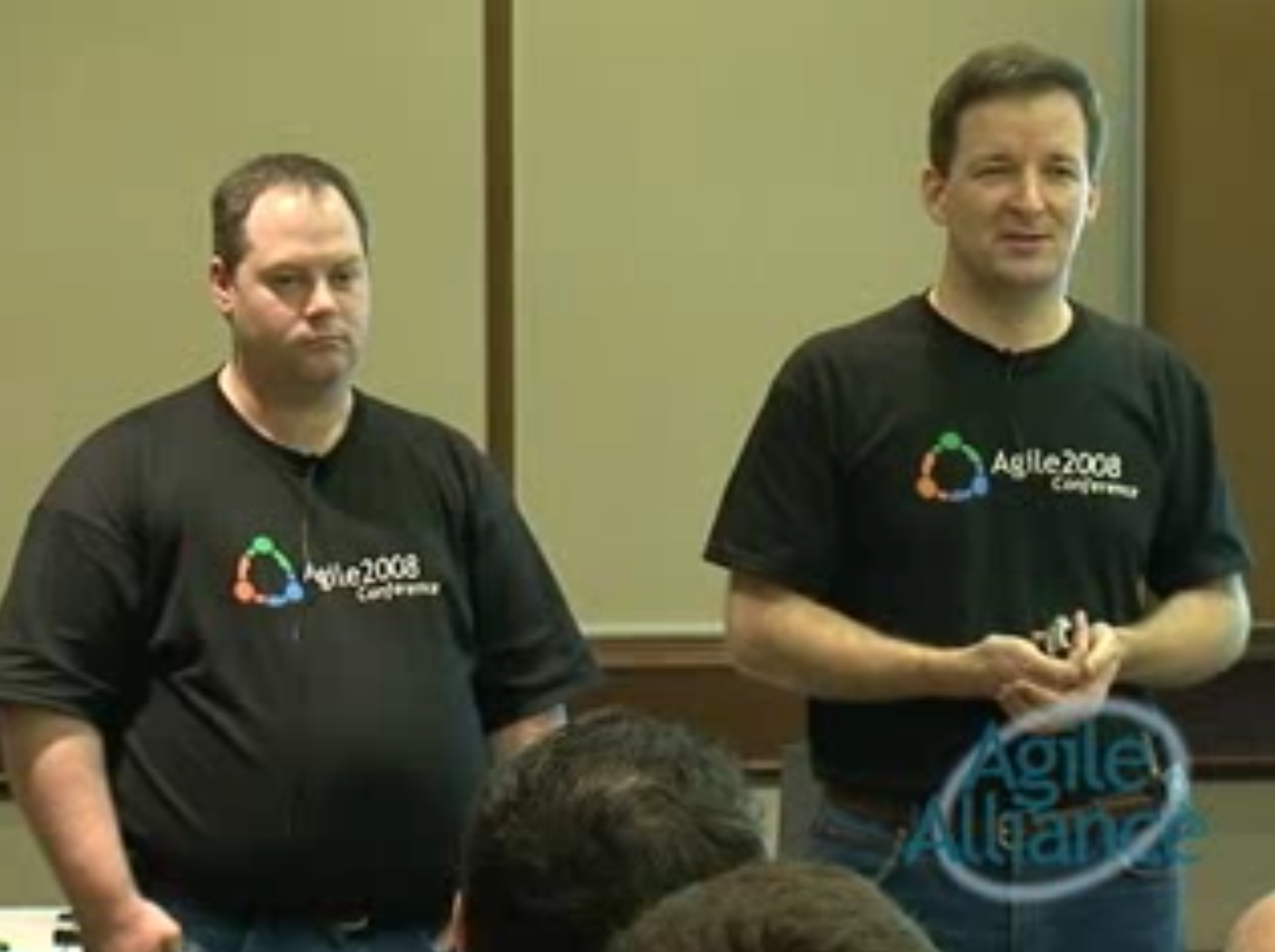
In this presentation filmed during Agile 2008, Craig Smith and Paul King present what happens when one tries to be super Agile. Practically, they employed most currently used Agile practices on several projects, then they experimented with new ideas leading them to better results, increased productivity and quality.

Source: Technical Lessons Learned Turning the Agile Dials to Eleven

Agile 2008 Review

It was a great honour to be accepted for two experience report talks at the Agile 2008 conference in Toronto, Canada with my colleague Paul King. Initially Paul was going to attend and present on my behalf, but days before the conference I got the OK by my employer to both present and attend my first international Agile conference (and my first trip overseas from Australia as well!)

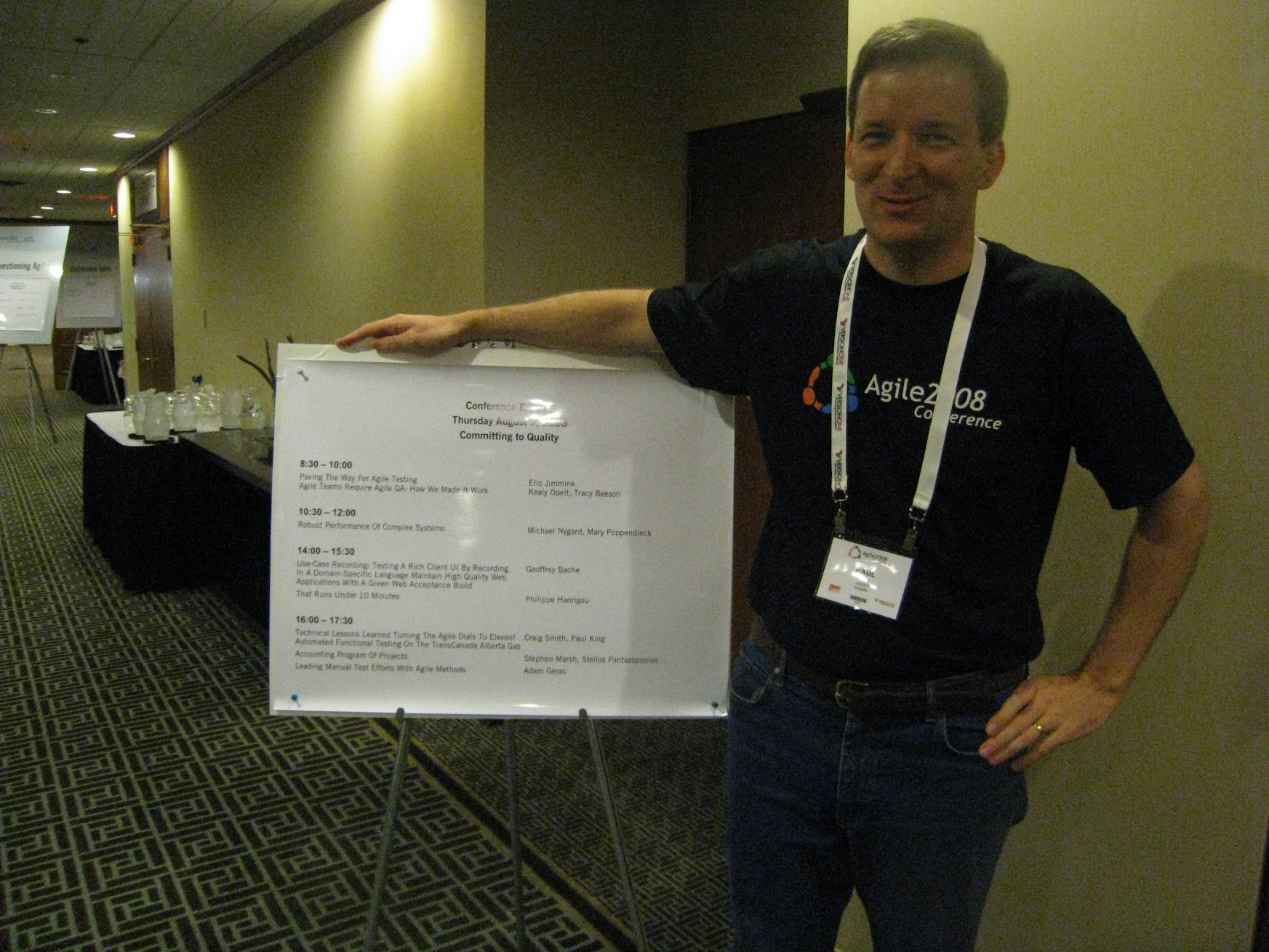
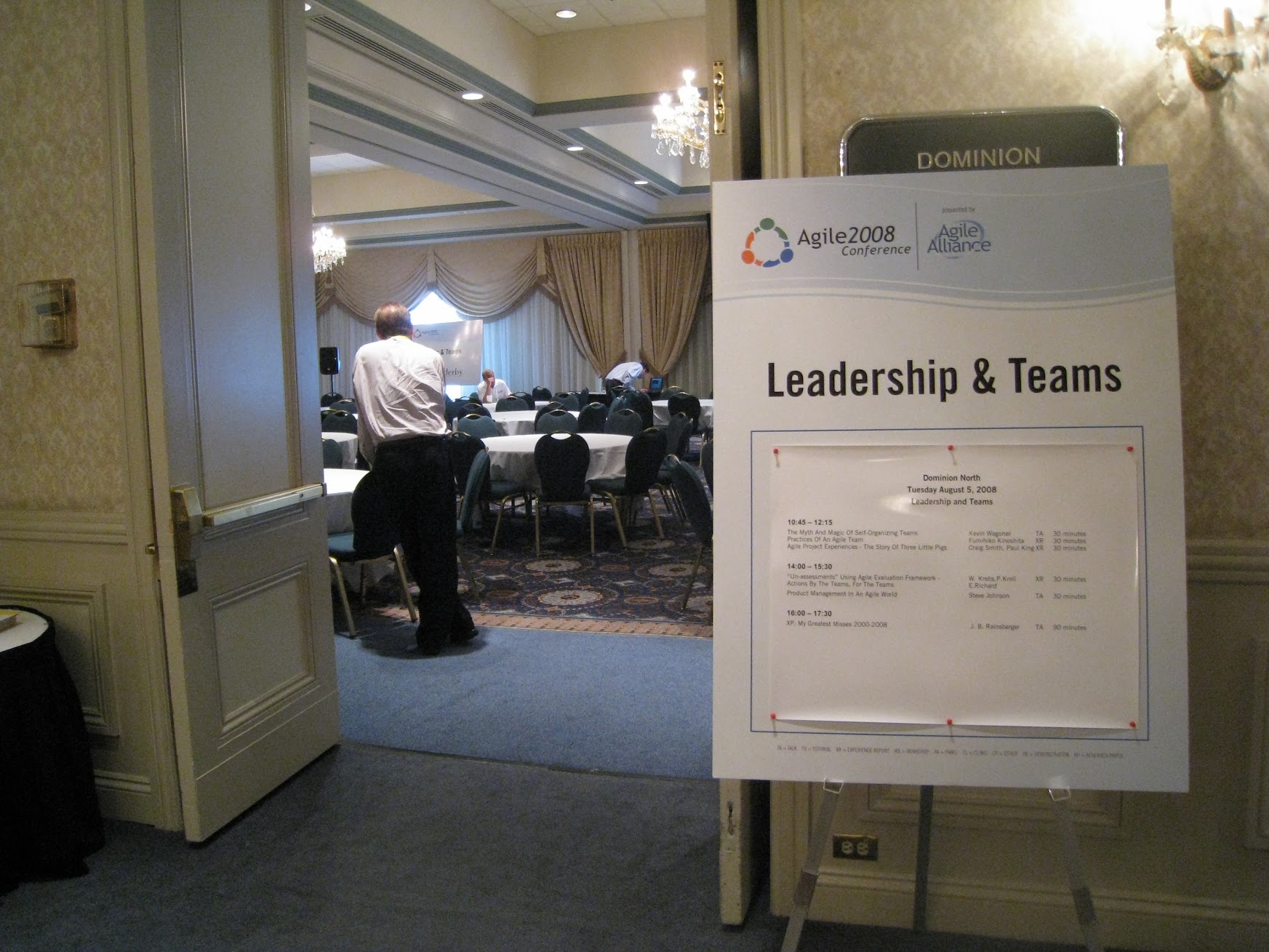
Paul and I presented two sessions: “Agile Project Experiences: The Story of Three Little Pigs” and “Technical Lessons Learned Turning the Agile Dials to Eleven!

I have some more detailed notes buried in a pile somewhere and will post if and when I find them, but this is a retrospective deck I presented when I returned home to a number of internal brown bag forums as well as the Brisbane XP User Group.

Agile 2008 – Technical Lessons Learned Turning the Agile Dials to Eleven!

My presentation with Paul King from Agile 2008 called “Technical Lessons Learned Turning the Agile Dials to Eleven!” is available on Slideshare.

Developer practices for traditional and agile Java development are well understood and documented. But dynamic languages – Groovy, Ruby, and others – change the ground rules. Many of the common practices, refactoring techniques, and design patterns we have been taught either no longer apply or should be applied differently and some new techniques come into play. In this talk, techniques for agile development with dynamic languages are discussed. How should we better apply refactoring techniques? What new aspects do we need to think about?

The session was recorded and is available on InfoQ.

The corresponding paper is available via the IEEE and is also available in full via the Agile Academy.

Agile 2008 – Agile Project Experiences: The Story of Three Little Pigs

My presentation with Paul King from Agile 2008 called “Agile Project Experiences: The Story of Three Little Pigs” is available on Slideshare.

Over the last few years, we have aggressively applied agile practices on a number of projects with success. These successes, however, have not been achieved without challenges and lessons learnt along the way. This experience report specifically highlights examples from three different projects of varying sizes in this period in the same organisation (three little pigs) where in all cases the pigs were well and truly committed.

Some of the key successes from the example projects will also be discussed.

The corresponding paper is available via the IEEE and is also available in full via the Agile Academy.

Take 43

Welcome to my blog. The aim of this blog for me is a place to record stuff that I come across in my working life. And why CDS 43? Well it’s a play on words and could mean:

  • compact discs for free
  • 43 things from me
  • the 43’rd site by someone with my initials

Anywho, that is the name I chose and WordPress have stuck me with it, so enjoy!